You Won't Believe How Social Media Turned 5 Latina Artists into Poetry Sensations Overnight!

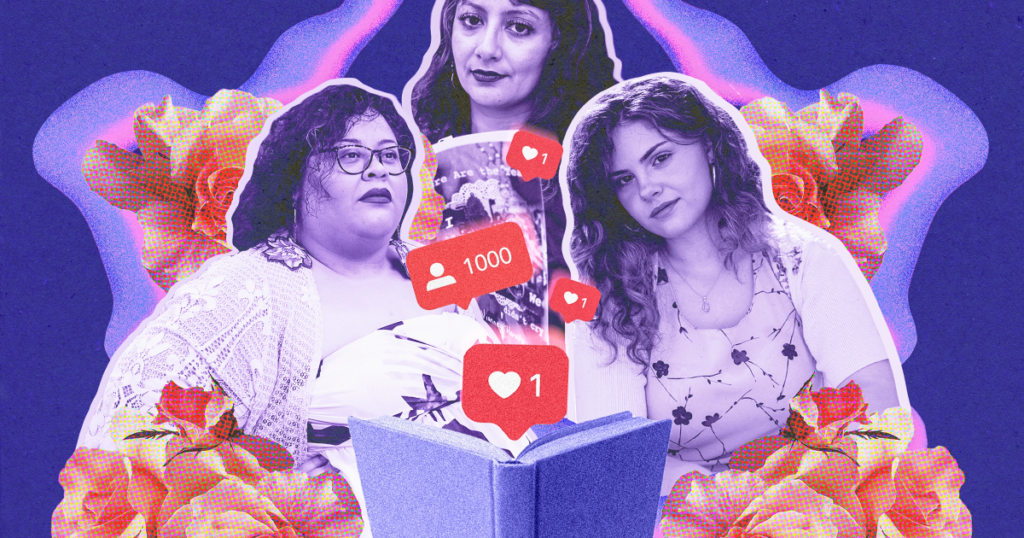
In a world where poetry often feels relegated to dusty classrooms or niche literary circles, Yesika Salgado is breaking down barriers, redefining what it means to be a poet in today's digital landscape. Over a decade, this Silver Lake author has transformed her life experiences into powerful verses, amassing a following of over 170,000 on Instagram. The jacaranda trees lining the streets near her favorite haunt, Café Tropical, have borne witness to her journey—one marked by both personal triumphs and struggles.
“Up until 2016, I had to work service jobs,” the 41-year-old poet recalls. “I worked as a cashier in a parking garage for like 10 years. I knew what it was like to be on your lunch break, eating your life, being tired, your feet sore, and scrolling on your phone just looking for something.” This unique perspective inspired Salgado to share her work in a way that resonates with everyday people—directly through their phones.
Salgado’s journey mirrors a broader trend in poetry’s evolution, particularly among U.S. young adults. The rise of social media platforms has given birth to movements like “Instapoetry” and #poetrytok, allowing voices from diverse backgrounds, especially within the Latino community, to flourish. According to Patrícia Lino, an associate professor of poetry and visual arts at UCLA, the democratization of poetry was once merely a dream: “The death of poetry has been declared many times throughout history, but it’s always transforming—and recently, it has transformed due to social media.”
As poetry moves away from the confines of academic journals, it has become more accessible, paving the way for more Latinos in the publishing industry. A 2022 report from the U.S. Government Accountability Office shows that they make up just 7% of writers and authors, but this number is slowly changing as more creators find their voice online.
“It’s surreal that my poems are in places that I thought I physically didn’t belong to,” Salgado shares. Her debut book, “Corazón,” was birthed from the very essence of her life experiences—its cover illustrated by a mango tree, a symbol of her parents’ homeland, El Salvador. The book soon became a No. 3 bestseller in Amazon’s Hispanic American subcategory.
“I was just writing poems about my crazy-ass family,” she continues. “The purest parts of me, the most nooks and crannies, are the ones that people connect with the most.” Salgado’s success story is echoed by other poets who are finding their footing and community through social media.
Transformative Voices in Poetry
In 2021, Mexican American author Celia Martínez took to TikTok and Instagram to share her raw, vulnerable poetry about modern dating and her experiences as a first-generation Latina college student. “Social media is a very public place. I realized how beneficial it is to see someone that looks like you, to hear someone that sounds like you have those same feelings,” she explained.
Martínez has cultivated a loyal following of over 5 million on her platforms, where she shares her bilingual poetry. Her journey has led to the publication of four books, including the upcoming “A Magnificently Ordinary Romance,” set to release in 2025. The support from her audience allows her to pursue another passion—medicine, which she hopes to blend with her poetry through the establishment of a community garden offering therapeutic treatment.
Another voice carving a niche is Vianney Harelly, a self-published author who embraces the “imperfect, messy and ugly” aspects of poetry. With over 220,000 followers on social media, Harelly focuses on creating visually rich, bilingual literature that resonates with other Latina creatives. She fondly recalls her own struggles in academia, feeling disconnected from predominantly Eurocentric literary narratives. “These people need to see that it is possible to be an author, to be a poet,” she said. Harelly’s journey has been one of empowerment, as she sells her self-published works through social media, opening doors for herself and many others.
As poets like Salgado, Martínez, and Harelly continue to redefine the landscape of poetry through social media, they are not just sharing words; they are forging connections, inspiring representation, and fostering healing within their communities. The digital realm has not only given them a platform but also a sense of belonging and significance—an evolution that speaks to the heart of modern poetry's democratization.
New Study Uncovers SHOCKING Immune Pathways in mRNA Cancer Vaccines – Are You Missing Out?

Train Fare Jumps from $13 to $150 for World Cup Fans—Can You Afford to Miss Out?
Why This Shocking Error Left Millions in Panic—Are You One of Them?
Scientists Discover a Shocking New Way to Save Coral – You Won’t Believe the Results!

You Won't Believe How Chef Robotics Turned Failure into a $10 Million Success—Find Out Their Secret!
Is House District 44 About to Explode? Two More Republicans Enter the Race—What This Means for You!
You might also like: