
Why Iran's Soccer Officials Are Facing a SHOCKING Ban from the FIFA Congress—You Won't Believe What Happened Next!

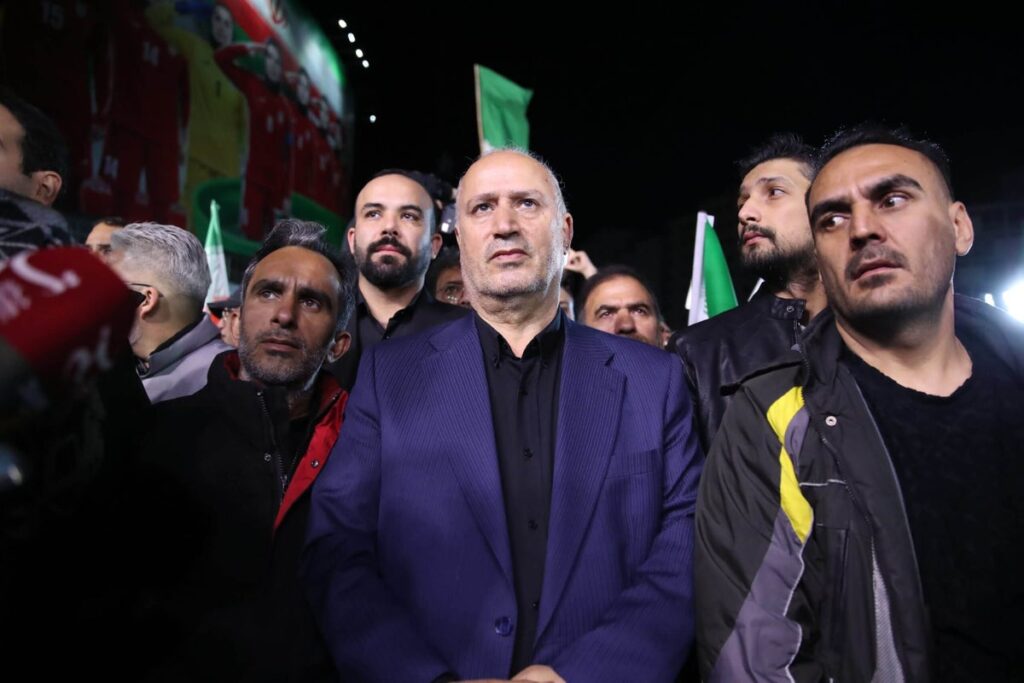
VANCOUVER, British Columbia — Tensions surrounding Iranian participation in international soccer events have intensified as Iranian soccer officials were absent from the FIFA Congress held on Thursday. This marks at least the second instance that representatives from Iran have been denied entry into North America ahead of the highly anticipated 2026 World Cup, which will be co-hosted by the United States, Canada, and Mexico.
FIFA president Gianni Infantino addressed the situation at the Congress, reassuring attendees that "of course" Iran will play its matches as scheduled in Los Angeles and Seattle. "And the reason for that is very simple, dear friends, it’s because we have to unite," he stated, emphasizing the importance of bringing people together through the global sport.
However, U.S. Secretary of State Marco Rubio highlighted ongoing concerns regarding the entry of Iranian officials, suggesting that while players may be allowed into the U.S., there are apprehensions about others accompanying them, particularly those with connections to the Islamic Revolutionary Guard Corps (IRGC), Iran's powerful military and security force. This sentiment reflects broader geopolitical tensions between Iran and Western nations.
The recent incident in Canada appears to be rooted in these concerns. Reports indicate that Iranian soccer federation president Mehdi Taj attempted to enter Canada on a Temporary Resident Permit but was sent back instead of proceeding to Vancouver for the FIFA events. This outcome aligns with Canadian government policy, which designates IRGC officials as inadmissible to the country. Anita Anand, Canada’s Foreign Affairs Minister, acknowledged this development, stating, “My understanding is that there is a revocation of the permission.”
As the Congress commenced with representatives from 210 of FIFA’s 211 member associations, the absence of Iran's officials was confirmed by FIFA general secretary Mattias Grafström. The exact reasons behind Taj’s denial of entry remain unclear, though Iranian state media have criticized “inappropriate behavior” from immigration officials at Toronto’s Pearson Airport.
Sources familiar with the situation revealed that this incident has ignited significant political backlash in Canada. Opposition Senate leader Leo Housakos released a statement expressing relief at Taj's denial but raised concerns about how a Temporary Resident Permit could have been issued to someone linked to the IRGC. "Canadians deserve to know if and why a Temporary Resident Permit was issued to an individual with reported ties to the IRGC," he stated. Housakos criticized the government for allowing “bad actors” to operate with relative impunity, echoing sentiments that have been prevalent in U.S. political rhetoric regarding Iran.
Rubio added that while Iranian players should be able to travel, there are significant concerns about allowing others into the country, underscoring the U.S. stance on ensuring national security. "What [Iran’s soccer team] can’t bring is a bunch of IRGC terrorists into our country and pretend that they’re journalists and athletic trainers,” he said.
The situation has raised questions about which Iranian officials possess IRGC ties and the nature of those connections. Several officials were previously denied U.S. visas ahead of a December World Cup draw. Taj, along with general secretary Hedayat Mombeini and his deputy Hamed Momeni, had planned to attend the FIFA Congress but returned to Iran earlier this week. It remains unclear if Taj was the only one denied entry or if the others accompanied him back out of caution.
Asian soccer officials had anticipated the arrival of Iran's representatives in time for the annual Asian Football Confederation congress, but their absence was noted as the meeting began with 46 of the confederation's 47 members present. The general secretary later indicated that Iran's officials were unable to attend due to visa-related issues, but they ultimately did not arrive in Vancouver.
While FIFA declined to comment on the matter, the situation highlights the complexities of international sports in a politically charged environment. As Infantino participated in friendly matches for FIFA delegates and former professional players, he faced questions from reporters, but remained reticent, stating, "I will answer everything tomorrow."
The implications of this incident reach beyond soccer, touching on ongoing diplomatic tensions and the delicate balance between international sport and national security. As the 2026 World Cup approaches, the participation of Iranian officials—and the geopolitics surrounding it—will likely continue to attract scrutiny.
SoftBank’s Shocking $100B IPO Plan for Roze AI: What You're About to Miss Could Change Everything!
Hollister Just Dropped a Shocking Soccer Collection with Kappa—Here’s What You’re Missing!

Shocking Secrets in This Week's Fox News Lifestyle Newsletter: 5 Must-Know Tips Before You Miss Out!

US Treasury Yields Hit 5.3%—Is Bitcoin’s Collapse Just Around the Corner? Find Out Now!
Is the EPA Chief’s Shocking Budget Cut a Secret Climate Change Play? Democrats Think So!
ECOFEST: Discover the Shocking Truth Behind This 1-Day Environmental Revolution! Don't Miss Out!
You might also like: