
White House’s Shocking New Military Orders: What Happens to Venezuela’s Oil Could Change Everything!

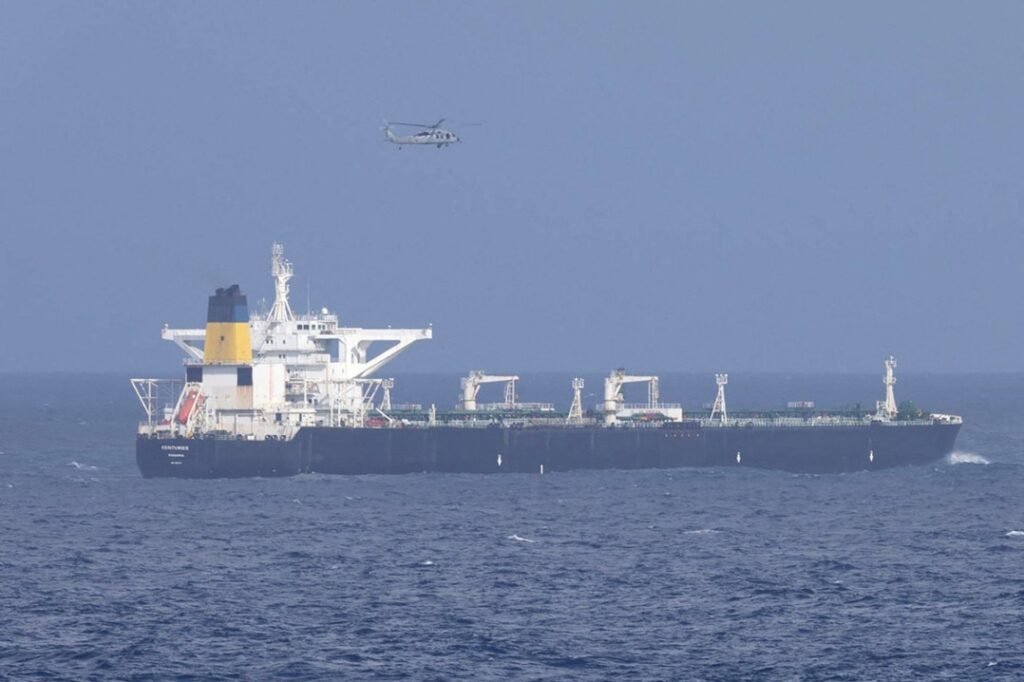
A U.S. military helicopter has been spotted flying over the Panama-flagged oil tanker, Centuries, which was intercepted by the U.S. Coast Guard shortly after President Donald Trump announced a "blockade" aimed at all sanctioned oil tankers entering or leaving Venezuela. This incident occurred in the Caribbean Sea, east of Barbados, on December 20, 2025.
According to a report by Reuters, the White House has directed the U.S. military to concentrate primarily on enforcing this "quarantine" of Venezuelan oil for the next two months. A U.S. official, speaking anonymously, stated, "While military options still exist, the focus is to first use economic pressure by enforcing sanctions to reach the outcome the White House is looking for." This strategic pivot underscores the administration's intent to exert maximum pressure on Venezuelan President Nicolás Maduro's government.
Reports indicate that the third oil tanker targeted by U.S. forces, Bella I, altered its course away from Venezuela, retreating into the Atlantic Ocean, thereby evading interception. This trend of tankers avoiding Venezuelan routes highlights the growing effectiveness of U.S. enforcement measures.
President Trump recently declared a "full and total blockade" of Venezuela's oil sector, labeling Maduro's government a U.S.-designated foreign terrorist organization. Trump has suggested that it would be “smart” for Maduro to resign, implying that continued resistance could lead to dire consequences for his regime. "If he plays tough, it'll be the last time he's ever able to play tough," Trump warned.
In response to U.S. actions, Venezuela's government has accused Washington of trying to instigate regime change and has labeled the interception of oil tankers as "piracy." Venezuelan Ambassador to the United Nations, Samuel Moncada, emphasized, "The threat is not Venezuela. The threat is the U.S. government."
The United Nations Security Council convened an emergency meeting on December 19, where the majority of members advocated for adherence to the UN Charter and cautioned against escalating tensions. Amid these developments, Trump has consistently accused Venezuela of flooding the U.S. with illegal drugs, and his administration has been conducting operations to target boats allegedly transporting narcotics from South America.
Moreover, recent statements from Trump indicate a willingness to escalate military measures, including bombing drug infrastructure on land and authorizing covert CIA operations aimed at Caracas. Just this month, the U.S. Coast Guard has intercepted two tankers in the Caribbean, a clear indication of the intensified enforcement strategy.
The situation remains fluid as both sides engage in a high-stakes showdown. The U.S. administration believes that its economic and military pressures could lead to an economic calamity for Venezuela by late January unless significant concessions are made by Maduro.
As this geopolitical saga unfolds, it reveals not only the complexities of U.S.-Venezuelan relations but also the broader implications for regional stability in Latin America. The stakes are high, both for the Venezuelan people and for American interests in the region, as the U.S. aims to curtail drug trafficking and assert its influence over an increasingly desperate Maduro regime.
Balen Shah's Shocking Election Strategy: Will He Win or Lose Everything on March 5?

Can the Broncos Shock the Chiefs on Christmas? Live Updates & Jaw-Dropping Highlights Inside!

Is Your 3pm Snack Sabotaging Your Health? Discover the Shocking Truth That Could Change Everything!
This Startup's Shockingly Simple Waste Solution Could Save 1 Billion Tons Annually—Are You Missing Out?

Billionaire's Shocking Tax Fraud Exposed: You Won't Believe the $1 Billion Settlement Details!

Colorado's Housing Market Just Crashed—What This Means for Buyers May Shock You!
You might also like: