
Trump's Bold Move: Could This Shift Change Everything for Israel, Lebanon, and Iran Talks?


JERUSALEM, Israel – Tensions in the Middle East are escalating as significant developments unfold, stirring hopes of a pivotal change in the region. President Donald Trump has indicated that discussions between Israeli and Lebanese leaders are imminent as he seeks what he describes as "a little breathing room." Furthermore, he expressed optimism about nearing a deal with Iran, a statement that echoes his administration's ongoing diplomatic efforts.
In an interview with ABC News on Tuesday, Trump noted that he does not anticipate extending the current ceasefire, which is due to expire on April 22. He commented on the exciting days ahead, suggesting that intensified efforts are underway to forge a broader agreement with Tehran. However, reports emerging on Wednesday hinted that negotiators might be open to extending the truce to facilitate further discussions, with a second round of negotiations scheduled to take place in Pakistan soon.
Amid these diplomatic maneuvers, the United States is ramping up its military presence in the region. The Pentagon is deploying 6,000 troops aboard the aircraft carrier U.S.S. George W. Bush along with its accompanying warships. This military buildup signifies the administration's dual approach of leveraging diplomacy while maintaining a credible military threat should the ceasefire falter.
Despite increasing pressure, Iran remains steadfast in its stance concerning nuclear enrichment. Iranian Foreign Ministry Spokesman Esmail Baghei stated, "We have emphasized that the Islamic Republic of Iran, based on its needs, must be allowed to continue enrichment." This declaration underscores the complexity of the negotiations, particularly as Iran continues to assert its rights amidst international scrutiny.
In a noteworthy development, The Financial Times reported that Iran may have utilized a Chinese-built satellite, the Tee-01B, to surveil U.S. military bases. This satellite, acquired by Iran's Islamic Revolutionary Guard Corps Aerospace Force in late 2024, has been reportedly employed to monitor critical U.S. military sites, capturing images before and after drone and missile strikes against these locations.
In Washington, Treasury Secretary Scott Bessent has announced a new phase of economic measures labeled "Operation Economic Fury." This initiative is described as the financial equivalent of military strikes, marking over a year of "maximum pressure" on Iran. Bessent elaborated that the U.S. is focusing on blocking payments to the Iranian state and targeting accounts belonging to the Islamic Revolutionary Guard Corps (IRGC). He emphasized that companies buying Iranian oil or holding Iranian funds in their banks could face secondary sanctions, further tightening the economic screws on Tehran.
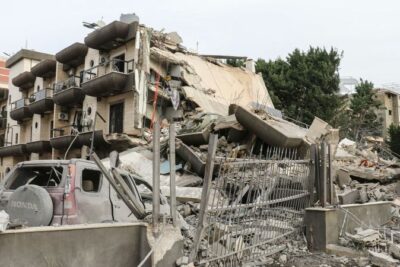
On the ground in Israel, Prime Minister Benjamin Netanyahu revealed plans for Israeli forces to extend a buffer zone in southern Lebanon while continuing operations against Hezbollah strongholds. He stated, "We are about to overcome (the southern Lebanon town of) Bint Jbeil; we are, in effect, about to eliminate this great stronghold of Hezbollah." Netanyahu has instructed the Israel Defense Forces (IDF) to persist in widening the security zone in the region, showcasing Israel's proactive military strategies.
As President Trump facilitates discussions between Israeli and Lebanese leaders, he aims to ease tensions along Israel's northern border. While he has not yet announced a formal ceasefire, he reiterated his commitment to creating a space for dialogue between the two nations at a critical juncture.
As the situation develops, the interplay of military readiness, diplomatic negotiations, and economic pressure paints a complex picture of the Middle East landscape, one that is watched closely by stakeholders across the globe. The coming days will be crucial in determining the future of regional stability and the potential for lasting peace.
You Won't Believe Which Four Fruita Monument Stars Just Scored College Sports Scholarships!

Netta Rager Dan Shocks Tech World as She Joins Novee—What This Could Mean for AI Security!
Iran War Escalates: Trump Claims 3 Major Breakthroughs! What’s Next for the Strait of Hormuz?

You Won't Believe Which 5 Players Could Change Everything at G Day—#3 Will Shock You!

Unlock the 7 Secrets Influencers Use to Boost Their Social Media Impact—#3 Will SHOCK You!

You Won't Believe This Fitness Coach's 10-Hour Daily Routine for Melting Away Belly Fat!
You might also like: