
Is Your 401(k) Safe? Shocking Market Surge Amid Iran Turmoil Leaves Experts Divided!

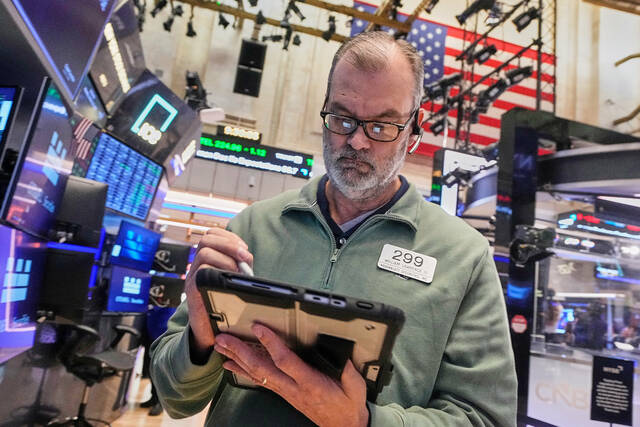
As gas prices and grocery bills continue to rise across the United States, an unexpected trend is emerging in the stock market. Notably, technology stocks have surged nearly 20% this month alone, according to S&P Global data, marking their best monthly performance since 2002. This paradox raises questions about the relationship between everyday economic pressures and market dynamics, particularly in the context of current geopolitical tensions, including the ongoing conflict in Iran and the closure of the Strait of Hormuz.
Jim Sinegal, senior investment analyst at Fragasso Financial Advisors in Pittsburgh, explains that the disparity between the economy—characterized by rising costs—and a flourishing stock market can be attributed to several factors. “If you look at the actual underlying job data, the unemployment rate is still pretty low, and jobless claims recently came in a little lower than expected,” he noted. “People are still working and still, to some extent, spending. That consumer spending trend hasn’t taken a hit yet. Whether that changes due to higher prices is still a question.”
The stock market fluctuates due to various reasons, but fundamentally, a stock's price depends on two key elements: a company's earnings and what investors are willing to pay for those earnings. The latter is often influenced by interest rates and the emotional climate of investors—swinging between fear and greed. In the early days of the Iran conflict, stock prices declined as fears mounted over a potential long-term spike in oil prices, which could trigger debilitating inflation globally.
However, since late March, optimism has started to replace fear as expectations grew that the United States and Iran might avoid a worst-case scenario. “It would be in both countries’ economic interests to do so, and for Iran’s leadership, an end to the war also would likely mean survival,” Sinegal explained. A ceasefire agreement reached this month remains in place, albeit under precarious circumstances.
The stock market's resilience is also reflected in oil prices. Following the onset of the conflict, the price of Brent crude oil soared from approximately $70 per barrel to a peak of $119. As of Tuesday, it was trading near $111, still roughly 58% higher than pre-war levels. This increase has driven gasoline prices up to $4.39 per gallon in many areas, including Western Pennsylvania.
Despite these surging energy costs, consumer confidence has seen a modest uptick. The Conference Board reported that the consumer confidence index rose from 92.2 in March to 92.8 in April, suggesting that Americans are not yet significantly deterred by rising prices.
Adding fuel to the fire, the stock market has also benefited from a boom in artificial intelligence (AI) investments over the past few years. “Areas of the market that were lagging have caught up,” Sinegal stated, noting that the energy sector has thrived due to high oil prices. He added that the focus has shifted from software to the physical materials needed for data center construction, further driving growth across multiple industries.
While the stock market's recent climb may appear to be at odds with the economic challenges faced by many U.S. households, experts remind us that the stock market is not a perfect reflection of the broader economy. Bryan Routledge, an associate professor of finance at Carnegie Mellon’s Tepper School of Business, emphasized, “The stock market is hard to forecast, and it’s hard to explain. When you look at stock prices going up and down, it’s hard to put a finger on what exactly might be making that change happen.”
Interestingly, the market's rise is occurring amid consumer anxieties regarding escalating gasoline prices and tariffs, which have been highlighted in recent surveys. Sinegal pointed out that rhetoric from the Trump administration concerning the Iran conflict may be undermining consumer confidence while simultaneously boosting investor sentiment. “I think to some extent it’s become a ‘boy who cried wolf’ situation,” he said. “There’s been so much change with the Strait of Hormuz being closed, then somewhat open. People are looking through this day-to-day geopolitical volatility and saying, ‘Six months or a year from now, this situation will probably be solved.’”
In an era where fewer companies are listed on the stock market—about 5,000 today compared to approximately 10,000 during the dot-com boom—investors are increasingly reliant on expectations rather than immediate news. “The stock market is affected by expectation in a lot of ways rather than being a reflection of news that’s happening right this moment,” Routledge concluded.
This complex interplay between rising costs for consumers and a thriving stock market illustrates a nuanced economic landscape, one that will require close monitoring as the geopolitical situation evolves and consumer behaviors adapt to new realities.
Arsenal vs. Atletico Madrid: The Shocking Truth Behind This Champions League Showdown! Will History Repeat?

Taiwan's Halal Food Push: 5 Shocking Health Benefits You Never Knew About! Don’t Miss Out!

Australia's Shocking Triumph: 30th Nation to Banish Trachoma—What This Means for Millions!

You Won't Believe What Governor Spanberger Just Signed on Day 100—Is This a Game-Changer for Education?
You Won't Believe What Happens in 'The Devil Wears Prada 2'—Kacey Musgraves and 'Euphoria' Stars Join the Drama!

My Son's Shocking Denial: Can He Really Drink 15 Beers a Day and Still Think He's Fine?
You might also like: