
You Won't Believe What Governor Spanberger Just Signed on Day 100—Is This a Game-Changer for Education?

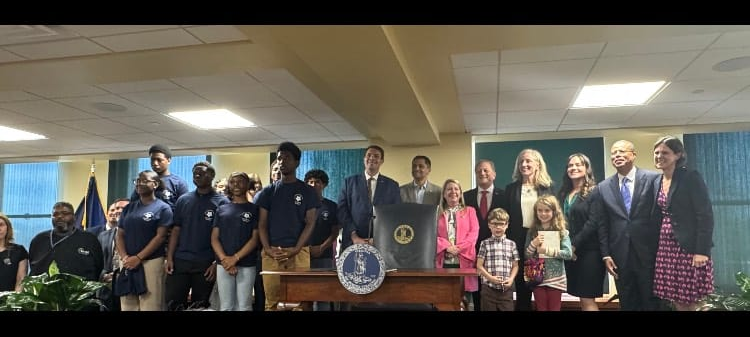
On her 100th day in office, Virginia's 75th governor, Abigail Spanberger, made a significant impact on the state's educational and workforce landscape by signing 12 bipartisan bills at the Roanoke Higher Education Center. This event not only highlights Virginia's commitment to enhancing skills training and economic opportunities but also positions the Roanoke Valley as a focal point in these efforts.
The new legislation, set to take effect in July, aims to streamline teacher certification, expand access to technical and vocational education, and enhance apprenticeship opportunities across the Commonwealth. Spanberger emphasized the importance of these initiatives during her remarks to a gathering of lawmakers, educators, and community leaders. “Let us determine all the things we can do to strengthen our public schools and the pathways and opportunities that exist for Virginians,” she stated, highlighting a shared goal of preparing the workforce and retaining talented individuals.
Among the key figures present were Secretary of Education Dr. Jeffrey O. Smith, State Superintendent of Public Instruction Jenna Conway, and Deputy Secretary of Education Connor Andrews. The governor pointed out, “Preparing our workforce and doing everything we can to train and retain talented people” is crucial for Virginia’s future.
Highlights of the Education and Workforce Development Bills
- HB332, SB203: Simplifying the process for career and technical education teachers to enter classrooms.
- HB275, SB10: Increasing the number of high school students who can begin apprenticeships in fields like culinary arts or information technology.
- HB423, SB242: Supporting Virginia's healthcare workforce by integrating the Appalachian College of Pharmacy into the Board of the Roanoke Higher Education Authority.
- HB1153, SB820: Expanding the Community Builders Pilot Program to help reduce youth violence in Roanoke City Public Schools.
- HB643: Fortifying the new School Performance and Support Framework accountability system.
- HB1283, SB742: Establishing clear graduation requirements for students and parents.
After the ceremonial signing, Spanberger praised the bipartisan patrons of the legislation, which included Del. Sam Rasoul (D), Sen. David Suetterlein (R), Del. Ellen McLaughlin (D), and Sen. Chris Head (R). “Virginia should provide all kinds of different pathways to a good career, beyond just a four-year degree,” she said, underscoring a collective responsibility to open doors for students.
The governor also addressed students present at the event, encouraging them to recognize the long-term implications of the new laws. “Everybody wants to ensure you all have lots of opportunities into the future,” she said, thanking educators and community members for their dedication.
Local reactions to the new legislation were overwhelmingly positive. Maggie Hutton, a Roanoke County auto mechanic, voiced her support, stating, “I love the idea of the Governor signing a bill to expand technical education in Roanoke. It betters the knowledge of our future technicians, creating a safer and more educated workforce.” Hutton reminisced about her own educational journey, expressing the hope that current students would have more options than she did. Her comments echoed sentiments from both Democratic and Republican lawmakers, who highlighted the need for expanded opportunities in the Roanoke Valley.
However, the event was not without its controversies. Outside the Higher Education Center, a small group of protesters held signs opposing the proliferation of data centers in the area, reflecting a growing concern about the environmental impact and infrastructure demands of such developments. This juxtaposition of educational progress and environmental apprehensions highlighted a broader dialogue in the Roanoke Valley: while there is strong support for education-driven economic growth, there is also mounting anxiety regarding the infrastructural and ecological ramifications of the industries that often drive this growth.
Spanberger acknowledged the concerns during her remarks, reiterating her willingness to engage in discussions about Virginia’s data center sales and use tax exemptions. She signed Senate Bill 253 and House Bill 1393, which aim to redistribute certain costs onto high-load customers like data centers. The community's unease was palpable, with residents from surrounding areas expressing their opposition during a recent hearing.
When asked how these initiatives will be funded, Spanberger emphasized that “funding matters” but pointed to innovative efforts underway across Virginia. She highlighted recent announcements of several million dollars in grants aimed at boosting advanced manufacturing in the Roanoke Valley, along with nearly five billion dollars in new business investments and the creation of over 3,000 jobs during her first 100 days in office.
Spanberger concluded her remarks by stressing the importance of creating a stable environment in Virginia amid rising gas prices and international trade uncertainties. “When we talk about workforce development and access to quality education, these are priorities for all Virginians,” she said, reinforcing the idea that investment in education is crucial for the state’s economic future.
As Virginia continues to navigate the complexities of education, workforce development, and environmental concerns, the Roanoke Valley stands poised to be a significant player in shaping the educational landscape and, ultimately, the future of its residents.
You Won't Believe What Happens in 'The Devil Wears Prada 2'—Kacey Musgraves and 'Euphoria' Stars Join the Drama!
My Son's Shocking Denial: Can He Really Drink 15 Beers a Day and Still Think He's Fine?

Scientists Discover Shocking New Immune Pathway That Could DOUBLE the Effectiveness of mRNA Cancer Vaccines!

You Won’t Believe What This 10-Minute Daily Workout Did for My Life—And I’m Not Even a Runner!

Is Flutter Entertainment's (NYSE:FLUT) Price Plunge Hiding a Secret Goldmine? Discover Now!

Samsung's Shocking Galaxy S Redesign Could Be Stopped by RAM Shortage—Find Out Why!
You might also like: