
Is College Football's Future at Risk? Discover Why One Seller Might Hold All the Power!

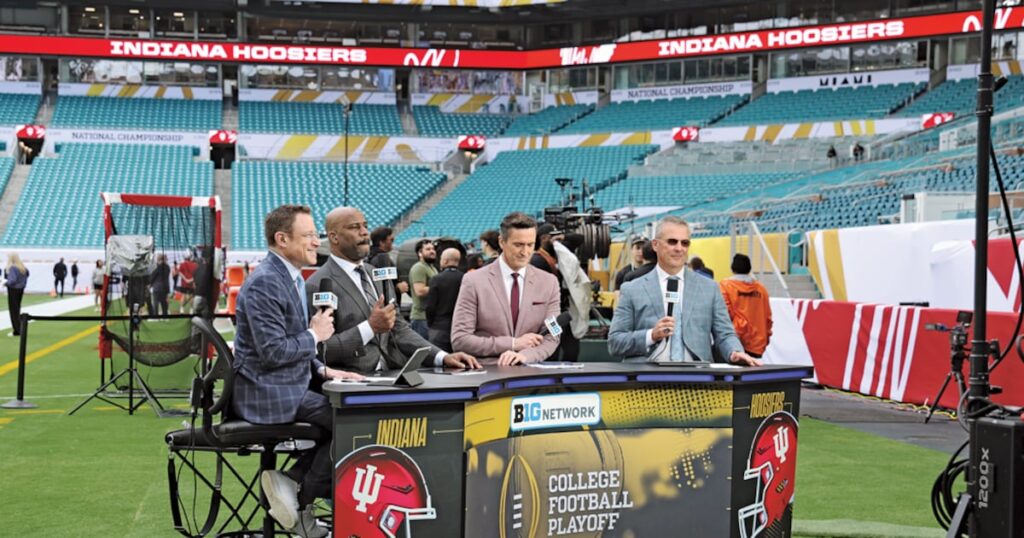
College football holds a prominent place in American sports culture, ranking as the second highest-rated TV programming in the U.S., trailing only the NFL. A dozen college football programs regularly attract audiences comparable to NFL games, with viewership figures ranging from 4 million to over 10 million. Despite this, the sport's media rights are notably undervalued, generating approximately $3.9 billion, which industry experts argue is far below potential.
In comparison, the NBA has successfully negotiated lucrative media deals by leveraging competitive bidding and its strategic spring season schedule, achieving an impressive $3.04 rights per viewer hour (RPVH). In contrast, the NFL's audience growth has caused its RPVH to decline to $1.30, prompting the league to revisit its media agreements and consider an expansion to 18 games. Predictions suggest this could boost the NFL's RPVH to an estimated $1.95, significantly higher than college football's current $1.07.
The disparity in valuation raises the question: why is college football, despite its immense popularity, undervalued? A significant factor is the fragmented nature of its national media rights negotiations. Unlike the NFL and NBA, which coordinate their media rights centrally, college football operates under a decentralized model. This creates financial pressures that necessitate a reevaluation of how media rights are negotiated, with discussions around revising the Sports Broadcasting Act gaining traction.
Experts propose that having a professional single seller negotiate college football's media rights could yield substantial benefits. Such a model would allow for optimized scheduling, improved media planning, and enhanced bargaining power. A historical analogy can be drawn from NASCAR's decision in 1999 to centralize its media rights, resulting in a fourfold increase in revenue. The potential for a similar approach in college football is compelling, yet it requires buy-in from the sport's leadership to effectively harness the increased revenue opportunities.
Looking ahead, projections indicate that college football's media rights could more than double by the 2034-35 season, reaching $8.4 billion. This forecast assumes current market conditions remain intact and that conferences do not prematurely renew their deals. However, if college football leaders adopt a single seller model and innovative strategies, those rights could soar to approximately $14.8 billion, representing a 76% increase over the current fragmented structure.
- Offering a more limited set of national media packages, thereby creating a competitive bidding environment among networks.
- Expanding the pool of bidders to include major digital streaming platforms like Netflix, Amazon, and YouTube, which have been largely excluded from the current college football media landscape.
- Enhancing matchups by scheduling more high-stakes games between ranked teams, given that only 11% of Power Four games in 2025 will feature ranked opponents, despite those matchups accounting for 32% of season viewership.
- Utilizing advanced scheduling software to avoid head-to-head matchups that dilute viewership, ensuring marquee games are accessible to the largest audience possible.
- Implementing an enhanced opening weekend and a later conference championship week to maximize fan engagement.
The anticipated growth in college football media rights is not merely a matter of numbers; it reflects broader trends in American media consumption. With streaming services now preferred by 47% of viewers over traditional linear broadcasts, there is a pressing need for college football to adapt to changing viewing habits. The integration of digital platforms could stimulate new revenue streams, especially as sports remains a key driver of television advertising value.
However, caution is warranted. The media landscape is rapidly evolving, with potential disruptions from artificial intelligence and ongoing declines in the pay-TV industry. While tech companies are eyeing the sports market, sports broadcasting is not their core business, raising uncertainties about future investments.
In conclusion, the leadership within college football has a critical opportunity to embrace a single seller approach and capitalize on the sport's inherent popularity. Given its potential to drive significant revenue growth, it would be perplexing not to explore new strategies to enhance its media rights value. As the landscape shifts, the time for innovation in college football is now.
Is Denver Pavilions About to Transform into a Thriving Social Hub? The Shocking Details Inside!

Is the AUSL’s “Golden Ticket” a Scam? Discover the Shocking Truth Before It’s Too Late!

Governor Hochul's Bold Move: What Shocking Limits on ICE Could Mean for New Yorkers!
You Won't Believe What Happens When a Request Goes Terribly Wrong—Find Out Now!
This Shocking Request Was Denied—Discover the Dark Truth Behind Why You Might Be Affected!

Is Your Outdoor Fun Killing You? Shocking Truth About Asthma & Climate Change Revealed!
You might also like: