
Is Denver Pavilions About to Transform into a Thriving Social Hub? The Shocking Details Inside!

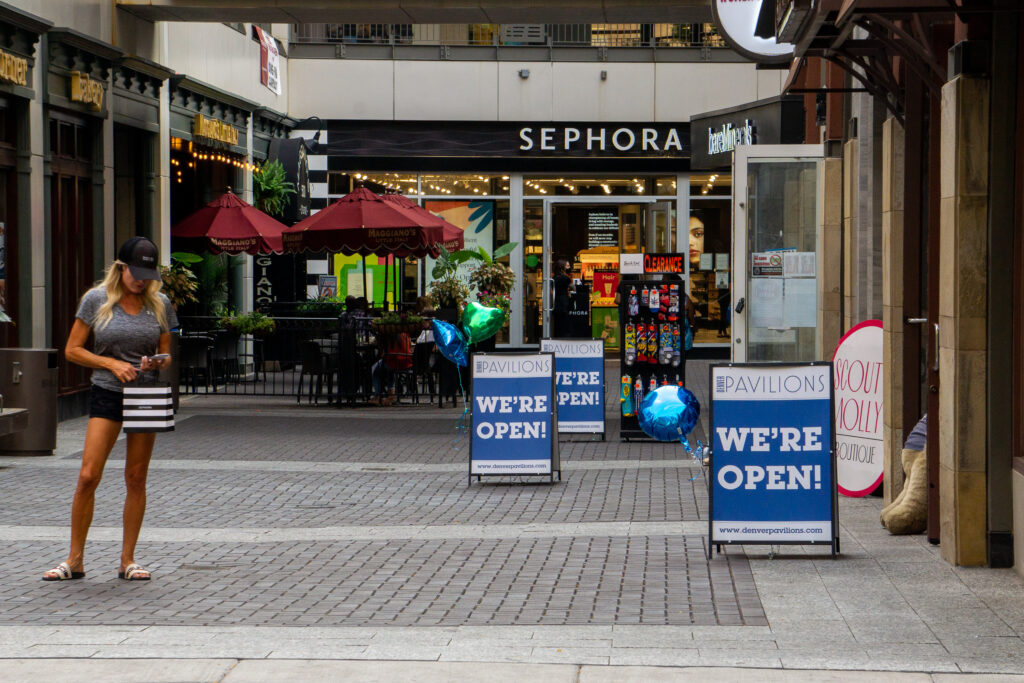
Denver is facing a pivotal moment in its urban landscape as the Denver Pavilions, a once-thriving shopping center, comes under scrutiny for a potential transformative renovation. A 10-member advisory panel from the Urban Land Institute (ULI), consisting of real estate professionals, architects, and urban planners from cities such as Los Angeles, Cincinnati, and Fort Lauderdale, delivered a striking assessment to city leaders on Friday, stating that the Pavilions is now obsolete.
The panel's recommendations emerged after a detailed five-day study, initiated on April 12, which aimed to identify and address the challenges surrounding the Pavilions, located across two blocks of 16th Street. Among their suggestions was the radical idea of razing parts of the structure and converting the area into a “central social district.” This new hub would be anchored by a park, enriched with public art installations and residential buildings. Such multi-use districts are designed to foster vibrant downtown neighborhoods that remain lively after hours, resembling successful examples such as New York's Hudson Yards and Philadelphia's Center City District.
Critically, the panel urged the city to retain the Regal UA theater, which sits adjacent to the Pavilions, while envisioning a “kaleidoscope” of uses to breathe new life into the property. This recommendation aligns with past initiatives; similar ULI panels had previously convened in 2008 for the 16th Street upgrade and again in 2022 for the renovation of Speer Boulevard.
“The Pavilions has had its time in the sun,” stated Kristen Morris, the president of Morris & Fellows, an Atlanta-based development firm and one of the volunteer panelists. “Now, it’s time to close that chapter and start a new one.”
Once a cornerstone of Upper Downtown's “retailtainment” economy, the Denver Pavilions is a three-level, open-air shopping center featuring a movie theater, a bowling alley, and 1,000 parking spaces. However, the rise of e-commerce and the significant impact of the COVID-19 pandemic have severely diminished its business base. By 2025, the vacancy rate in Upper Downtown soared to 40%, prompting the Downtown Denver Development Authority (DDDA) to invest $45 million in acquiring and renovating the Pavilions, a property once valued over $100 million. The DDDA purchased the site for $37 million, allocating an additional $8 million for renovations.
The DDDA's immediate goals for the renovation focus on enhancing visitor access, including adding more surface parking for surrounding businesses. Long-term plans aim to integrate new retail storefronts, public spaces, and various entertainment and cultural offerings, such as an art installation on the prominent five-story façade facing 15th Street.
Repositioning for a New Era
However, the journey to revitalize the Pavilions may be lengthy, and the city's strategies could diverge from ULI's recommendations. As an independent body, the ULI's suggestions are not binding. The panel put forth various ideas, including the construction of a convention hotel on the current parking lot and the establishment of new public amenities to accommodate increased housing units. They also proposed transforming the theater into a civic or cultural incubation space.
Despite the challenges, the Pavilions benefits from its strategic location, situated roughly a mile from Denver Union Station and a short distance from the Civic Center. James Lima, president of the New York-based James Lima Planning + Development firm, emphasized the area's potential for fostering connectivity between these critical urban landmarks. “This isn’t a rescue — it’s a repositioning,” Lima remarked.
The timing of this renewed focus on the Pavilions resonates with an old saying attributed to Mark Twain: “History doesn’t repeat, but it does rhyme.” The center originally opened in 1998, symbolizing Denver's recovery from the economic malaise of the 1980s. Today, Upper Downtown finds itself confronting a similar challenge as it emerges from the pandemic's lingering effects.
Bill Mosher, Denver’s chief project officer and a key figure in the Pavilions' original development, reflected, “It’s odd that the same key piece of property is sort of at the center of the strategy in a way. I was around in the 1990s when we did this, so to be in the same position three decades later is kind of crazy.”
Despite current challenges, signs of recovery are evident. The 16th Street area reported a 14% increase in total visits between 2024 and 2025, reaching 2.5 million, as stated in the Downtown Denver Partnership’s 2025 State of Downtown report. While overall foot traffic in downtown remains about 9.8% below pre-pandemic levels, retail and restaurant businesses are leading the recovery, accounting for approximately 81% of all new businesses established downtown in 2025.
Denver collected around $82 million in sales taxes from retail and restaurant sales in 2025, representing a nearly 6% increase from 2024. The planned renovation of the Pavilions coincides with a burgeoning neighborhood vibe in Upper Downtown. Recent developments approved by the DDDA include a $15 million loan to convert the historic University Building into a mixed-use property with 120 units of affordable housing, and a $63 million loan for the High Fidelity Plaza project, transforming it into a residential building with amenities like a bookstore and childcare center.
“We can’t do this overnight,” Mosher cautioned. “We need more employment; we need more housing; we need Upper Downtown to come along. So the Pavilions is going to be a reflection of that and can be a leader in that, but we may have to reimagine it.”
Is the AUSL’s “Golden Ticket” a Scam? Discover the Shocking Truth Before It’s Too Late!
Governor Hochul's Bold Move: What Shocking Limits on ICE Could Mean for New Yorkers!
You Won't Believe What Happens When a Request Goes Terribly Wrong—Find Out Now!
This Shocking Request Was Denied—Discover the Dark Truth Behind Why You Might Be Affected!

Is Your Outdoor Fun Killing You? Shocking Truth About Asthma & Climate Change Revealed!
You Won't Believe What Happens When This Request Is Denied—The Shocking Truth Inside!
You might also like: