
ICE Banned from Polling Places in 2026? Shocking Trump Official's Claims You Can’t Miss!

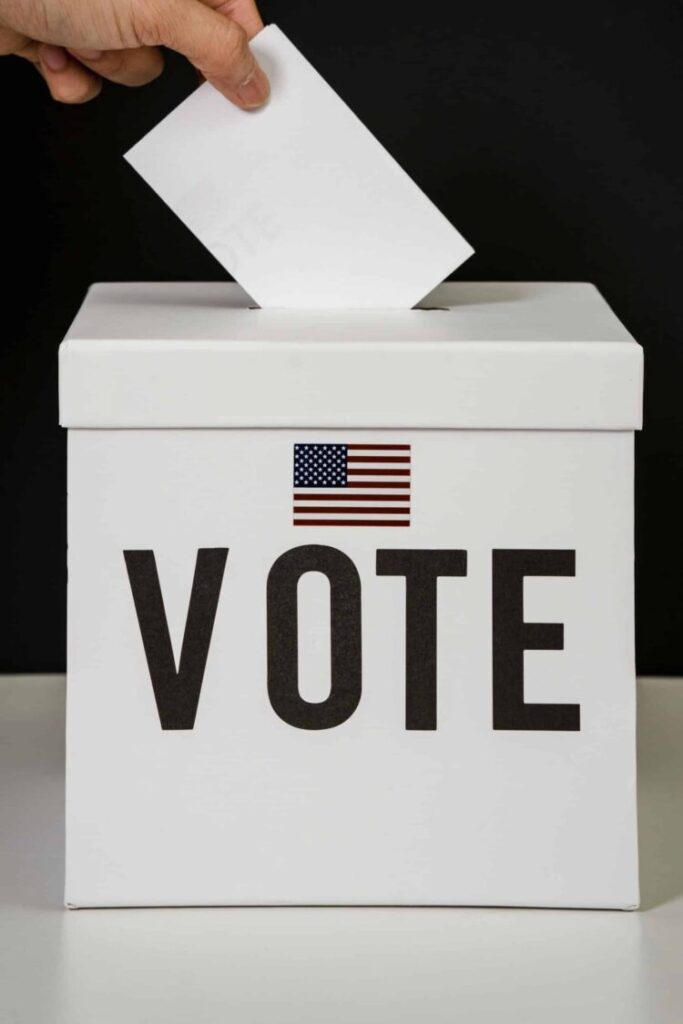
As the 2026 midterm elections approach, concerns about federal interference at polling places have stirred significant anxiety among election officials and voting advocates. However, a recent virtual meeting dispelled some of these fears, with the Department of Homeland Security (DHS) confirming that agents from U.S. Immigration and Customs Enforcement (ICE) will not be present at polling locations. This declaration came from Heather Honey, the deputy assistant secretary of homeland security for election integrity, who stated, “Any suggestion that ICE is going to be present at polling places is simply disinformation.”
This assurance marks a pivotal moment for those apprehensive about the potential for federal agents to disrupt the electoral process. Election officials have long been concerned, particularly in the wake of former President Donald Trump's remarks about regretting the absence of the National Guard during the contentious 2020 election. As ICE has ramped up its immigration enforcement activities in various cities, the worry that federal agents could intimidate voters has only intensified.
In the past months, speculation about armed federal agents influencing the 2026 elections had reached a fever pitch. In November, a White House spokesperson dismissed these concerns as "baseless conspiracy theories and Democrat talking points," yet didn't rule out the possibility. Just earlier this month, White House press secretary Karoline Leavitt echoed that sentiment by stating she had not heard any formal plans regarding ICE at polling sites but could not provide guarantees against such actions.
Federal law explicitly prohibits the stationing of “troops or armed men at any place where a general or special election is held, unless such force be necessary to repel armed enemies of the United States.” Despite this clear legal framework, some Republican figures have questioned the rationale behind such prohibitions. U.S. Representative Jason Smith of Missouri recently asked why ICE should be barred from polling places, while former Trump adviser Steve Bannon called for ICE to "surround the polls come November." In Arizona, a state senator's proposed bill to station federal immigration agents at voting locations failed to gain traction.
While Honey's comments may alleviate some concerns, they have not entirely quelled skepticism. Adrian Fontes, Arizona's Secretary of State, expressed his doubts, stating he was not inclined to take Honey at her word due to her previous involvement in the movement questioning the integrity of the 2020 election results. “It’s too bad that they used an election denier without any integrity to send that message,” Fontes remarked, illustrating the deep mistrust that remains among some state officials.
During the meeting, Honey also reported that the Systematic Alien Verification for Entitlements (SAVE) database had helped states identify over 300,000 deceased individuals and 25,000 noncitizens on voter rolls. However, this database, recently overhauled by the DHS to serve as a voter-verification tool, has faced criticism due to frequent false positives. Election officials in Texas reported instances where individuals flagged as noncitizens had already proven their citizenship.
In addition to addressing these pressing concerns, Honey encouraged the use of hand-marked paper ballots whenever feasible, a recommendation that aligns with efforts to ensure election integrity. This call comes against the backdrop of Trump's unsubstantiated claims regarding voting machines manipulating results in the previous election cycle. Currently, nearly 70% of registered voters reside in jurisdictions that use hand-marked paper ballots, and virtually all jurisdictions implement paper ballots in some capacity.
Despite the heightened tension leading up to the meeting, it resembled past gatherings of state election officials and federal agencies during both the Trump and Biden administrations. Kentucky Secretary of State Michael Adams noted that the meeting was a routine interaction where federal representatives reiterated their support for state officials in managing the election process.
As we move closer to the midterm elections, the implications of these developments stretch far beyond the confines of government meetings. The potential for federal interference has sparked debates about the integrity of the electoral process, the role of local versus federal oversight, and the fundamental rights of citizens to cast their votes freely and without fear. The 2026 elections are poised to be a critical testing ground for these themes, challenging both voters and officials to navigate an increasingly fraught political landscape.
You Won't Believe How Messi's Last-Minute Magic Rescued Inter Miami in a Jaw-Dropping Derby!

Iran’s Supreme Leader is Dead: Why the White House Thinks Change Won’t Happen! Shocking Reasons Inside!
You Won't Believe How Military Training Transformed This Ordinary Person’s Life Forever!

You Won't Believe How Azzi Fudd Led UConn to a Stunning 47th Victory—What Happened Next Will Shock You!

You Won't Believe What Nutritionists Discovered: Is Popcorn Really a Healthy Snack or a Hidden Danger?

You Won’t Believe This Chinese Ghost Town: Rent for Just $116—Is It Safe? Find Out Before It’s Too Late!
You might also like: