
Countries in Crisis: Will Colombia's Bold Move to Ditch Fossil Fuels Save Us All? Find Out!

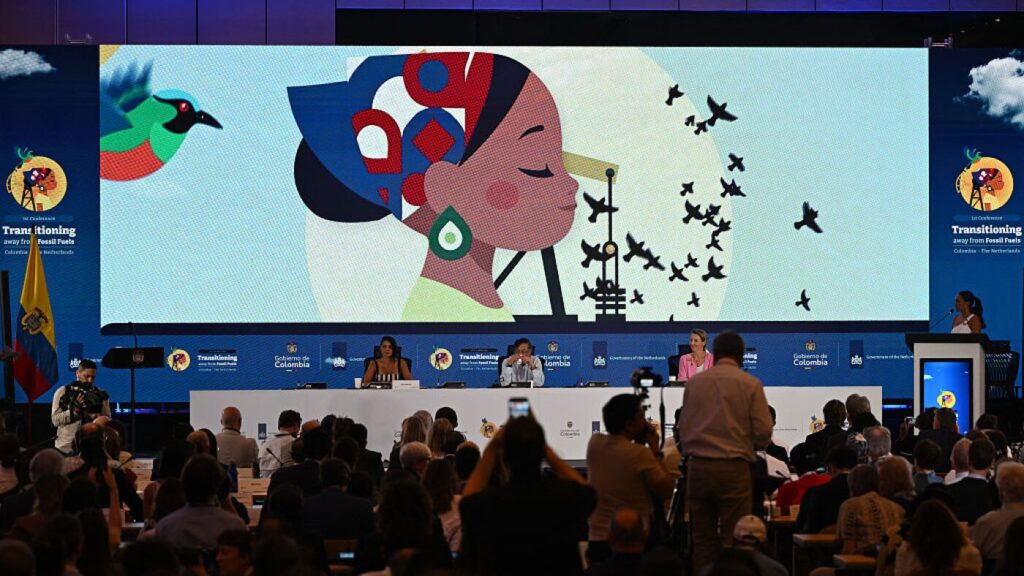
As the sun sets over the Caribbean coast, the lights of Colombia’s ports, known for exporting millions of tons of coal, flicker to life. Colombia has long been a significant player in the global coal market, alongside its oil and gas production. However, the nation is now actively seeking to diversify its economy and transition away from fossil fuels, which are the primary drivers of climate change. This shift is part of a larger global trend as many countries grapple with the urgent need to address environmental concerns.
This week, Colombia co-hosted the "Transitioning Away from Fossil Fuels conference" in Santa Marta, just north of its coal-exporting hub, alongside the Netherlands, the birthplace of oil giant Shell. Representatives from over 50 countries gathered for this two-day event to explore concrete strategies for phasing out oil, gas, and coal.
During the opening plenary, Colombia’s Environment Minister, Irene Vélez Torres, called for the conference to mark a pivotal moment. “Let this conference be the moment when ambition becomes action,” she urged, emphasizing the need for a coordinated global effort towards decarbonization.
The discussions took place against the backdrop of a warming planet and an escalating energy crisis exacerbated by recent geopolitical tensions, particularly the U.S.-Israeli conflict concerning Iran. High oil and gas prices, along with energy shortages, have been described as “the mother of all energy crises” by Fatih Birol, the executive director of the International Energy Agency.
Countries like Vanuatu, which face existential threats from rising sea levels due to climate change, are increasingly feeling the urgency to transition away from fossil fuel dependency. Ralph Regenvanu, the climate change minister of Vanuatu, noted that the current crisis has prompted his country to accelerate its solar project initiatives and electrify government vehicle fleets, saying, “The decision on EVs was directly stimulated by the crisis.”
As affordable Chinese electric vehicles grow in popularity, and large-scale solar and wind projects become more cost-competitive than traditional fossil fuel sources, the transition appears both economically viable and necessary. “Governments are not doing [the energy transition] necessarily for climate reasons. They’re doing it because it is cheaper and more effective to move your economy away from fossil fuels,” said Leo Roberts of the climate nonprofit E3G.
Notably absent from the conference was the U.S., the world’s largest oil and gas producer and consumer. The U.S. State Department, which has previously participated in international climate discussions, issued a statement asserting its decision not to engage in what it called a “bogus climate agenda.” Similarly, China, the world's most significant coal consumer, also opted out of the discussions.
Despite these absences, several major fossil fuel-producing countries, including Australia, Mexico, and Nigeria, were present at the conference. Daniela Durán, head of international affairs at Colombia’s Ministry of Environment, remarked that the conference is a platform for those ready to take actionable steps towards transitioning away from fossil fuels. “This is a space for those who are ready to move forward,” she asserted.
The conference's agenda included discussions on shifting subsidies from fossil fuels to renewable energy and identifying new job opportunities for those currently employed in the fossil fuel sector, particularly in regions like the coal mines surrounding Santa Marta.
The urgency for action is palpable. Climate experts and country representatives expressed frustration with the traditional United Nations climate conferences, known as COPs, which have struggled to reach consensus on binding commitments for phasing out fossil fuels. In November 2023, during a COP conference in Brazil, 80 countries sought a roadmap for transitioning away from fossil fuels but concluded without a concrete plan. The Santa Marta conference, therefore, was intentionally designed to fill this gap, providing an explicit focus on fossil fuel transition.
The outcome of the discussions may ultimately lead to a legally binding treaty that commits participating nations to concrete actions. However, some are hesitant, preferring non-binding agreements that have characterized climate negotiations for the past three decades. Andrés Gómez, Latin America coordinator for the Fossil Fuel Treaty Initiative, humorously noted that after thirty COPs, some nations still resist binding commitments.
In a sign of continued commitment to this goal, Tuvalu and Iceland announced plans to host the next conference in Tuvalu, an island nation facing dire threats from rising sea levels. As climate scientists warn that the world is on track to breach the critical 1.5-degree Celsius temperature limit, the urgency to transition away from fossil fuels has never been clearer. Johan Rockström, director of the Potsdam Institute for Climate Impact Research, stated, “You are the light in a tunnel of darkness,” expressing optimism amid the challenges ahead.
College Students Are Risking Their Futures: Shocking $1,000 Bets That Could Ruin Everything!

Shocking Bus Rollover Halts Marquette-QND Soccer Game—What Really Happened?

Shocking Move: HHS's Bold Appeal Could Overturn Kennedy's Controversial Vaccine Policies—Find Out What’s at Stake!

Nut Butter Bar Market Skyrockets 200%—What’s Fueling This Surprising Healthy Snack Craze?

You Won't Believe Why DeAndre Jordan's Teammate of the Year Title Is Causing Controversy!

Ballet Arkansas Shocks Audience with ‘Origins’ — Don’t Miss This Unforgettable Night in North Little Rock!
You might also like: