
You Won't Believe How This Modern Trend is Reviving Ancient Practices—Discover the Shocking Results!

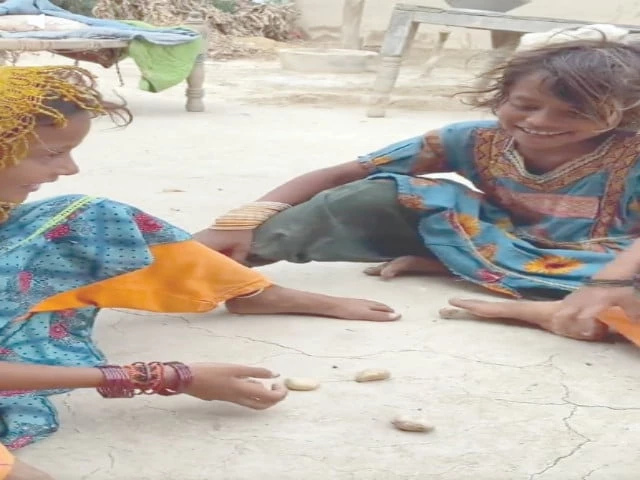
As the afternoon sun casts a warm glow over the villages of Bahawalpur, Pakistan, a centuries-old traditional game known as Chari is making a remarkable comeback. Beneath the shade of trees and inside quiet deras, laughter and conversation replace the hurried pace of modern life. This revival not only reconnects generations but also emphasizes that cultural heritage has a vital role in our contemporary society.
In Ahmedpur East, a town in the Bahawalpur region, the calm stretch after lunch serves as a gathering time for both elders and young men. No screens or strict schedules draw them together; instead, it is the allure of Chari—a game that had nearly faded from daily life. Once popular across Bahawalpur and its surrounding areas, Chari is now experiencing a renaissance, echoing a trend seen with other traditional games such as Malan Khara, Gitti Danda, Khido Khundi, Pitthu Garam, Kho Kho, and Langri that are fondly remembered by older generations.
Aslam, a 35-year-old resident of Sheikh Wain, notes the game's deep roots in the area, stating, "Our elders used to play it. Then it slowly disappeared. Now it has returned, and people actually wait for these afternoon gatherings." Khizar, from Dera Bhaka, Bahawalpur, adds that these gatherings often attract 20 to 35 participants, suggesting a strong community interest.
Chari is played by four individuals while others gather around as spectators. The lively atmosphere is filled with cheering, teasing, and clapping, transforming the game into a vibrant village event. Elders often sit nearby with hukkas, observing the match and contributing to the ambiance. Remarkably, Chari is inclusive; players range from children as young as nine to older adults, underscoring its ability to bridge generational gaps.
In Chari, players utilize four equal sticks called Kana, which can be made from wood or specially prepared bamboo. Each stick is crafted to identical specifications, and the game rules include various scoring methods: if all four sticks land on the opposite side, it's called Athi, earning eight points; if they land straight, it's known as Choka, worth four points. Other combinations yield different point values, ensuring that each game remains engaging and unpredictable.
Players employ pieces known as Got, which can be made from wood, stone, or colored plastic, all of the same shape, to navigate a board drawn with boxes similar to Ludo. Unlike other board games that rely on dice, Chari determines movement based on the fall of the Kana sticks, thus integrating a unique rhythm and element of chance rooted in local tradition.
The joyous tension peaks as players race to complete their Got pieces. The winner is celebrated, remaining in the circle to cheer for fellow competitors, reinforcing community spirit. This camaraderie is further emphasized by the atmosphere of friendly banter and laughter, which accompanies the game's conclusion. As Abdul Samad, a government officer based in Islamabad, recounts, "Whenever I visit my native village Faqirwali, I head straight to the dera after lunch. This game brings all my friends and elders to one place." He elaborates, “Here you find the fragrance of soil, the colors of culture, harmony, tolerance, and relationships. Through casual talk and shared stories, elders guide children and shape their character. This gathering is not just about playing—it is the scent of our culture."
Even rain doesn't halt the excitement; players simply migrate to a nearby paved area, demonstrating the game's resilience against elements and the unwavering commitment of its community. Chari serves as a reminder of the power of tradition, especially in an age dominated by technology. It is a precious pause in a fast-paced world, inviting everyone to engage with shared heritage and communal joy.
As Chari and other traditional games reclaim their place in village life, they do more than entertain. They restore connections among various generations, reminding communities that the bonds of culture and shared experiences can still be vibrant, one afternoon at a time.
Why CV and CHS Girls Soccer Teams Are Set to Break Records in 2025-26—You Won't Believe What Happens Next!

Achieve These 7 Milestones by 60? You’re in the Elite 8%—Here’s What You’re Missing!

Samsung's Mind-Blowing Galaxy Z TriFold Just Dropped in South Korea—Is This the Future of Smartphones?

Is 2025 the Year We Face Catastrophic Heat? Shocking New Study Reveals Alarming Truth!

Is Your Smartphone AI Lying to You? Shocking Truth About Siri and Gemini Revealed!

Hawks' Bold Move: Are They About to Unleash a Future Superstar in This Shocking Draft Pick?
You might also like: