
Is Your DSLR About to Become Obsolete? Shocking Smartphone Camera Breakthroughs Revealed!

In 2025, smartphone camera technology underwent a significant transformation, moving away from the predictable cycle of larger sensors and increased megapixels. Innovations in smartphone photography now extend beyond the confines of the device itself, as manufacturers are reimagining the smartphone as the core of a broader imaging system. This shift marks a pivotal moment in mobile photography, addressing the limitations of traditional smartphone cameras.
Historically, compact cameras have seen a steep decline, with shipments plummeting by over 90 percent since 2010. In stark contrast, smartphones have become the primary photography tool for over 90 percent of users. As Sandeep Sarma, Associate Director at Xiaomi India, points out, the inherent design of smartphones presents physical constraints that limit optical advancements. As a result, the industry has realized that computational photography, while powerful, cannot fully overcome these limitations.
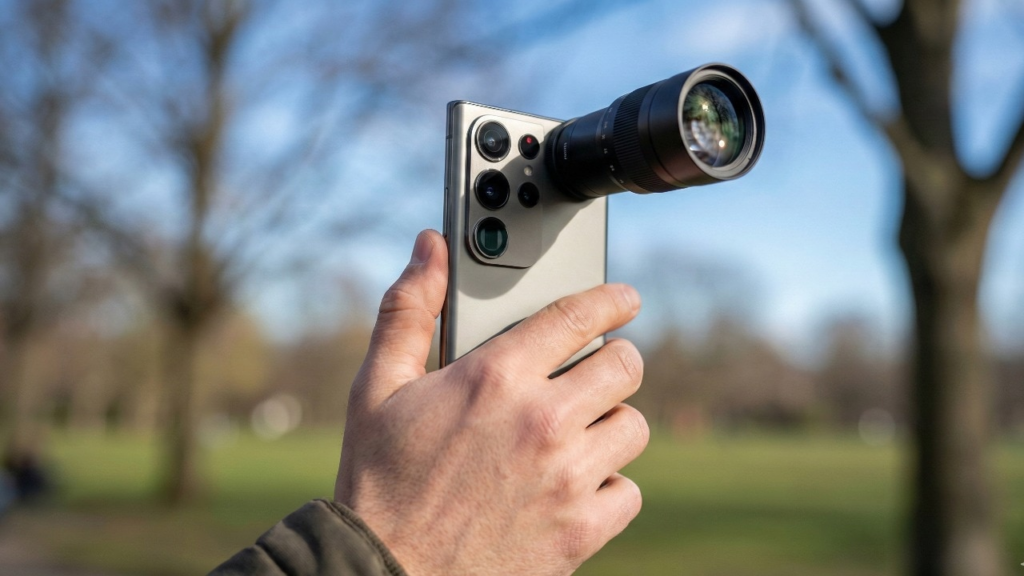
Phones like the Vivo X300 Pro and Oppo X9 Pro exemplify the trend towards modular solutions. Rather than cramming increasingly complex optics into ever-thinner devices, manufacturers are now exploring attachable lens kits, modular optical systems, and even gimbal cameras. This evolution allows smartphones to extend their functionality beyond mere digital cameras, offering users the flexibility needed for more serious photography.
Redefining Mobile Imaging
The approach taken by companies like Xiaomi reflects a shift towards a hybrid system where the smartphone serves as the control center while essential components are external. The recently unveiled Xiaomi Modular Optical System captures this philosophy, emphasizing an evolutionary rather than a disruptive change in technology. Sandeep explains, “The goal isn’t to replace enthusiast cameras outright. It’s to elevate smartphone imaging.” This perspective allows both traditional cameras and smartphones to coexist, catering to various user needs.
Other notable innovations include Oppo’s teleconverter lens, which enhances reach without adding bulk, and Honor’s upcoming gimbal camera, designed to improve stabilization. The key to these innovations is not merely adding more megapixels; it's about transforming smartphones into versatile camera systems that prioritize utility over gimmicks.
While hardware advancements are important, software remains vital in maximizing camera potential. Peter Lee, head of product strategy at Oppo, underscores that the future of mobile imaging lies in a balance between optical and computational innovations. He states, “Optical innovations set the foundation, but computational imaging is what unlocks the full potential of that hardware in real time.”
Modern accessories, such as Oppo’s teleconverter, are also evolving. They are designed to prevent common issues like light loss and edge distortion, offering users a more seamless experience. Although current setups may not yet meet every need, they represent a significant step forward in mobile imaging technology.
Historically, camera accessories faced a stigma as being fragile or gimmicky. This perception is changing as integration improves, leading to more durable solutions. As Sandeep notes, professional cameras with exposed elements can perform reliably under demanding conditions, suggesting that a robust modular system could enhance smartphone photography even further.
For professional photographers, the rise of smartphone creativity tools is not seen as a threat but as a new dynamic in the photography landscape. Amit Saxena, a professional photographer, views smartphones as “powerful convenience tools” but acknowledges that dedicated DSLRs still excel in low light, depth of field, and dynamic range. He envisions a future where smartphones handle speed and accessibility, while dedicated cameras retain their role for precision and control.
The demand for smartphone camera innovations reveals a paradigm shift in user expectations. Nearly 70 percent of Gen Z creators globally rely on smartphones as their primary camera, with rising interest in lens kits, stabilizers, and external filters. This trend highlights a desire for simplicity by default, with the option to delve deeper into professional-level photography when necessary.
The evolution of camera technology in 2025 signifies a shift in consumer mindset, moving from an emphasis on breakthrough features to an appreciation for versatility and practicality. As manufacturers explore ways to extend camera capabilities beyond the phone body, they must also ensure that accessory costs remain reasonable, thus preventing a repeat of past failures seen with modular accessories.
Ultimately, smartphone makers must recognize the diverse needs of users and provide options that enhance rather than complicate the photography experience. As for DSLRs, they are not disappearing but rather finding new relevance in a world increasingly focused on mobile imaging solutions.
Why 2025 Could Change Healthcare Forever: Shocking New Hospital Battles Unfold in Chesterfield!

You Won't Believe the 2011 Snack Cake Scandal That Left 3,000 Sick and 1,000 Recalled!

2025: The Year Climate Change Went Wild – Are You Prepared for the Shocking Consequences?

KakaoTalk and YouTube: The Shocking Truth Behind Korea's App Obsession Revealed!

Why Are U.S. Senators and Kansas Governor Throwing $220M at Rural Hospitals? The Shocking Truth Inside!
This Shocking Legal Case Has Everyone Talking—What’s Hidden in the Details? You Won’t Believe It!
You might also like: