You Won't Believe What Could Happen If We Hit Just 2 Degrees of Global Warming—The Shocking Consequences Revealed!

Even if global warming remains under two degrees Celsius, a new study reveals that it could still bring about more severe consequences than previously anticipated. This research, published in the journal Nature, is led by Jana Sillmann, a research group leader at the CICERO Center for International Climate Research, along with colleagues from Germany and Switzerland.
The study focuses on three critical climate-related risks: flooding, droughts in vital agricultural regions, and wildfires. Sillmann notes that while large climate reports, like those from the Intergovernmental Panel on Climate Change (IPCC), often summarize results from various climate models to project warming impacts, there is significant variability within these models. "Typically, an average is taken from many different climate models," Sillmann explains. However, this study indicates that individual simulations might predict stronger changes at two degrees of warming than the average projections might suggest for a world that is three or four degrees warmer.
The findings challenge the notion that climate impacts at two degrees of warming are less severe than those at higher temperatures. "The main point of the study is that we cannot just look at the average," Sillmann warns. "Even at two degrees of warming, the climate may produce extreme rainfall or drought that could have a very large impact." Each climate model offers a plausible future scenario, which means that more severe outcomes cannot be dismissed, even if they are less likely.
Using simulations from the CMIP6 collaboration—models employed in UN climate reports—the researchers examined potential dire effects of a two-degree rise: increased drought frequency in agricultural zones, intense rainfall in urban areas, and heightened fire risks in forested regions. Sillmann emphasizes the importance of food security, which affects people worldwide. "Society is globalized, and we get our food from different parts of the world," she states, underscoring the need for projections that indicate how various regions will be impacted by heatwaves that threaten crops.
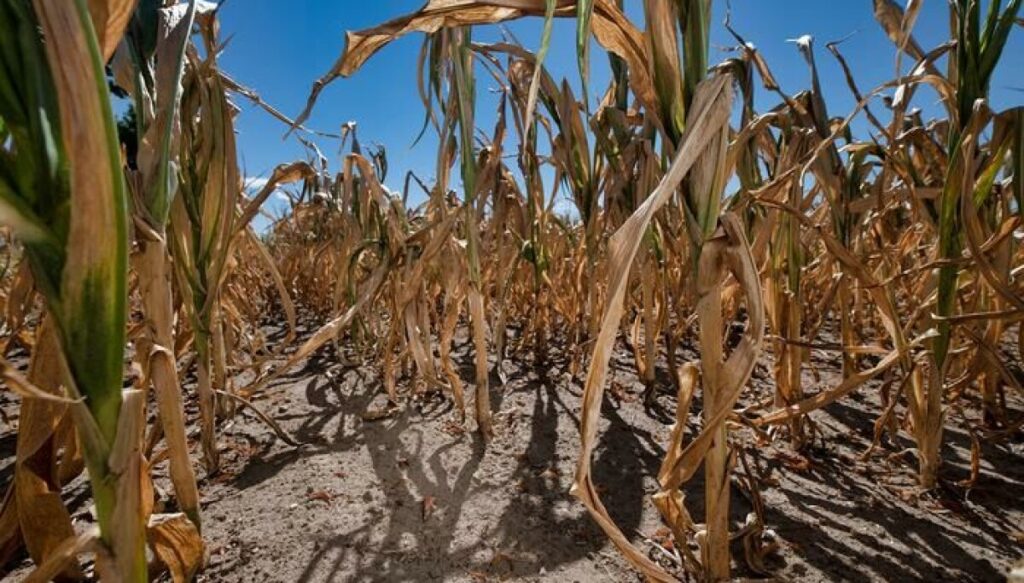
In terms of drought, the study reveals that models suggest a frequency increase of up to 10 percent at two degrees of warming compared to pre-industrial levels. In contrast, at three or four degrees, drought frequency is estimated to rise by about 15 percent. However, individual models vary widely; some predict a staggering increase of 20, 30, or even 50 percent at just two degrees of warming. "This is much higher than the average for four degrees," Sillmann cautions. Conversely, some models indicate minimal increases, suggesting only slight changes.
On the flooding front, the research looked at maximum rainfall over a five-day period in urban areas and found that the average across models suggests an increase of about 8 percent at two degrees of warming. However, some models anticipate increases up to 14 percent, a figure closer to what would be expected at three degrees of warming. "If we are to assess the risk, we need all the information, including both the worst and best scenarios," Sillmann asserts.
When it comes to fire-prone weather, the study reveals major discrepancies as well. In the most extreme scenarios, the likelihood of fire-prone conditions could increase fourfold compared to the most optimistic estimates, even exceeding averages expected for a world three degrees warmer. The largest changes are forecasted for rainforest regions, North America, and northern Europe and Asia.
"To properly assess risk, we need to take all model outcomes into account. We cannot rely only on averages, since severe consequences may still occur at lower levels of global warming than anticipated," Sillmann explains. Accurate and comprehensive data is vital for decision-makers, aiding them in making informed risk assessments.
Cecilie Mauritzen, a climate researcher at the Norwegian Meteorological Institute, who was not involved in the study, finds it both strong and relevant. She notes that traditional climate projections often average results from various model centers worldwide. "Because each projection carries uncertainty, and no single model has been considered more reliable than others, researchers have traditionally followed a ‘democratic principle’ by averaging all results," she elaborates.
However, as our understanding of model discrepancies grows, it becomes possible to determine which models are more suited for specific applications. Mauritzen commends this study's approach of excluding models that behave unrealistically for the questions they are addressing, thereby moving away from a purely average-focused methodology toward a framework that leverages scientific insight to evaluate and rank models accurately.
This study signals a significant shift in how climate projections can be understood and utilized, highlighting that even a modest increase in global temperatures could lead to severe and unexpected outcomes. As societies grapple with the realities of climate change, this research serves as a critical reminder that the average does not tell the whole story, and we must prepare for a broader range of possible futures.
Korea’s Climate Crisis: Why 70% of Citizens Are Ignoring the Urgent Call to Action!

You Won't Believe How Long These TWO "One-Time" Factors Can Impact Your Life! Find Out Now!
Access Denied: Why 90% of People Are Being Locked Out of Their Own Accounts!

Marvel's Epic Twist: 5 Iconic Heroes Swap Superpowers for Soccer! Will They Succeed?

Discover the $1.5M Hanover Dream House: Why Experts Say You MUST See Inside Before It's Gone!

Wall Street's Shocking New Stock Predictions Amid Iran Conflict: Are You Prepared for the Fallout?
You might also like: