
You Won't Believe What Bishop Dolan Revealed About Mental Health: Are Faith and Science the Key?

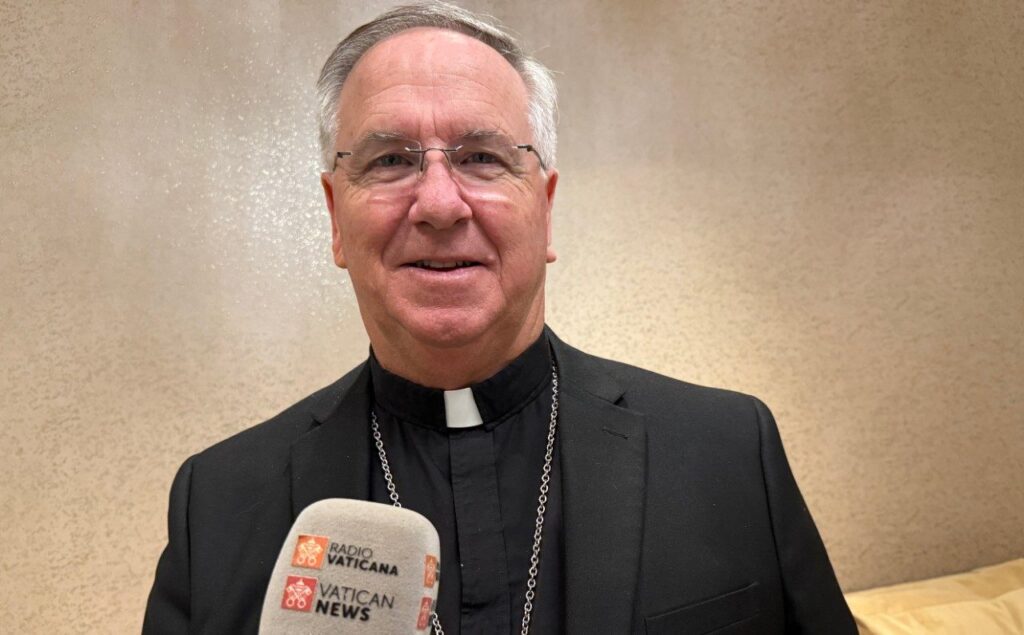
The mental health crisis in America has reached alarming levels, prompting many institutions, including religious organizations, to reevaluate their approaches to support those in distress. Bishop John Dolan of the Diocese of Phoenix is at the forefront of this conversation, advocating for a more comprehensive understanding of mental health that moves beyond simplistic solutions.
In recent statements, Bishop Dolan has expressed deep concern for families grappling with mental illness and the devastating impact of suicides. “Families are having to endure when they lose a loved one by suicide, or they’re losing a person before their very eyes as they see them struggling with their mental health-related issues,” he noted. This acknowledgment resonates widely, particularly as suicide rates have steadily increased across the United States, with the Centers for Disease Control and Prevention reporting over 45,000 deaths by suicide in 2020 alone.
Highlighting the pervasive helplessness often felt by families, Bishop Dolan pointed out that conditions like schizophrenia and bipolar disorder can leave loved ones unsure of how to help. This vulnerability frequently leads to the temptation for quick fixes. “Sometimes the answer is to try to find a quick fix,” he explained, cautioning against offering “golden advice” in moments of crisis.
📰 Table of Contents
Integrating Faith and Science
Bishop Dolan emphasizes that neither a purely religious nor a strictly medical approach suffices in mental health ministry. “Telling someone simply to get back to Church won’t necessarily do it. And getting someone to a psychiatrist is a good place to start, but that isn’t enough either,” he elaborated. Instead, he advocates for an integrated approach, where faith complements scientific understanding. “We don’t want to compete. We want to go down the same road together, faith and science,” he stated, underscoring that disciplines such as psychiatry and psychology should be seen as gifts rather than threats to faith.
The Bishop's philosophy extends deeply into the realm of mental health ministry, which he believes should encompass the whole person. “In mental health ministry, you want to do all of it. All of the above,” he said, urging that churches invite individuals into their communities while simultaneously directing them toward professional help. “Invite them to the place of Church, and at the same time encourage them to go to counselors or psychiatrists or psychologists.”
Furthermore, Bishop Dolan’s episcopal motto, “Abide in my love,” reflects the necessity of reaching out to the peripheries—those often marginalized or overlooked. “Mental health ministry is reaching out to the peripheries… to the wider body of Christ and into the world,” he remarked. The focus of this ministry is not merely to “fix” individuals but to accompany them with compassion. “We do not diagnose, prescribe, or treat, but we do accompany,” he clarified, framing this work as an act of love stemming from the Sacred Heart of Jesus.
Priorities in Action
Bishop Dolan has outlined three key priorities for mental health ministry within the Diocese of Phoenix:
- Education: Training clergy in mental health first aid plays a crucial role in enabling pastors and deacons to recognize signs of crisis and respond effectively. This education can help diminish stigma and improve community responses to mental health issues.
- Advocacy: The church aims to establish a presence in vulnerable settings, including prisons, where mental health challenges are prevalent. “There’s kind of a peer-to-peer accompaniment in prison,” the Bishop explained, reiterating the importance of establishing relationships even in isolation.
- Systemic Action: Efforts are underway to increase resources for mental health care in Maricopa County, where the number of beds available for patients experiencing a mental health crisis has doubled from 350 to 600. “We need more, but it was an expensive venture—and a needed one,” he stated.
In terms of priestly formation, Bishop Dolan advocates for integrating mental health discussions within seminaries, promoting the understanding that mental health is an essential aspect of pastoral care. “We use mental health ministry in our seminary so that they see mental health is not something we shy away from, but something we embrace,” he emphasized.
Ultimately, Bishop Dolan’s vision for mental health ministry aims to foster deeper self-knowledge and growth, rooted in the understanding that we are all beloved children of God. As the nation grapples with the complexities of mental health, his insights remind us that genuine support requires a multifaceted approach—one that blends faith and compassion with professional understanding.
Sam Altman’s Shocking $555,000 Offer: Can YOU Handle This Life-Altering Job Challenge?
Shocking AI Breakthroughs and Foldable Phones: Is Your Wallet Ready for the Price Hike?

Moto G-Series Phones Catch Fire! Shocking User Claims & Viral Footage You Must See NOW!

Is San Francisco Real Estate Making a Shocking Comeback? Discover What Investors Know NOW!

Trump's Latest Move: Why Two Major Kennedy Center Events Were Canceled—Shocking Details Inside!

Snack Bar Market Set to Explode to $41B by 2031—Are You Missing Out on This Healthy Goldmine?
You might also like: