
You Won't Believe How New Isotope Tools Could Transform the Global Nitrogen Cycle—Discover the Shocking Truth!

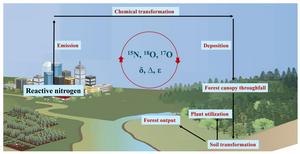
Human activities have significantly altered the Earth’s nitrogen cycle since the Industrial Revolution, leading to pollution, biodiversity loss, and climate change feedbacks. A recent scientific review outlines how advancements in isotope science are revolutionizing our ability to trace nitrogen through various ecosystems, providing essential tools for managing environmental change.
The study, authored by Wei Song and Xue-Yan Liu, synthesizes recent advances in nitrogen isotope research and proposes a new framework that integrates multiple isotopes with monitoring networks and modeling approaches. This combination is crucial in identifying the sources of reactive nitrogen, understanding its movement through ecosystems, and assessing its overall impact on climate and water quality.
"Reactive nitrogen links air pollution, soil health, biodiversity, and climate change," said Song, the study's corresponding author. "Isotopic methods allow us to see this invisible cycle in unprecedented detail and design more targeted mitigation strategies."
Reactive nitrogen, primarily generated by fertilizer use, fossil fuel combustion, and various industrial activities, now circulates through ecosystems at rates significantly higher than natural levels. Once released, it can trigger a cascade of environmental effects including haze formation, soil acidification, greenhouse gas emissions, and eutrophication of water bodies.
The review explains that nitrogen and oxygen isotopes serve as chemical fingerprints. By examining the isotopic composition of nitrogen compounds, researchers can distinguish between pollution sources, track microbial transformations in soils, and quantify nitrogen uptake by plants. These insights are reshaping scientists' understanding of global nitrogen budgets and ecosystem responses to pollution and climate change.
A major finding from the review indicates that non-fossil sources, such as microbial processes and biomass burning, contribute far more nitrogen oxides to the atmosphere than previously thought. This revelation has significant implications for updating emission inventories and refining air quality models.
Additionally, the authors highlight that forests are more active in nitrogen cycling than previously recognized. Tree canopies have the ability to intercept and transform atmospheric nitrogen before it reaches the soil, which alters nutrient flows and impacts ecosystem productivity. New isotopic techniques now allow scientists to quantify these canopy processes more accurately.
In soil environments, isotopic methods are unraveling complex microbial transformations that control nitrogen availability for plants. By using these techniques, researchers can uncover how nitrogen is mineralized, nitrified, or lost through denitrification—processes that have profound implications for greenhouse gas emissions.
The review also presents emerging evidence that the way plants utilize nitrogen carries hidden carbon costs. The assimilation of nitrogen requires energy, suggesting that increased nitrogen availability under warming climate conditions may lead to higher carbon expenditure by plants, potentially offsetting some growth benefits.
"Our understanding of the nitrogen cycle is shifting from a static picture to a dynamic, interconnected system," the authors stated. "By combining isotopes, experiments, and models, we can better predict how ecosystems will respond to pollution and climate change."
Looking ahead, the study advocates for expanded isotopic monitoring networks, particularly in under-researched regions like the tropics and polar areas. It also calls for enhanced integration of isotopic data into Earth system models. These efforts could refine climate predictions, guide sustainable land management, and inform policies aimed at reducing nitrogen pollution.
As environmental challenges continue to escalate, the authors argue that isotopic tracing is one of the most powerful scientific tools available for understanding and managing the global nitrogen cascade.
Journal Reference: Song W, Liu XY. 2026. Isotopic insights into the anthropogenic nitrogen cycle: a review. Nitrogen Cycling 2: e008 doi: 10.48130/nc-0025-0020
For more information, visit the study's page here.
Unlock the Hidden Truth: 7 Shocking Events That Could Be Causing Your Tension—Don't Ignore This!

Is the Galaxy S26 a Game-Changer? Here’s What You Must Know Before February 25!

Sham Elections in Myanmar: What They’re Hiding Could Shock You! Are Millions at Risk?

$6.5 Million QB on the Brink: Will He Crash and Burn Before 2026 NFL Draft?

You Won't Believe What This New Smartphone Can See at Night—Thermal Imaging Will Change Everything!

Shocking Epstein Files: Which Top College Sports Programs Are Under Investigation? The Fallout Will Leave You Speechless!
You might also like: