
Sham Elections in Myanmar: What They’re Hiding Could Shock You! Are Millions at Risk?

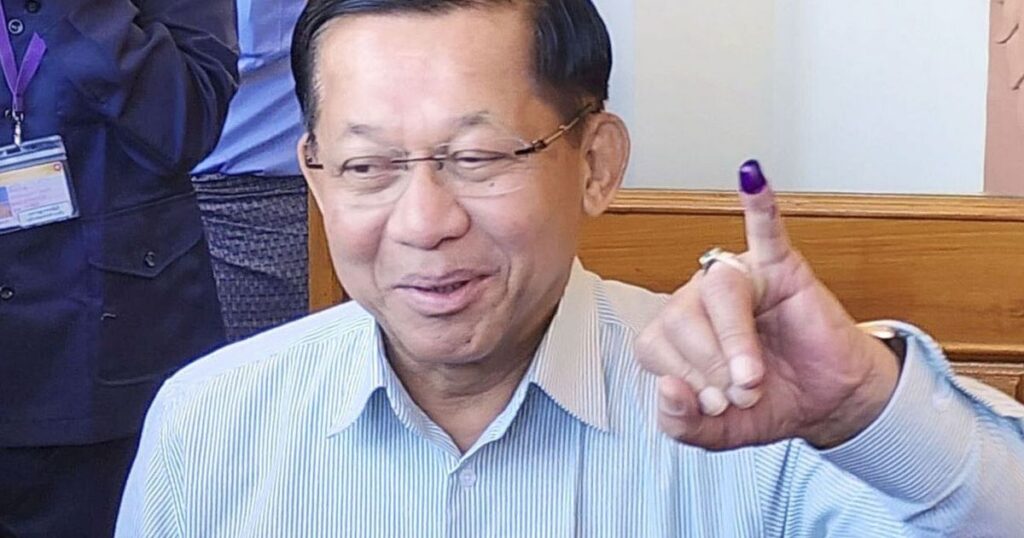
Five years after a brutal military coup plunged Myanmar into chaos, the country recently held elections that were neither free nor fair. These elections, rather than fostering political participation, served primarily to facilitate an authoritarian transition from military rule to a so-called “civilian” government. The military leadership claims these elections are a “new beginning” aimed at restoring stability and breaking international isolation, particularly from entities like the European Union (EU), which has imposed sanctions against Myanmar. However, those sanctions should remain firmly in place, as the reality is far from a legitimate democratic process.
Following decades of military dominance, the National League for Democracy (NLD), led by Aung San Suu Kyi, achieved significant victories in the 2015 and 2020 parliamentary elections. The NLD initially emerged during a liberalization process that the military itself initiated in 2010 to mitigate the nation’s international isolation. The military’s 2008 constitution guarantees it 25 percent of parliamentary seats and permits it to control essential ministries, such as defense and the interior. This structure allows the military to declare a state of emergency at will, effectively stripping civilian institutions of power.
The situation took a dramatic turn on February 1, 2021, when the military, under Commander-in-Chief Min Aung Hlaing, launched a coup on the very day the newly elected parliament was set to convene. The military justified this action by alleging “election fraud,” yet provided no substantial evidence. Since then, Myanmar has descended into turmoil, with widespread civilian protests met with brutal crackdowns, resulting in hundreds of deaths and thousands of arrests. The NLD called for armed resistance, forming People's Defence Force (PDF) units and seeking alliances with ethnic minority armed groups, known as Ethnic Armed Organizations (EAOs), that have been fighting for autonomy and rights for decades.
As of spring 2021, numerous armed factions have emerged, with some aligned with the NLD's exiled National Unity Government (NUG) while others operate independently. These groups vary widely in ideology, goals, size, and armament, often clashing with one another despite a shared opposition to the military regime. According to various reports, the number of armed conflicts in Myanmar saw a 17 percent drop in 2025, largely due to extensive military operations in the central regions. However, conflict intensified in states like Rakhine and Kayin, with the junta reportedly controlling only about 30–40 percent of the country.
The humanitarian crisis resulting from this ongoing conflict is staggering. An estimated 90,000 people have been killed since the coup, with over 3.5 million displaced internally and more than 1.5 million fleeing to neighboring countries. Bangladesh now hosts the world's largest refugee camp for Rohingya displaced by violence, while significant numbers have sought refuge in Thailand and India. A staggering one-third of Myanmar’s population, approximately 18 million people, now rely on humanitarian aid. The United Nations has classified Myanmar as a “hotspot of very high concern,” with millions facing acute food insecurity.
Economic conditions have also deteriorated drastically, with nearly half of the population living below the national poverty line—up from just under a quarter before the coup. The infrastructure has been severely damaged, and key sectors such as tourism and manufacturing have collapsed, leading to a 74 percent decline in foreign direct investment since the coup. Organized crime has surged, particularly in drug production and trafficking, leading Myanmar to be identified as the country most affected by organized crime according to the Global Organized Crime Index.
The Elections and Their Political Significance
Despite the dire circumstances, the junta held elections, albeit in just 265 of the 330 townships, where they openly admitted that they do not fully control all areas. Millions were displaced, and numerous opposition figures remain imprisoned, making the elections a farce. More than 50 political parties, including the NLD, were barred from participation, which had previously secured over 90 percent of seats in the last free elections. This ensured that the military-aligned Union Solidarity and Development Party (USDP) would dominate the elections, which took place in three phases from late December 2025 to late January 2026. The USDP declared victory with 72 percent of the vote, a stark contrast to the meager 6 percent it received in 2020, and reported a voter turnout of just over 50 percent, despite evidence of coercion.
Criticism of the elections was swiftly silenced, with over 200 critics—including journalists and opposition figures—arrested under the new “Election Protection Act.” The junta dismissed any allegations of illegitimacy, but the ongoing military operations during the election campaign, which resulted in civilian casualties, further delegitimized their claim to power. It is unlikely that the populace will view this new “civilian” government as legitimate—especially given its ties to military leadership. Domestically, the government will likely face a heterogeneous yet unified opposition against both the elections and their new regime.
While Myanmar may have transitioned from a military dictatorship to a “civilian” government, the reality remains bleak. The hope for a reform process akin to the one following the 2010 elections, which led to the NLD's victory, appears unrealistic given the current military leadership's perception of the NLD as antagonistic. The junta has filled many key positions with retired military personnel, indicating that genuine political change is unlikely.
Internationally, the military junta's isolation has diminished, as neighboring countries like China and India have shown interest in normalizing relations for strategic, economic, and security reasons. Myanmar is rich in mineral resources, particularly rare earths, making it a valuable asset for these nations. Additionally, the region is grappling with issues of organized crime and drug trafficking, which prompt neighboring countries to seek cooperation for border security.
Ultimately, while the military may attempt to present a façade of legitimacy through these elections, the humanitarian crisis, political instability, and organized crime will continue to define Myanmar's future. The international community, particularly Western nations, should remain cautious and not rush into recognizing or normalizing relations with the new government until a significant improvement in humanitarian conditions and political inclusivity occurs.
$6.5 Million QB on the Brink: Will He Crash and Burn Before 2026 NFL Draft?

You Won't Believe What This New Smartphone Can See at Night—Thermal Imaging Will Change Everything!
Shocking Epstein Files: Which Top College Sports Programs Are Under Investigation? The Fallout Will Leave You Speechless!

USF Health Morsani College Shocks Nation with TWO Top 10 NIH Funding Rankings – What Does This Mean for You?
Can the Market Survive Climate Chaos Without Government? Shocking Stats Inside!

Is the 2024 Election Rigged? Shocking New Evidence Links Top Officials to Iran Conflict!
You might also like: