
Yemen's Shocking Starlink Revolution: Who's Cashing In While Others Are Left Behind?

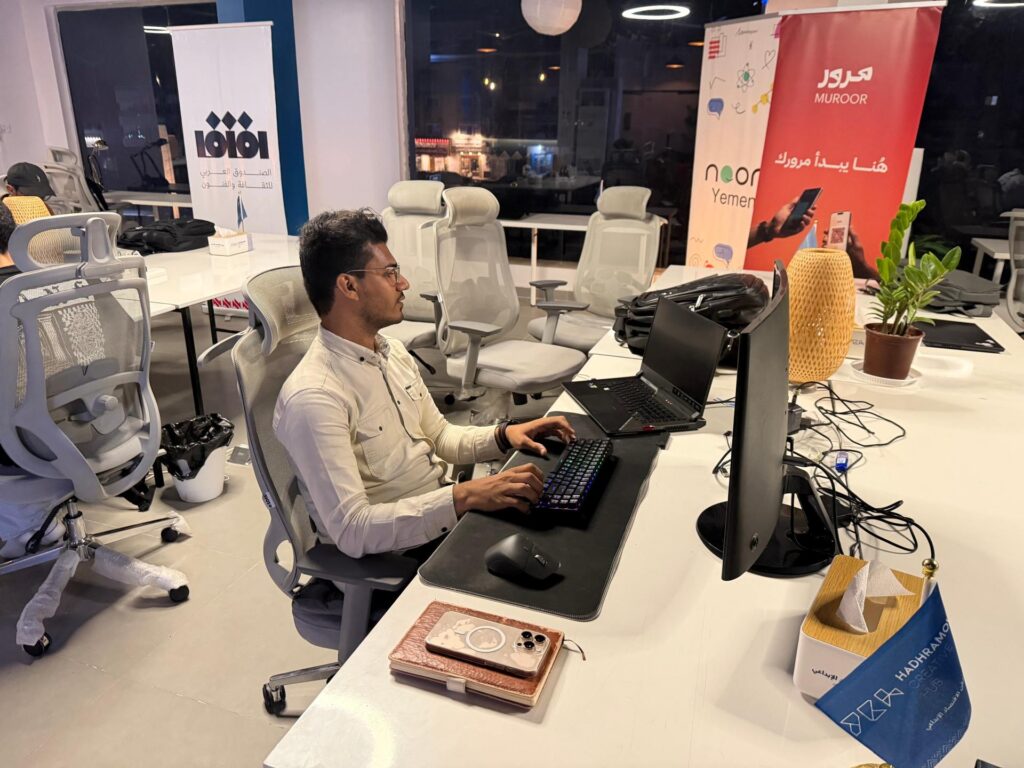
Mukalla, Yemen – In a corner of Yemen's coastal city of Mukalla, the Mukalla Creative Hub has emerged as a beacon for entrepreneurs, remote freelancers, and students. The vibrant space is filled with the hum of productivity: a man in a black T-shirt leans over a desk to assist a colleague, while others are engrossed in their laptops. Nearby, women tap away on their devices in ergonomic office chairs, all drawn together by a common need—fast, reliable internet.
At the heart of this hub's appeal is the Starlink satellite internet service, which offers speeds of 100 to 150 Mbps, making it a lifeline for those looking to escape Yemen's war-torn telecommunications landscape. “Four Starlink devices power the space,” said Hamzah Bakhdar, a digital freelancer who works at the hub, in an interview with Al Jazeera.
The ongoing conflict in Yemen has crippled communication networks, with Houthi rebels controlling major internet providers and often blocking websites linked to their opponents. As a result, many areas face abrupt disconnection due to damage to land cables, leaving residents struggling to maintain any online presence. However, Starlink's arrival has provided an alternative route for connectivity, allowing users to bypass the Houthis' stranglehold on telecommunications.
For many, including Mohammed Helmi, a video editor and motion graphics designer, this internet service has transformed their work life. “I was juggling projects for three clients in Yemen, Saudi Arabia, and the United States. Thanks to the fast internet at the café, I no longer worry about losing connection or missing deadlines," he shared. Previously, Helmi faced the frustration of interrupted downloads and constant data limits, often having to turn down lucrative projects that would have been impossible to complete under those conditions.
Starlink, operated by billionaire Elon Musk's SpaceX, provides internet by relaying signals from low-orbit satellites to ground dishes. While the kits are priced at approximately $500, which is unaffordable for many Yemenis living below the poverty line, the service has begun to spread across the country. Many are turning to local providers who resell access to Starlink as a more affordable option.
University students like Mariam, who studies at Hadramout University, report that even buying vouchers from local providers is often beyond their means, underscoring the socioeconomic barriers that many face. “People are using vouchers because they cannot afford Starlink devices, whose prices are very high,” she told Al Jazeera, highlighting the digital divide that persists in Yemen.
The Houthis have reacted defensively to this new service, warning against its use and threatening legal repercussions for those caught with the devices. They have accused Starlink of serving as a “US espionage agent,” claiming it poses a threat to national security, and raising concerns that the data gathered might be used for intelligence or economic exploitation.
Connecting Yemen’s Remote Areas
Despite these challenges, the introduction of Starlink has bridged significant gaps, particularly for those in remote areas long cut off from the digital world. For Omer Banabelah, a mobile app developer, Starlink means he can now communicate with clients no matter where he is in the countryside of Hadramout. “I can reply to their messages anytime, from anywhere,” he explained. “Work that takes 10 minutes with Starlink could take an entire day without it.”
Teachers, too, have benefited from the service, allowing them to conduct uninterrupted online classes. Raja al-Dubae, a school director in Taiz, shared that her school started offering online classes based on the Yemeni curriculum for students living abroad. Initially facing challenges with poor internet connections, the installation of Starlink increased the number of enrolled students from 50 to over 200, enhancing both teaching quality and school revenues.
“With Starlink, the internet is very fast and reaches every corner of the school,” al-Dubae remarked. “I never imagined it would make such a difference.” The positive impact on education and income for teachers has been significant, as reliable internet allows classes to proceed without interruptions.
As Yemenis grow accustomed to the benefits of high-speed internet, the thought of returning to the unreliable local networks is daunting. Helmi expressed the sentiment shared by many: “If Starlink were cut off, I would be devastated and forced back into the local market, which cannot cover my expenses or living costs.”
In a nation where more than 80% live below the poverty line, the emergence of a digital workforce fueled by Starlink not only offers a glimpse of economic opportunity but also a vital means of communication in a fractured society. As the situation develops, the ongoing impact of Starlink serves as a reminder of the critical role technology plays in connecting communities, even in the most challenging circumstances.
Is Your Smartphone Obsolete? How India's 'Ultra' Flagships Are Shaking Up the Industry!

USMNT's Future Stars: You Won't Believe What Balogun, Pepi, and Luna Must Achieve for Glory!

You Won't Believe How This Kiwi's Move to Australia Transformed Her Health in Just 30 Days!
You Won't Believe What Happens Next: 5 Shocking Reasons Your Access is Denied!

You Won't Believe What Eating 20 Almonds a Day Does to Your Gut—Doctors Are Shocked!

Celtics SHOCKINGLY Collapse to 76ers: What Everyone’s Missing About This Epic Playoff Fail!
You might also like: