
Is Your Smartphone Obsolete? How India's 'Ultra' Flagships Are Shaking Up the Industry!

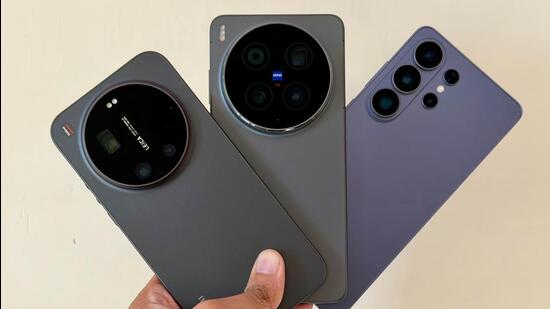
India’s smartphone market is poised for a significant transformation this summer, as key Android manufacturers finally gain the confidence to launch their high-end ‘Ultra’ flagship phones. While companies like Samsung and Xiaomi have been steadfast in this sector, Vivo and Oppo are set to debut their premium offerings in India for the first time. This shift is underscored by three key developments: a belief among manufacturers that consumer price sensitivity will not hinder sales, a renewed confidence in the Indian economy, and a cultural shift that positions smartphones as status symbols and aspirational items.
The new Ultra models come with hefty price tags. The Samsung Galaxy S26 Ultra starts at ₹1,39,999, while the recently launched Xiaomi 17 Ultra is priced the same. Following closely, the Vivo X300 Ultra is slated for release this week, with the Oppo Find X9 Ultra making its entrance later this month, which will expand consumer choices significantly in comparison to previous launches that did not cater to this premium range.
Although exact pricing details for the new models are yet to be confirmed, projections suggest they will be even more expensive than their predecessors, the X300 Pro and the Find X9 Pro, which are both priced at ₹1,09,999. For perspective, the Vivo X300 Ultra is sold in Europe for €2,000, which converts to approximately ₹2,22,000 for a 16GB+1TB variant.
According to Prabhu Ram, Vice President of Industry Research Group at CyberMedia Research (CMR), this wave of Ultra Android flagships marks a significant structural shift in India’s premium smartphone market. He notes that this is fueled by sustained premiumization, improving affordability through financing options, and longer replacement cycles supporting higher price brackets. Notably, camera quality remains a top consideration for Indian consumers, according to CMR research.
“There is a visible shift in how users engage with their devices,” remarked Paigham Danish, Head of Product & GTM at Vivo India. “They are no longer occasional photographers or mere consumers of content. They have become continuous creators, storytellers, and visual enthusiasts.” This evolution in consumer behavior underscores the increasing importance of advanced camera technology in smartphones.
The entries of Vivo and Oppo into the premium space are strategic moves to reclaim market share from dominant global brands Apple and Samsung. The high-end segment, particularly the “more than ₹1 lakh” product category, has largely been dominated by these two brands. Abhilash Kumar, Lead Research Advisor at Smart Analytics Global (SAG), emphasizes that Samsung leads in terms of sales volume, facilitated by its previous and current generation Ultra models, leaving a substantial gap for its Chinese counterparts to fill.
Recent data has shown that while India’s smartphone market has plateaued in recent quarters, there remains a strong demand for premium devices. CMR's India Mobile Handset Market Review for CY2025 emphasizes a “structural transition” benefiting brands like Samsung, Apple, and OnePlus, while companies like Vivo and Oppo aim to break free from their reliance on affordable phones.
“India’s smartphone market is undergoing a transition in how consumers evaluate devices, with a growing emphasis on camera capabilities, performance, and AI-driven features,” stated Tarun Pathak, Research Director at Counterpoint Research. April marked India’s weakest smartphone shipment quarter in six years, attributed to subdued demand and rising material costs. Currently, Vivo holds a 21% market share, followed by Samsung at 18%, Oppo at 12%, and Xiaomi at 8%.
The competition among flagship devices is more intense than ever, with manufacturers focusing on high-end specifications, including advanced chipsets, ample memory and storage, powerful cameras with large sensors, and refined designs. These Ultra models are also not merely reactions to the anticipated iPhone Ultra foldable expected later this year.
The Camera Arms Race
A critical aspect of the Ultra experience is the collaboration between smartphone makers and established camera companies for expertise. Xiaomi partners with German photography leader Leica, while Vivo teams up with German optics firm Zeiss, and Oppo collaborates with Swedish camera experts Hasselblad.
A recent Smartphone Insights Report 2026 released by Counterpoint Research and Flipkart highlights that 45% of smartphone buyers are willing to pay more for enhanced performance, while 57% are looking to invest in a device for superior camera quality. As with their predecessors, Vivo and Oppo aim to deliver value through the experiential features that Ultra flagships promise.
According to Kumar, while Apple and Samsung provide reliable camera systems, a niche segment of consumers is gravitating toward Ultra devices from Chinese manufacturers for their superior photographic capabilities and additional accessories. Anuj Sharma, Chief Marketing Officer at Xiaomi India, emphasizes their goal in camera technology is to capture images that closely resemble real life, focusing on dynamic range, detail, and realism rather than merely enhancing aesthetics through digital processing.
The innovations in camera technology include Xiaomi's world-first Leica 1-inch LOFIC sensor and 200-megapixel continuous optical zoom capabilities, which have proven to deliver detailed handheld images at 120x zoom in tests. Vivo plans to introduce a 200mm focal length Telephoto Extender Gen 2, while Oppo is expected to launch a 300mm teleconverter, both aimed at enhancing photography experiences.
Both Vivo and Oppo view these new offerings as long-term strategic bets designed to create a powerful halo effect across their portfolios, enabling growth in a competitive market dominated by Apple and Samsung. As the smartphone landscape continues to evolve, the focus on innovation, particularly in camera technology, will be crucial for manufacturers seeking to differentiate themselves and capture the interest of premium consumers.
USMNT's Future Stars: You Won't Believe What Balogun, Pepi, and Luna Must Achieve for Glory!

You Won't Believe How This Kiwi's Move to Australia Transformed Her Health in Just 30 Days!
You Won't Believe What Happens Next: 5 Shocking Reasons Your Access is Denied!

You Won't Believe What Eating 20 Almonds a Day Does to Your Gut—Doctors Are Shocked!

Celtics SHOCKINGLY Collapse to 76ers: What Everyone’s Missing About This Epic Playoff Fail!

You Won't Believe How Former Illinois Stars Transformed Timberwolves' Playoff Hopes Overnight!
You might also like: