White House Dinner Shock: Secret Service Agent Shot—What Really Happened? You Won't Believe the Details!

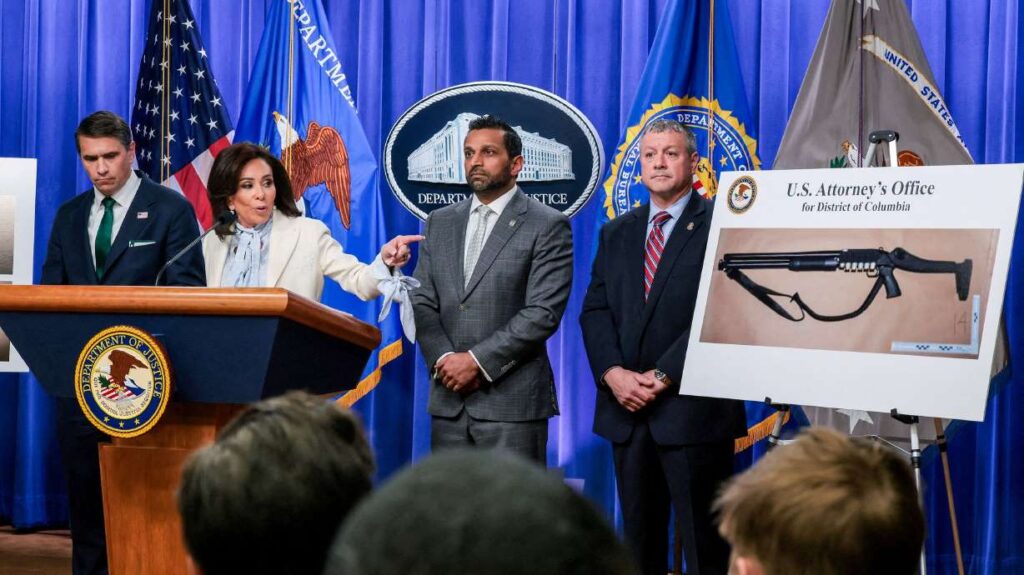
WASHINGTON — U.S. Attorney Jeanine Pirro confirmed on Sunday that the Secret Service agent injured during the shooting at the recent White House Correspondents' Dinner was struck by a shotgun blast fired by Cole Tomas Allen, the suspect accused of attempting to assassinate President Donald Trump.
In an appearance on CNN's "State of the Union," Pirro stated, "We now can establish that a pellet that came from the buckshot, from the defendant's Mossberg pump action shotgun, was intertwined with the fiber of the vest of the Secret Service officer." She added, "It is definitively his bullet."
Following the incident, which occurred last weekend, Pirro's office filed multiple charges against Allen. A CNN analysis of hotel surveillance footage, alongside audio captured during the shooting, revealed that a total of six shots were fired — one from Allen and five from a responding officer. However, the analysis could not definitively establish the precise moment when Allen discharged his weapon.
Pirro indicated that additional surveillance material from the event will be released, offering further insights into Allen's actions leading up to the incident. The footage shows law enforcement K-9 and its handler inspecting a doorway that Allen entered just before he bypassed security checkpoints. "He goes into that room to take off a long coat that he has on," Pirro explained. "He's wearing a long, dark coat because he has to hide the Mossberg pump action shotgun."
This raises questions about security protocols at high-profile events, particularly those attended by the President. Jonathan Wackrow, a former U.S. Secret Service agent and CNN contributor, noted that the K-9 involved was trained for bomb detection, specifically to locate "high-order explosives," rather than ammunition. He remarked, "These dogs are deployed mission-specific," stressing that their primary focus would be on identifying explosives rather than firearms.
Currently, Allen faces an initial charge of discharging a firearm during a crime of violence, but as the investigation progresses, new charges may be added. Acting Attorney General Todd Blanche mentioned that initial charges could evolve based on findings from the ongoing grand jury investigation. "There's initial charges and there's an investigation, and to the extent that the government learns more things, I assure you they will, they will become charges," he said during an appearance on NBC's "Meet the Press."
A preliminary hearing with the grand jury is scheduled for Friday. While an alleged manifesto authored by Allen does not explicitly name Trump as a target, Pirro asserted that there is substantial evidence to suggest otherwise. "We have a lot of evidence that indicates his intent and the fact that everything that he did thereafter… asking on his phone, 'Is the president in the ballroom yet? Has the president sat down yet? What time will dinner be served?'" she noted, emphasizing, "This is clearly — the president is a target."
Pirro also dismissed any arguments suggesting that Allen's actions could be attributed to mental instability. "He is far from insane — he is brilliant. … This is a guy who had no psychotic break," she stated firmly. Additionally, she addressed concerns regarding a potential conflict of interest in her prosecutorial role, asserting, "My ability to prosecute this case has nothing to do with my being there."
The events at the White House Correspondents' Dinner have not only raised alarms about security measures in place for protecting high-profile individuals but also brought to light the complexities of navigating legal proceedings in cases involving alleged attempts on a sitting president's life. This incident serves as a stark reminder of the vulnerabilities that exist, even in the most secure of settings. As the legal proceedings unfold, all eyes will remain on the developments and implications for national security moving forward.
“Did Jaylen Brown Just Expose the NBA's Biggest Flopper? Shocking Video Sparks Outrage!”
You Won't Believe What Shocking Fitness Changes Are Coming for the 137th SOW – Act Now or Miss Out!
You Won't Believe What Jaydon Grant Revealed About His Shocking Journey to the CFL!
Governor's Shocking K-12 Education Reforms: Are Your Kids at Risk? Find Out NOW!
You Won't Believe What Joe Brady's NFL Draft Strategy Reveals About the Bills' Shocking Future!
Trump's Shocking Pipeline Decision: What FEMA's Secret Move Means for You!
You might also like: