
White House Declares Iran War “Terminated”: What They’re Not Telling You Could Change Everything!

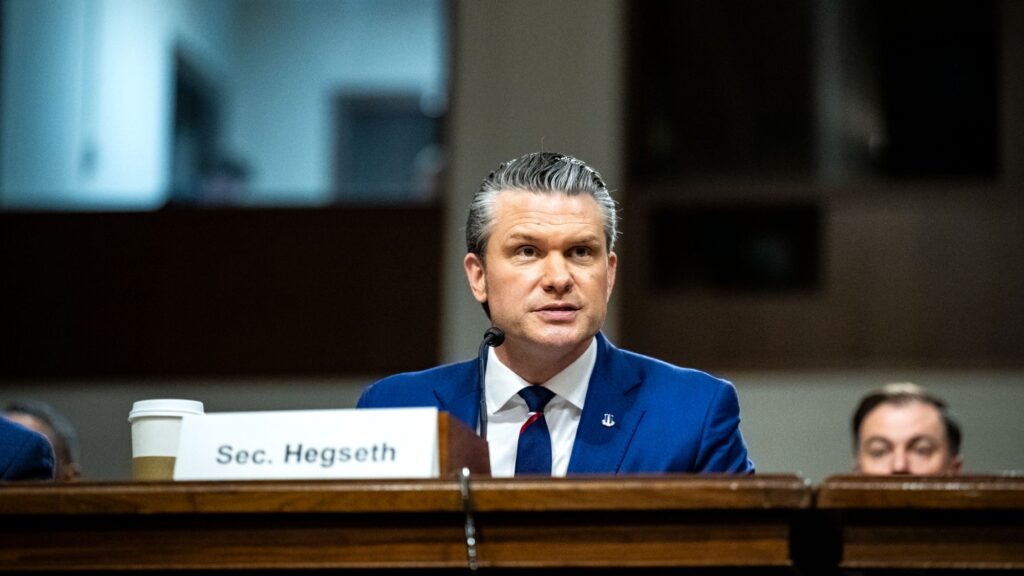
In a recent turn of events, the White House is clarifying its interpretation of the War Powers Act in relation to ongoing military actions against Iran. According to officials, the deadline for Congress to authorize any military engagement is no longer Friday, as many lawmakers had anticipated. This assertion stems from President Donald Trump's decision to order a ceasefire on April 7, which the administration argues effectively halted the 60-day clock mandated by the Act. “For War Powers Resolution purposes,” a White House official explained to reporters, “the hostilities have terminated.”
During a Senate hearing on the Pentagon’s budget request of $1.45 trillion, Defense Secretary Pete Hegseth reiterated this stance, stating, “We are in a ceasefire right now, which our understanding means the 60-day clock pauses or stops.” His comments were met with significant backlash. Democrats expressed outrage, while Republicans displayed skepticism about the legality of pausing the clock under the War Powers Act.
This discussion has raised eyebrows among legal experts. Katherine Yon Ebright, a war powers authority at the Brennan Center, emphasized that “nothing in the text or design of the War Powers Resolution suggests that the 60-day clock can be paused or terminated.” She argued that Congress needs to push back against what she termed “sizeable extension of previous legal gamesmanship” over the law. The implications of this debate extend beyond legal interpretations; they also touch on broader questions about executive authority and military engagement.
Despite Hegseth’s claims, it is essential to note that the U.S. military is still enforcing a military blockade, which is considered an act of war under international law. This raises significant concerns about the nature of U.S. involvement in the region, particularly as tensions with Iran continue to simmer.
As the Pentagon seeks approval for its expansive budget, the question of how long military actions against Iran could persist remains unanswered. The lack of clarity around this issue not only complicates legal interpretations but also raises pressing questions about the U.S. military's role in ongoing global conflicts. The Senate hearing highlighted the urgent need for Congress to assert its oversight authority, particularly as discussions about the proper scope of presidential power in military matters continue to evolve.
In this climate of uncertainty, it is crucial for citizens to understand the implications of these developments. The ongoing debate over the War Powers Act reflects a broader struggle within American governance regarding the balance of power between the executive branch and Congress. As the situation unfolds, both lawmakers and the public will need to grapple with the complexities of military engagement and the authority that underpins it.
Discover the 5 Hidden Neighborhoods in East Grand Rapids That Could Skyrocket Your Home's Value!

Cricket Club's Shocking Move: Why 80% of Fans Are Furious Over Social Media Ban!

Celtics vs. 76ers: Who Will Survive This Shocking Game 7 Face-Off? Don't Miss the Heart-Stopping Action!

Is Caesars Entertainment's Shocking $18 Billion Bid About to Change Everything? You Won't Believe the Impact!

Is Scotland on the Brink? 2026 Election Nears – You Won't Believe What’s at Stake!

Antigua's Prime Minister is on the Brink of a Shocking Fourth Term—What Could This Mean for the Future?
You might also like: