
Venice Faces Submerged Future: Why You Might Need a Submarine by 2030—Experts Warn!

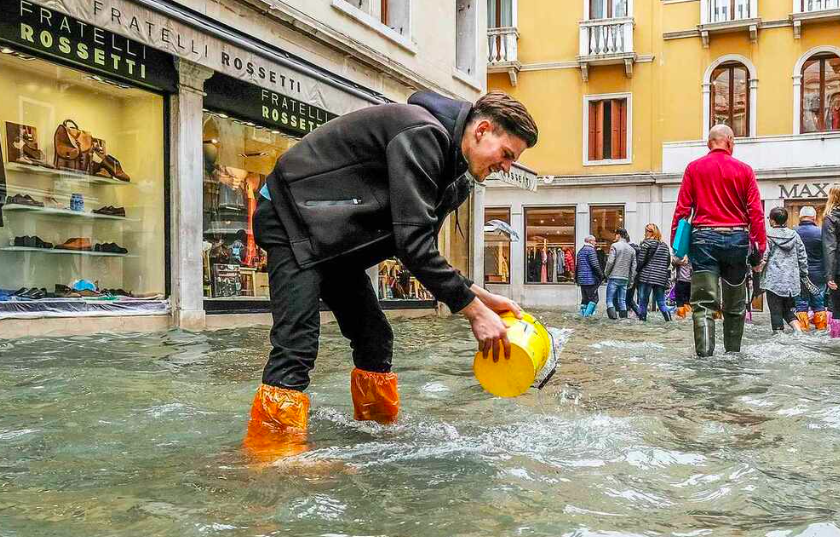
Venice, the iconic UNESCO World Heritage Site known for its enchanting canals, is facing an alarming reality: it is sinking. A recent study from the University of Salento warns that this historic city could find itself underwater sooner than anticipated, potentially making it accessible only via submarine.
The beautiful city, built on a network of islands, is increasingly threatened by rising sea levels attributed to climate change. Researchers predict that the city will need to undergo “unprecedented” adaptation efforts to balance the preservation of its rich heritage with economic and social concerns. The phrase “floating city” may soon become a grim irony if fossil fuel emissions continue to drive global warming, which is raising greenhouse gas levels in the atmosphere.
📰 Table of Contents
The Risk of Complete Submersion
Experts are urging Venice to consider strengthening its flood defenses, with large barriers deemed necessary to protect the lagoons. In a worst-case scenario, complete flooding of the city could occur if sea levels continue to rise unchecked. The historical monuments of Venice are particularly vulnerable, and while relocating them could be an option, many fear that failure to act would lead to an irreversible loss of Venice's “historical urban fabric, lagoon-based culture, traditional lifestyles, and most economic activities.” Estimates suggest that the cost of such protective measures could reach up to €100 billion, while the submersion of residential properties could lead to losses around €6.5 billion.
“There are steps we can take to delay this scenario, but they will not work forever; the future appears unavoidable,” said Piero Lionello, a researcher at the University of Salento, in an interview with The Times.
Escalating Sea Levels
Currently, over half of Venice sits between 80 cm to 120 cm above mean sea level, rendering it vulnerable to extensive flooding. Projections indicate that by 2100, mean sea levels could rise by an alarming 42 cm to 81 cm. Researchers are calling for swift action to avert the direst consequences.
For decades, Venice has depended on the MOSE (Modulo Sperimentale Elettromeccanico) barrier system, which consists of 78 mobile gates designed to block the Adriatic Sea during high tides. While this system has successfully protected the city from several floods recently, experts from the University of East Anglia and Deltares warn that MOSE is merely a temporary solution.
As global sea levels continue to rise, these barriers will require frequent closure to prevent flooding, which could ultimately lead to a “permanent closure” that would endanger the lagoon’s delicate ecosystem. Stagnating water could disrupt natural sewage-cleansing tidal flows, threatening both the environment and the city’s historic ambiance.
Possible Futures for Venice
Researchers have outlined four potential paths forward to keep Venice from becoming a modern-day Atlantis:
- Permanent Sealing: Constructing a fixed barrier to entirely separate the lagoon from the sea, necessitating a significant overhaul of the city’s sewage treatment systems, which currently rely on tidal flows.
- Controlled Flooding: Embracing a lifestyle where flooding is more frequent, while raising the ground levels of buildings and walkways.
- Relocation: A radical solution involving the movement of invaluable art and historical artifacts to a “New Venice” on the mainland, leaving the original city submerged as a museum.
- The Submarine Future: If no action is taken, researchers warn that the ground floors of buildings in Venice could be permanently underwater by 2100, transforming the city into a network of submerged corridors navigable only by specialized aquatic vessels.
As time runs out, experts emphasize the urgency of addressing not only the rising sea levels but also the phenomenon of “subsidence,” which refers to the physical sinking of the land. This dual challenge creates a “double whammy” effect, making the current situation unprecedented in the city’s long history.
Local authorities are caught in a precarious balancing act: they must weigh the ecological health of the lagoon against the structural survival of Venice's Renaissance architecture. The city's thriving tourism industry, which relies on its unique charm and historical allure, is also at stake. A Venice submerged or perpetually barricaded would lose much of what draws millions of visitors each year.
Without decisive action, the fate of Venice hangs in the balance, challenging not just its residents but also the world to confront the pressing impacts of climate change and rising sea levels.
Unlock the Secret: 20 Minutes a Day with This Gita Ritual Will Transform Your Life—Are You Brave Enough to Try?

NFL Power Rankings SHOCKER: How the 2026 Draft Turned Underdogs into Title Contenders! You Won't Believe Who Rose to the Top!

Shocking Twist: 'Friendly Federal Assassin' Letter Reveals Disturbing Motive Behind White House Dinner Shooting!

Bitcoin’s SHOCKING Surge: Why Experts Fear It Could Hit $80K THIS WEEK—Are You Ready to Miss Out?

You Won't Believe How the Salk Vaccine Changed Millions of Lives—Discover the Shocking Truth!

Shocking Warning: PA Election Officials Expose Disturbing Plans to Hack Voting Systems—Are Your Votes at Risk?
You might also like: