
Shocking Warning: PA Election Officials Expose Disturbing Plans to Hack Voting Systems—Are Your Votes at Risk?

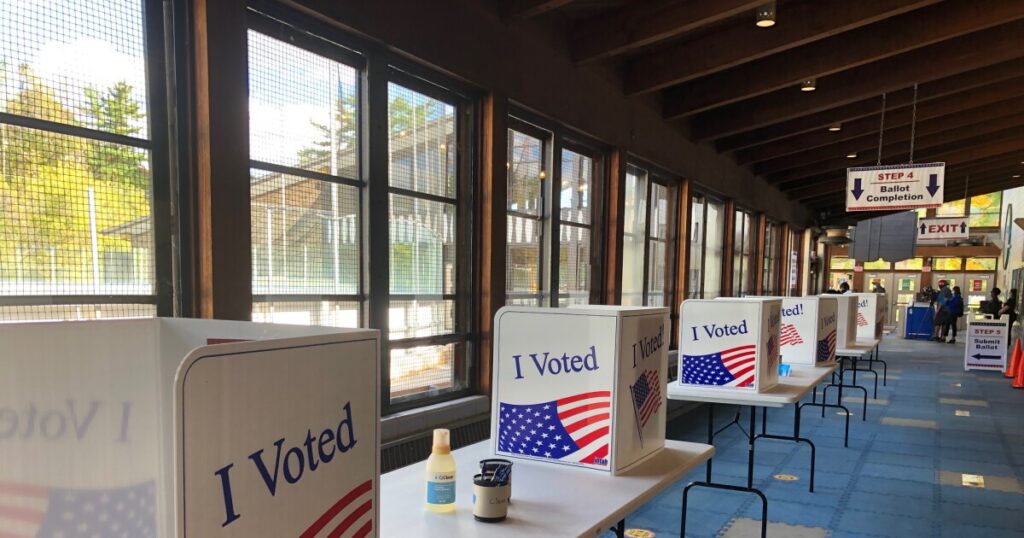
A recent directive from Pennsylvania’s Department of State underscores a heightened focus on election security as the fall elections approach. The five-page policy, released earlier this month, emphasizes that county election officials “shall not permit or facilitate physical access to voting systems” to unauthorized individuals. This comes amidst ongoing concerns about potential interference, particularly from entities associated with former President Donald Trump, who has continually questioned the legitimacy of the 2020 election results.
The guidance explicitly prohibits any outside parties from accessing “any component of electronic voting systems for the purpose of copying voting systems software, source code, or proprietary data.” This measure responds to a history of challenges to the integrity of voting technology, particularly in light of incidents like those in Fulton County, Pennsylvania, and Fulton County, Georgia, which have become cautionary tales for election integrity advocates.
In Fulton County, Pennsylvania, the county's decision to allow an outside vendor access to its voting machines during the post-2020 election scrutiny led to accusations of corruption. This prompted the Pennsylvania Department of State to mandate the replacement of all voting machines in that county, resulting in over $1 million in fines. Meanwhile, in Fulton County, Georgia, federal authorities have reportedly sought access to voting systems as part of investigations into the 2020 election, further exacerbating concerns about voting system integrity nationally.
The Pennsylvania directive also addresses the possibility of requests for access from federal officials, stating that access “applies with equal force to requests … made by (or on behalf of) any federal, state, or local government officials without a judicial warrant.” Vic Walczak, legal director for the ACLU of Pennsylvania, has pointed out that the policy seems particularly mindful of the past actions by the Trump administration, which have raised alarms about potential federal overreach into local election processes.
“The system works really well now — it's safe, it's secure, it's accurate,”
said Walczak, emphasizing the importance of preventing unauthorized access to voting machinery. He cautioned that allowing those without legitimate standing to inspect or alter systems risks undermining public confidence in the electoral process.
In light of these concerns, Al Schmidt, who leads the Department of State, advised voters and officials to “tune out a lot of this chatter” regarding potential federal interference, particularly from immigration agents at polling places. Schmidt assured the public that state and county officials are engaged in comprehensive preparations to manage any issues that may arise during the electoral process.
The directive’s guidance to verify that any presented warrants are valid judicial warrants, rather than administrative ones issued by government agencies, highlights a growing concern among civil liberties advocates about the use of potentially overreaching legal frameworks. Administrative warrants, which are often issued without judicial oversight, have been increasingly utilized by agencies such as the U.S. Department of Homeland Security to enforce immigration and other laws, raising ethical questions about their use in election-related matters.
Walczak remarked that while the guidance appears precautionary rather than reactionary, it reflects a necessary vigilance regarding the integrity of election processes. “I think the Department of State is doing a very good job, and the counties are, too, by and large. But you've got 67 of them,” he noted, referring to the number of counties in Pennsylvania.
Thad Hall, the elections director for Mercer County and president of the Western Pennsylvania Election Personnel Association, echoed this sentiment, suggesting that the main takeaway from the guidance is a simple warning: “Don’t be Fulton County.” Hall believes the Department of State issued the directive to “cover their bases” amid a climate of uncertainty and concern about election integrity, humorously remarking that officials should remind themselves not to act “stupidly.”
Ultimately, the policy signals a proactive approach to safeguarding the integrity of Pennsylvania’s elections as officials brace for potential challenges. As the nation prepares for another election cycle, the spotlight remains on how states navigate the delicate balance between security measures and ensuring public trust in democratic processes.
You Won’t Believe What Epitopea’s New Ovarian Cancer Vaccine Could Mean for 1 in 78 Women!
$3 Million Up for Grabs: Are You Brave Enough to Enter the Grow-NY Competition? Don’t Miss Out!

You Won't Believe How Propy (PRO) is Revolutionizing Real Estate—Are You Missing Out on This $1.5 Trillion Opportunity?
S&P 500, Nasdaq, and Dow Plunge: Is Iran's Shocking Offer the Catalyst We Didn't See Coming?

Netanyahu’s Rivals Unite! What Shocking Alliance Could Change Israel’s Future Forever?

Is Celsius (CELH) Betting Big on Soccer? Discover How This Bold Move Could Change Everything!
You might also like: