
US Anti-Vaccine Movement Could Spark a Global Measles Outbreak: Are You Prepared?

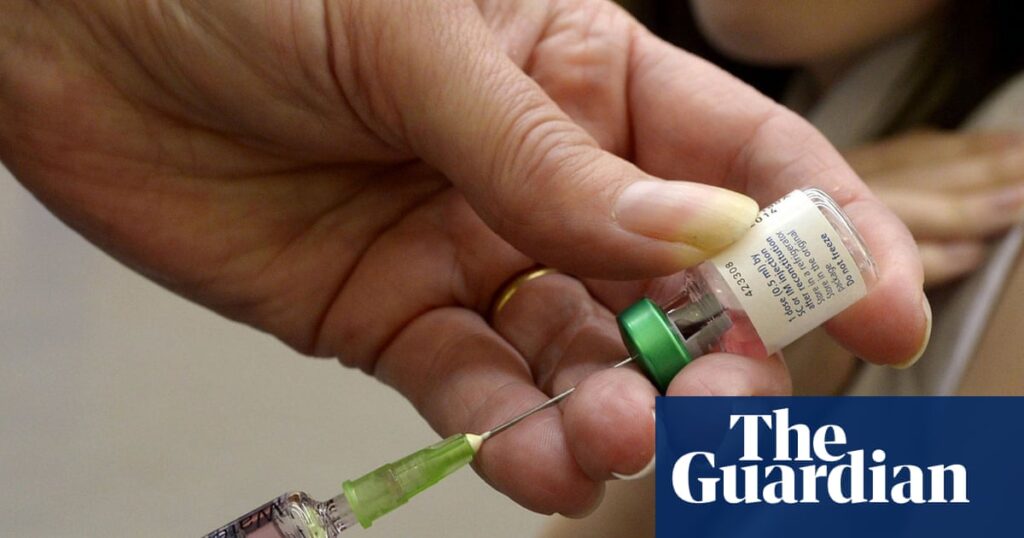
The increasing anti-vaccine rhetoric from the US government has raised significant concerns regarding global public health, particularly as nations worldwide face the risk of losing their measles elimination status. The World Health Organization (WHO) recently announced that six European countries—the United Kingdom, Spain, Austria, Armenia, Azerbaijan, and Uzbekistan—have officially lost this status, indicating that the virus has been circulating continuously in these regions for over 12 months.
According to health recommendations, a vaccination rate of at least 95% among children is necessary to effectively contain measles. However, vaccination rates across Europe have sharply declined. In the UK, for example, only 84% of five-year-olds received both doses of the measles, mumps, and rubella (MMR) vaccine by 2024. This decline has positioned the UK as a central hub for vaccine hesitancy, largely attributed to the discredited claims made by Andrew Wakefield in a now-retracted 1998 study linking the MMR vaccine to autism. Despite losing his medical credentials, Wakefield's influence persists, fueled increasingly by figures like Robert F. Kennedy Jr., the current US health secretary.
“The rhetoric that happens in the United States spills over across borders to other countries,” remarked Jennifer Nuzzo, director of the Pandemic Center at Brown University. “We live in a global ecosystem, so when they hear, well, [the vaccine is] not good enough for the Americans, maybe it’s not good for us either.”
Kennedy, known for his involvement with the anti-vaccine organization Children’s Health Defense, continues to promote Wakefield's debunked theories, contributing to the surge of vaccine skepticism both domestically and internationally. Organizations like Children’s Health Defense often frame their campaigns as activism; however, Nuzzo emphasizes the underlying profit motives, revealing that the “Anti-Vaxx industry” generates at least $36 million annually. Before assuming his role as health secretary in 2024, Kennedy reportedly earned millions from Children’s Health Defense and law firms targeting vaccine manufacturers.
Under Kennedy’s leadership, the US stands on the brink of losing its measles elimination status as well. Measles is highly contagious and often spreads internationally; both Canada and Mexico have also experienced rising outbreaks, with Canada losing its elimination status in November 2022 and Mexico’s status also under threat.
The Trump administration's decision to withdraw funding from the Global Measles and Rubella Laboratory Network (GMRLN), coordinated by WHO, signals a significant deprioritization of measles control efforts. Dr. Alonzo Plough, a senior public health expert and current chief science officer at the Robert Wood Johnson Foundation, explained that breakthrough measles cases often arise from international travel and unvaccinated children. The GMRLN has played a crucial role in detecting and containing measles outbreaks globally. However, funding cuts have severely impaired the operation of nearly 800 international labs, risking the collapse of essential surveillance as measles cases surge.
“Viruses don’t know borders,” Plough stated, emphasizing the need for international cooperation in preventing the spread of highly contagious viruses like measles. The past partnerships between organizations like the CDC and international health networks have fostered a robust defense against outbreaks. Yet, with current funding challenges, that network is weakening.
The US Department of Health and Human Services (HHS) did not provide specific insights into Kennedy’s vaccine stance or the GMRLN’s operational capacity. A spokesperson mentioned that HHS collaborates with the White House on a comprehensive path forward for global health. However, many public health experts, including Nuzzo, worry that the US's failure to prioritize measles at a global level exerts a “chilling effect” on other nations grappling with vaccine hesitancy.
Amid these concerns, Nuzzo warns of a dangerous mentality emerging worldwide, where people believe they can simply contract the disease naturally. “Listen, this is a bad disease. You do not want to get this disease, OK?” she emphasized, noting that survivors may face severe long-term health effects, including compromised immune responses. As she pointed out, the US's significant influence in spreading misinformation about measles vaccines could ultimately leave the global community more vulnerable to outbreaks.
Is U.Va. on the Brink? Shocking Revelations About the 2030 Plan You Can’t Afford to Ignore!

Why ‘College GameDay’ Basketball is Breaking Records—And It’s Not Just the Bickering!

Illinois Prisons Promised Better Healthcare—Why After 7 Years Are Inmates Still Suffering?
Why Ontario's Special Election Could Change the Hospitality Industry Forever—Don't Miss the Shocking Details!
You Won't Believe What Happens When Your Request Gets Denied—The Shocking Truth Inside!

This Shocking Energy Truth Could Change Everything—Are You Prepared for the Consequences?
You might also like: