
Trump’s Shocking AI Move: Will His Executive Action Collapse State Laws Overnight?

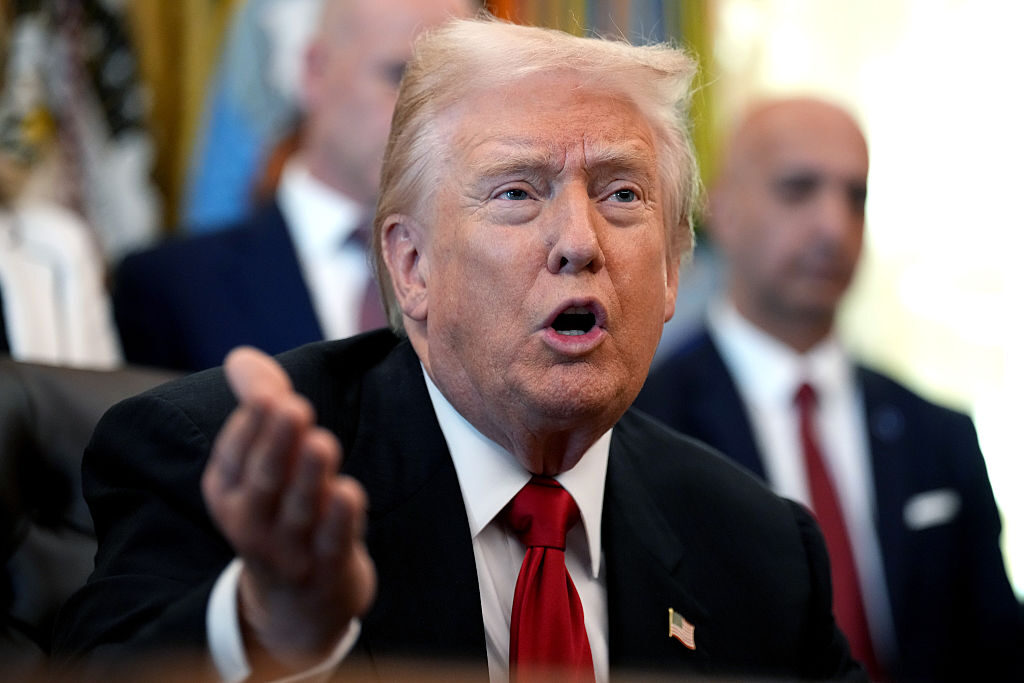
In a significant move that underscores the evolving landscape of artificial intelligence (AI) regulation, President Donald Trump announced via his Truth Social account that he plans to sign an executive order this week aimed at addressing the discrepancies between state laws governing AI. This decision follows Congress’s recent failure to include a moratorium on state AI regulations in the annual defense policy bill, a point that has highlighted the need for a unified approach to AI governance.
While details on the executive order remain sparse, Trump emphasized that having a singular national policy on AI is essential for maintaining American leadership in the industry. He criticized states that have enacted their own AI regulations, labeling them as “bad actors” and warning that such fragmented laws could hinder the growth of AI “in its infancy.” In his post, he affirmed, “You can’t expect a company to get 50 approvals every time they want to do something. THAT WILL NEVER WORK!”
The tech industry has largely welcomed Trump's initiative, advocating for a more standardized regulatory framework. Amy Bos, vice president of government affairs for the tech industry group NetChoice, pointed out that the current “patchwork” of state regulations would create significant compliance challenges for AI companies. “This executive order is an important step towards ensuring that smart, unified federal policy — not bureaucratic red tape — secures America’s AI dominance for generations to come,” she stated.
However, not everyone is on board with the idea of federal preemption. Brad Carson, head of Americans for Responsible Innovation and a former Democratic member of the Oklahoma House, voiced concerns that circumventing Congress could be politically toxic. He argued that a lack of regulations around AI could create a “rules-free zone” for companies, which voters and lawmakers are increasingly wary of. He cautioned that an executive order might face serious legal challenges and public backlash.
The Draft Executive Order
A draft executive order on state AI laws was leaked in November and indicated a more aggressive approach. Rather than outright banning state laws, the draft proposed establishing a task force within the Justice Department to challenge state regulations that could be seen as unconstitutional or unlawful. This task force would be empowered to identify specific state laws that could disqualify them from federal funding or would warrant legal challenges, such as those that require AI models to alter truthful outputs.
The draft also called for the Federal Communications Commission to explore the adoption of reporting and disclosure standards for AI. Furthermore, it directed the Federal Trade Commission to clarify when its regulations might preempt state laws that demand modifications to the outputs of AI systems.
While these efforts could signal a shift towards more rigorous federal oversight, it’s important to note that the draft did not propose a comprehensive national standard for AI regulations. Instead, it suggested a legislative recommendation to create such a framework, indicating that the conversation around federal AI governance is still in its nascent stages.
The discussions surrounding the National Defense Authorization Act (NDAA) have highlighted the complexities of AI regulation in Congress. Efforts to establish a moratorium on state AI laws faced significant opposition. While House Majority Leader Steve Scalise and Senate Commerce Chair Ted Cruz supported the initiative, several Democratic senators, including Elizabeth Warren and Edward J. Markey, opposed it, arguing that it would prevent states from addressing urgent risks posed by rapidly evolving AI technologies.
This ongoing debate reflects broader concerns about the role of state versus federal governance in regulating emerging technologies. For instance, some Republican senators, like Josh Hawley and Mike Rounds, have expressed the importance of allowing states to implement their own safeguards, particularly in protecting vulnerable populations from potential harms associated with AI.
As the landscape continues to evolve, the implications of Trump's impending executive order could be far-reaching. It might pave the way for a more centralized approach to AI regulation, which proponents argue is vital for ensuring that the U.S. remains competitive. However, it also raises questions about the balance of power between federal and state authorities in shaping the future of technology governance. With the stakes this high, the tech industry and lawmakers alike will be watching closely to see how this executive order unfolds and what it might mean for the future of AI in America.
You Won’t Believe What the Robinson Team Just Achieved in Chattanooga’s Real Estate – Record-Breaking Numbers Revealed!
Blakeman vs. Stefanik: The SHOCKING GOP Showdown Everyone's Talking About—Will YOUR Vote Matter?
You Won't Believe What Jimmy Kimmel Just Signed – The Shocking Deal That Could Change Late Night Forever!

Is the US Stock Market About to Skyrocket? Discover Shocking Earnings Growth Predictions for 2026!

Airports to Snag $1B for Shocking Upgrades—Is Your Terminal on the List?

You Won’t Believe What 'Pixnapping' Can Do to Your Android! Protect Yourself NOW Before It’s Too Late!
You might also like: