
This CEO's Shocking Leadership Model is Transforming Athletics—Will Your Favorite Team Survive?

Redefining Leadership in Athletics: The CEO Model
In the rapidly evolving world of intercollegiate athletics, the title "athletics director" is undergoing a significant transformation. Over the past three years, dramatic changes driven by factors like Name, Image, and Likeness (NIL) compensation, multi-billion dollar media-rights deals, and relentless conference realignment have forced universities to rethink how they approach athletic leadership. In this new landscape, the University of South Florida (USF) has taken a bold step by deciding that its next leader must not be just an athletics director but a CEO of USF Athletics.
“As we embarked on this search, it became clear that this moment was different,” said Will Weatherford, chair of the USF Board of Trustees. “Our next leader couldn’t just be an athletics director — we needed a CEO of USF Athletics.” This shift in title reflects a recognition that college athletics is evolving into something that resembles a professional sports franchise rather than a traditional nonprofit organization.
The CEO model acknowledges that USF is not merely managing a sports program but overseeing a complex business that includes revenue sharing and athlete compensation models that mirror those found in professional sports. The university is also considering its growing nine-figure budgets and the complexities involved in capital projects and enterprise-level risks.
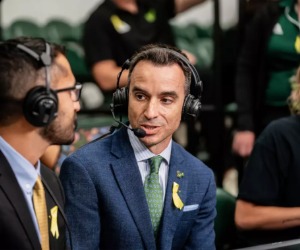
The newly appointed CEO of USF Athletics is Rob Higgins, a USF alumnus and the former executive director of the Tampa Bay Sports Commission. Higgins has successfully orchestrated high-profile events like two Super Bowls and a College Football Playoff National Championship. “The college athletics landscape has been ultra dynamic in the last three years specifically,” Higgins stated. “The days of just managing sports programs and coaches and overseeing student-athletes are over.” His extensive experience in managing large-scale events prepares him for the multifaceted responsibilities of his new role, which includes revenue generation, marketing, and compliance risk management.
According to Michelle Harrolle, who leads USF’s Vinik Sport & Entertainment Management graduate program, collegiate athletic departments are transforming into “mini corporations.” She emphasizes the importance of this shift: “An athletic director directs. A CEO strategically manages the entire enterprise. Names are perception. Language matters.” This evolution not only enhances the capabilities of athletic departments but also signals a new era of governance that is necessary for recruiting talented individuals from both collegiate and professional sectors.
While it may be easy to frame USF’s transition solely as an athletics story — a new title, a high-profile hire, and the construction of a stadium on campus for the first time in the university’s 70-year history — the deeper narrative speaks to broader institutional leadership amid transformation. Across higher education, presidents and administrators are grappling with numerous structural shifts, including demographic changes, competition for research funding, evolving workforce demands, technological disruption, and financial pressures. Intercollegiate athletics mirrors these upheavals, with governance now taking center stage.
The CEO model is part of a larger trend in which universities are reassessing their governance structures to meet contemporary challenges. For many institutions, the pressing question is whether their own governance frameworks align with the complexities of today’s landscape. While athletics may be the most visible arena illustrating this tension, it is certainly not the only one.
Ultimately, titles alone will not transform institutions. It requires alignment, clarity, and a willingness to adapt to the evolving landscape. As college sports continue to evolve, so too will higher education as a whole. Institutions that view these changes as leadership challenges rather than merely public relations issues will likely be better positioned to not only compete but also to endure in this new era.
In conclusion, the University of South Florida's decision to adopt the CEO model for its athletics department signifies a significant shift in how universities manage their athletic programs amidst a complex and competitive environment. As USF embraces this change, it sets a precedent for other institutions to consider how they can better govern and lead in the evolving world of intercollegiate athletics.
BYU and Utah's Shocking Rankings Revealed: Are They Set for a Fall or Rise in 2023?

Why Top Analysts Are Predicting a Shocking 25% Stock Market Crash by June 2026!

DNC Chair Drops Bombshell: Why 2024 Election Insights Could Spark Chaos!
Discover the SHOCKING truth about when you should eat breakfast after 50—your health could depend on it!

Just Launched: Rolli's Game-Changing API Promises to Transform Your Social Media Strategy—Are You Ready to Miss Out?

Why Iran's Soccer Officials Are Facing a SHOCKING Ban from the FIFA Congress—You Won't Believe What Happened Next!
You might also like: