
Tech Giants Are DITCHING Shoes?! Discover the Shocking Reason Behind This WILD Trend!

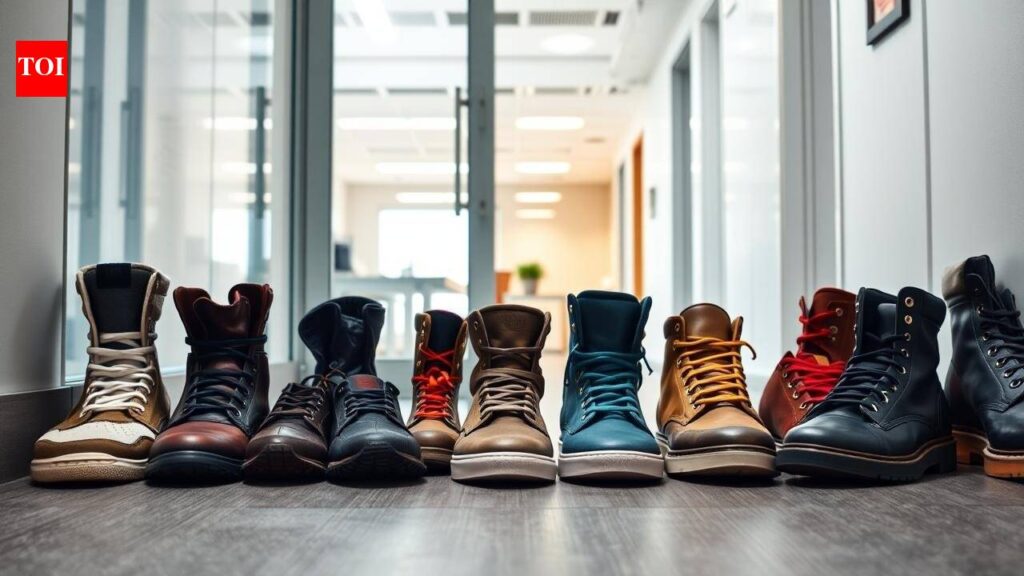
A recent social media post by a tech worker in San Francisco has sparked intrigue and discussion about an emerging workplace trend among tech startups: the “no shoes” policy. The viral image, featuring multiple pairs of shoes left outside the office door, is associated with **Cursor**, an artificial intelligence startup co-founded in 2022 by **Aman Sanger**, **Michael Truell**, **Sualeh Asif**, and **Arvid Lunnemark**, all alumni of the Massachusetts Institute of Technology (MIT). However, Cursor is not alone in this practice; other companies like **Replo**, **Spur**, **Speak**, **Flowhub**, and **Composite** are also adopting similar policies, instructing employees to leave their shoes at the entrance.
**Sneha Sivakumar**, co-founder and CEO of Spur, emphasized the benefits of this approach, stating, “It makes it feel like a second home” for her team of 10 employees and “disarms you in a positive way.” Spur specializes in using AI to identify bugs on websites, exemplifying how the tech industry is reshaping its work environment to foster comfort and creativity.
Tracing the Origins of the Trend
Analysts speculate that the no-shoes trend may have its roots in **China’s** fast-paced tech scene. It’s often linked to the notorious “996” work culture, which mandates employees work from 9 a.m. to 9 p.m., six days a week. **Margaret O’Mara**, a historian at the University of Washington, described this schedule as a “high-octane version” of existing work norms in the tech industry. After a difficult period marked by layoffs, the tech sector is tightening its operations, and the extreme work ethic exemplified by **Elon Musk**’s “extremely hardcore” approach appears to be gaining traction across the industry.
Interestingly, while the no-shoes policy is gaining renewed attention, it is not entirely new to Silicon Valley. According to **Business Insider**, the practice emerged as a hallmark of the tech culture back in 2019, alongside staples like hoodies and jeans. The onset of the **COVID-19 pandemic** in 2020 saw many professionals transitioning to remote work, which further solidified casual at-home habits. **Nick Bloom**, a Stanford economist who studies work culture, referred to this shift as “the pajama economy in action,” suggesting that as workers return to the office, they bring home-based customs with them.
The policy reflects a broader movement towards more relaxed work environments aimed at improving employee wellbeing. By allowing employees to work without shoes, companies may be fostering a more comfortable and open atmosphere, potentially leading to increased productivity and job satisfaction. This trend could also signify a cultural shift within the tech industry, where traditional corporate practices are being reexamined in favor of more flexible approaches.
As startups continue to navigate a rapidly evolving landscape, the embrace of no-shoes policies may be more than just a quirky trend; it represents a shift in workplace culture that prioritizes comfort and mental well-being. While it remains to be seen how widespread this trend will become, it highlights an ongoing conversation about employee engagement, work-life balance, and the future of workplace environments in an age where adaptability is key.
You Won’t Believe What Happens When Access to This Secret Page Gets Denied! Shocking Details Inside!
Shocking Numbers: AusPost's 3,075 Parcels PER MINUTE—Is Coles’ Profit Plunge a Warning for Investors?

Shocking New Startups Just Secured $5M in Funding—Is Your Next Investment Missing Out?

2026 Primary Shock: Why Early Voting Turnout Is Exploding and What It Means for YOU!

Is Tech Sovereignty the Key to Surviving the AI Explosion? Shocking Insights from Mobile World Congress!

Is Your Child Safe? Shocking Measles Outbreak Revealed by ECU Health and Local Officials!
You might also like: