
South Carolina's Measles Nightmare: What Nearly 1,000 Victims Wish They Knew!

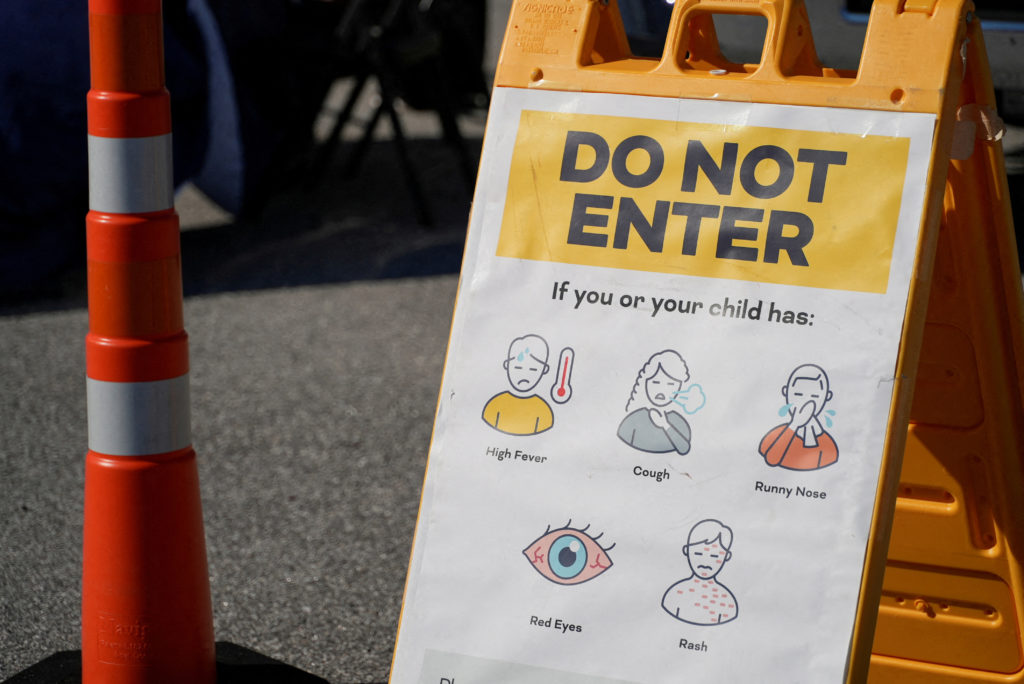
South Carolina's measles outbreak—the most severe in the U.S. in over 35 years—has officially come to an end, as state health officials announced on Monday. After surpassing a pivotal threshold of 42 consecutive days without any new outbreak-related cases, the state can now breathe a sigh of relief. Since October, a staggering 997 individuals were reported to have contracted this vaccine-preventable disease, with at least 21 requiring hospitalization. The overall response to this outbreak has cost an estimated $2.1 million.
Dr. Edward Simmer, interim director of the South Carolina Department of Public Health, emphasized the effectiveness of targeted measures: "The outbreak was predominantly contained to one area of one county and never went statewide, thanks to timely investigations, identification of those exposed, and people's willingness to stay home."
Measles is notoriously one of the most contagious viruses known to medicine, with symptoms including a high fever, cough, runny nose, and the characteristic rash. While most recover, the virus can lead to severe complications such as pneumonia, brain swelling, or even death, particularly in very young children and individuals with weakened immune systems. The measles vaccine is highly effective, with a 97% success rate after two doses.
Outbreak Spurred Increased Vaccination
The outbreak, which was centered in northwestern Spartanburg County, was particularly alarming for health officials, as it marked the fastest growth of measles cases in decades. In January alone, over 650 cases were confirmed, quickly outpacing the 2025 outbreak in West Texas, which sickened at least 762 people and resulted in the deaths of two school-aged children.
Fortunately, a quicker-than-expected decline in cases has brought relief to healthcare providers. Dr. Brannon Traxler, chief medical officer for the state health department, noted that both the increase in vaccination rates and the natural course of the outbreak contributed to the decline. Public health initiatives saw significant success, administering nearly 82,000 measles vaccines from October to March, representing a more than 30% increase from the previous year. Notably, Spartanburg County experienced a remarkable 94% rise in vaccinations.
Efforts to contain the outbreak included sending nearly 2,300 quarantine letters, conducting more than 1,670 case investigation calls, and coordinating across seven school districts to quarantine 874 students.
Despite the positive news from South Carolina, the threat of measles is far from over. The United States has already reported 1,792 cases this year—nearly 80% of the record-breaking total from 2025—and 22 new outbreaks across various states. Florida has confirmed 134 cases, and Texas has recorded 180, according to the Centers for Disease Control and Prevention (CDC).
A notable concern arises from an ongoing outbreak that began on the Arizona-Utah border. Since August, 607 infections have been reported across Utah, with Mohave County, Arizona, confirming 282 cases. Genetic analysis suggests this outbreak may have started weeks earlier, indicating a potentially larger spread than initially understood.
Dr. Ellie Brownstein, a Utah pediatrician and president-elect of the state's American Academy of Pediatrics chapter, warned, "It has marched through the state and is everywhere," as every local health district in the state has logged at least one case.
In South Carolina, the end of the outbreak offers only a brief respite. A recent case linked to international travel in Saluda County has resulted in 41 individuals needing to quarantine. Dr. Traxler urged vigilance: "We are certainly not letting our guard down, and I don't think that South Carolinians who are still vulnerable to the virus, that don't have immunity, should let their guard down."
The resurgence of measles across the Americas follows a significant outbreak that began in Canada in the fall of 2024. In the U.S., vaccination rates among children have been declining as more parents choose to opt out of required school immunizations. In November, international health officials will assess whether the U.S. still maintains its measles elimination status, which has been upheld since 2000.
Dr. Martha Edwards, president of the South Carolina chapter of the American Academy of Pediatrics, expressed her mixed feelings regarding the outbreak's conclusion: "I'm angry that many children and their parents had to worry about contracting or suffering through a disease that should have been nearly 100% preventable."
As this outbreak highlights the critical importance of vaccination, it serves as a reminder that public health measures must continually be enforced to protect vulnerable populations and maintain herd immunity.
OpenAI's Secret Weapon? You Won’t Believe What Codex Can Do for Your Coding Projects!

Stunning Secrets: How 2025-26's Top STEM Students Defied the Odds – You Won't Believe Their Stories!

Unbelievable! Over 50,000 Turn Out on Day One of Early Voting—What Happens Next Will Shock You!

Brendan Sorsby's Shocking Controversy: Which 2 Major College Football Programs Could Be Affected?

Antarctica's Deep Ocean Warms 3x Faster Than Expected—What This Means for Our Future!

Social Media Bans Are Failing: Discover the Shocking Truth Behind 80% of Users Still Thriving!
You might also like: