
Shocking Twist: White House Truce Puts 60-Day Deadline at Risk—What You Need to Know NOW!

In a significant development regarding the ongoing conflict with Iran, a senior official from the Trump administration declared that a ceasefire established in early April has effectively ended hostilities for the purposes of the War Powers Resolution. This resolution permits the President to engage in military action for a 60-day period before requiring congressional approval to continue operations. The Iran conflict, which began with U.S.-Israeli airstrikes on February 28, has led to heightened tensions in the Middle East, particularly concerning the vital Strait of Hormuz.
President Trump formally notified Congress of the military engagement just 48 hours following the initial airstrikes, setting the deadline for congressional approval at May 1. The War Powers Resolution allows for a potential 30-day extension, but administration officials assert that the ceasefire effectively pauses the 60-day countdown.
According to the anonymous senior official, there have been no exchanges of fire between U.S. and Iranian forces since the ceasefire began. "For War Powers Resolution purposes, the hostilities that began on Saturday, February 28, have terminated," the official stated, which means Trump may avoid seeking congressional approval to continue military actions.
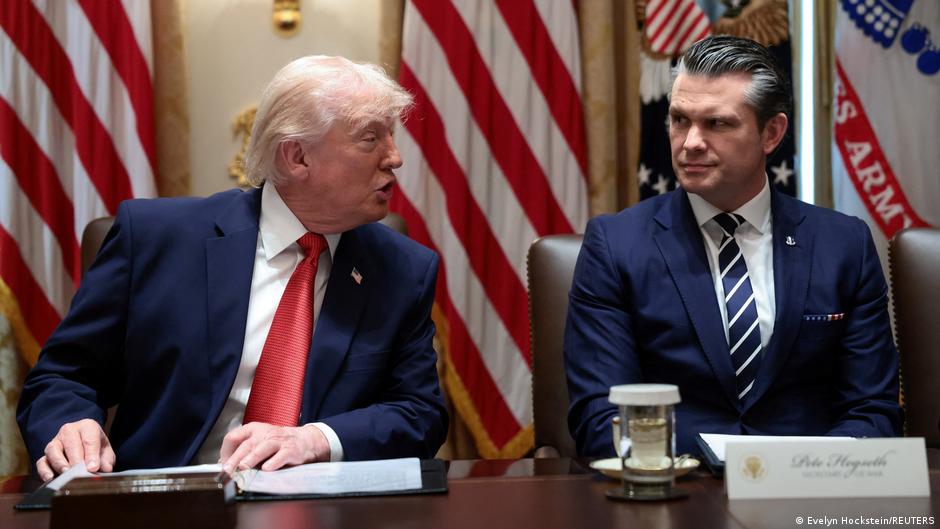
This assertion was echoed by U.S. Secretary of Defense Pete Hegseth during a Senate Armed Services Committee hearing, where he maintained that the administration's interpretation of the ceasefire is that it suspends the ticking clock of the 60-day deadline. However, this claim has sparked controversy among Democratic lawmakers, who argue that there are no legal grounds for pausing the countdown.
As the situation unfolds, analysts suggest that Trump may either choose to ignore the deadline altogether or formally request a 30-day extension from Congress. Meanwhile, the ceasefire between the U.S. and Iran appears to be holding, even as Iran maintains a blockade of the Strait of Hormuz, which is critical for global oil transportation. The U.S. Navy continues to enforce a blockade of Iranian ports, further complicating the situation.
The geopolitical tensions are not confined to U.S.-Iran relations alone. During a recent hearing, Secretary Hegseth faced intense scrutiny regarding the administration's strategies. In parallel, Germany’s Chancellor Friedrich Merz expressed his country’s willingness to contribute militarily to securing the Strait of Hormuz, provided that Iran ceases hostilities and engages in negotiations. Merz’s comments highlight the growing international concern over Iran's actions in the region.
On the Iranian side, new Supreme Leader Ayatollah Mojtaba Khamenei, who assumed leadership following his father's death in U.S.-Israeli airstrikes, has indicated Iran’s intention to maintain its nuclear program. Khamenei also suggested that Iran might introduce new legal frameworks for managing the Strait of Hormuz, which could include imposing tolls on vessels passing through.
Iran's president has condemned the U.S. naval blockade as a violation of international law, claiming it is doomed to fail. As the situation continues to evolve, the implications of the ceasefire and the broader conflict will undoubtedly resonate on international markets, particularly in the oil sector, where stability is paramount.
In summary, while the Trump administration asserts that hostilities have effectively concluded under the War Powers Resolution framework, significant challenges remain, both regionally and globally. The ongoing geopolitical chess game plays a crucial role in shaping U.S. foreign policy and international relations moving forward.
Is This the End of Commercial Real Estate? Shocking Insights from the Latest Pipeline Report!

You Won't Believe Which Marin County Property Sold for $5 Million – Shocking Real Estate Deals Inside!

You Won't Believe What Happened When 1,000 Swindon Residents Watched This Climate Change Film!
You Won't Believe What Happens When Access is Denied: 7 Shocking Consequences That Could Change Everything!

You Won't Believe These 7.7% Dividend Stocks from the Middle East—Investors Are Rushing!

You Won't Believe How Mark Carroll's Daughter Defied All Odds to Become an NFL Cheerleader!
You might also like: