
Shocking New Trump Plaques Slam Biden, Obama & Bush—What They Reveal Will Leave You Speechless!

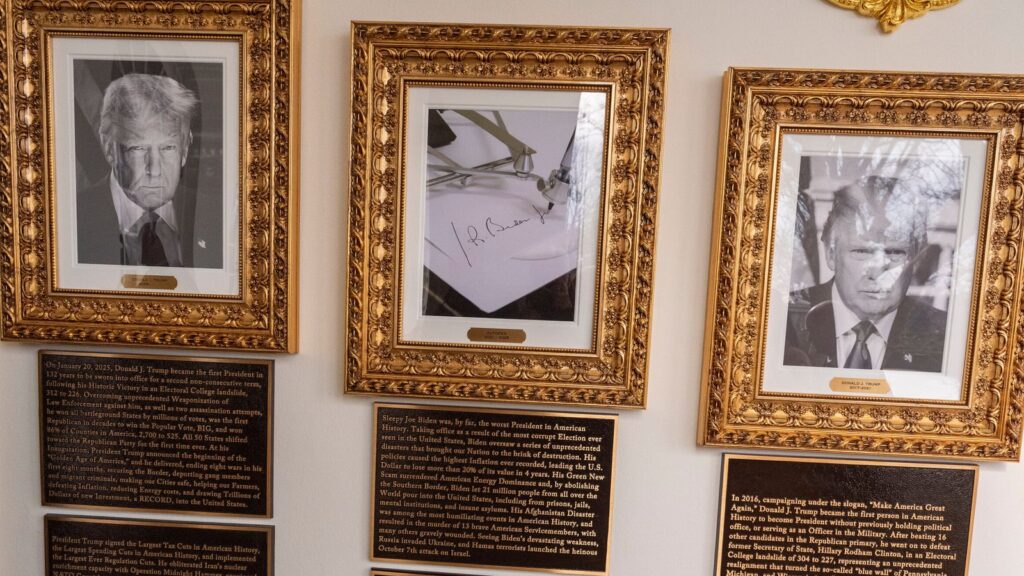
In a striking display of partisan sentiment, the Trump administration has installed a series of new plaques beneath the portraits of former U.S. presidents in the White House. These plaques, reportedly penned by former President Donald Trump himself, take aim at his predecessors in characteristic fashion. Among the most notable is a plaque designated for President Joe Biden, which reads: “Sleepy Joe Biden was, by far, the worst president in American history.”
This initiative is part of the newly created "Presidential Walk of Fame," which showcases portraits of every U.S. president. Interestingly, President Biden’s image has been replaced by that of an autopen, a device used for reproducing signatures, which Trump has previously claimed symbolizes Biden's alleged inability to lead effectively. Trump has often asserted that Biden’s mental capacity waned during his presidency, suggesting that his staff made decisions for him without his knowledge.
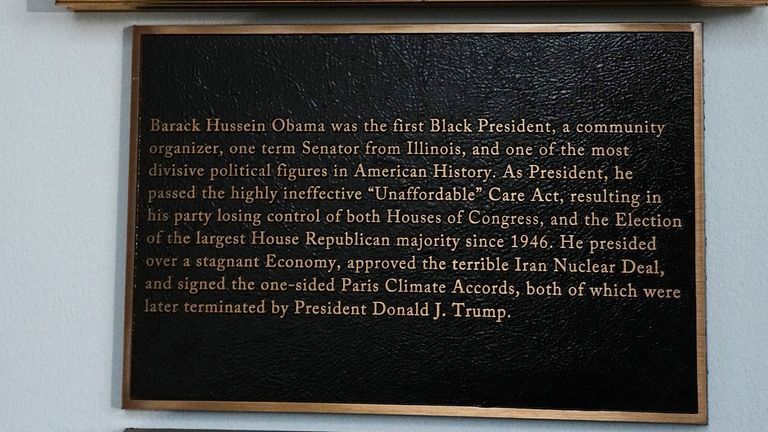
The plaques also contain provocative statements about other former leaders. One referring to Barack Obama labels him as “one of the most divisive political figures in American history.” Another plaque under Bill Clinton’s portrait highlights that “in 2016, President Clinton’s wife, Hillary Clinton, lost the presidency to President Donald J. Trump!” Even George W. Bush, a fellow Republican, is not spared; his plaque states that he “started wars in Afghanistan and Iraq, both of which should not have happened.”

The new display has sparked significant attention and debate regarding its implications for political discourse in America. White House press secretary Karoline Leavitt described the plaques as “eloquent” representations of each president's legacy, asserting that many were written directly by Trump himself.
Additionally, the décor of the White House appears to reflect Trump’s personal style, featuring increased gold accents that echo the lavish design elements of Trump Tower and his Mar-a-Lago estate in Florida. The choice to include such confrontational and often misleading messages raises questions about the role of the White House as a space for respectful historical reflection versus a platform for ongoing political battle.
As the United States continues to grapple with political polarization, the installation of these plaques may serve as a symbol of the deepening divides within the nation. By publicly denouncing past presidents, Trump’s administration appears to underscore the contentious atmosphere currently permeating American politics. The implications of such displays extend beyond mere decorum, reflecting a broader trend of political rhetoric that prioritizes division over unity.
As this narrative unfolds, the American public is left to ponder the role of historical legacy and the responsibilities of current leaders in shaping the national discourse. Whether these plaques will be seen as a fitting tribute or a further entrenchment of political animosity remains to be seen, but they undoubtedly mark a significant moment in the ongoing saga of American political life.
Unlock the Secret: 7 Game-Changing Summer Snacks for PCOS You’ll Regret Missing!

Kentucky’s Budget Forecast Takes an Unexpected Turn—What You MUST Know Before it’s Too Late!
You Won't Believe What Trump Just Said About Immigrants—The Shocking Numbers Will Leave You Speechless!

Planet Fitness Employee Brutally Attacked in Little Havana—You Won’t Believe the Shocking Details!

Is Dulce Maria Alavez Really Missing? Shocking New Claims and a Major Prosecutor's Warning!
Is Your Browser Putting You at Risk? Discover the Shocking Truth NOW!
You might also like: