
Can the Market Survive Climate Chaos Without Government? Shocking Stats Inside!

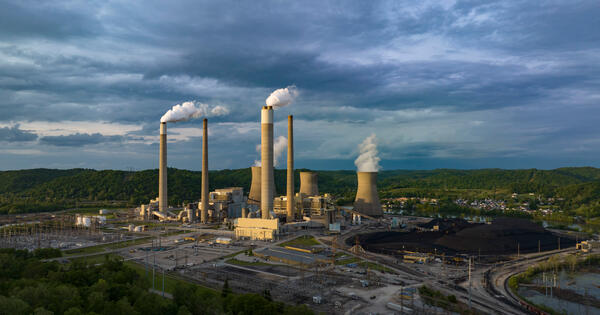
The potential disappearance of federal climate regulations raises pressing questions about the future of climate risk pricing in financial markets. If the legal framework supporting these regulations vanishes, can the markets adequately address the climate crisis without government intervention?
The 2009 EPA Endangerment Finding was significant not only for triggering Clean Air Act regulations but also for serving as a crucial risk signal for capital markets. For asset managers, insurers, and corporate boards, this finding indicated that climate risks could translate into financial risks due to possible regulatory actions. Consequently, these entities incorporated climate risk into their valuations and loan agreements. Removing this signal doesn’t erase the inherent physical and transitional climate risks; it merely introduces a layer of regulatory uncertainty, which historically has led markets to misprice non-regulated risks.
Experts predict a fracturing or increased volatility in pricing rather than a total collapse. For instance, large institutional lenders with substantial European lending exposure will likely continue to price physical climate risks—like floods, droughts, and heat stress—because these risks remain relevant regardless of the U.S. regulatory landscape. However, without federal carbon regulations, risks associated with stranded fossil fuel infrastructure may diminish in importance for creditors, as there is no immediate indication that we are nearing peak oil consumption.
The risk doesn’t vanish from the public balance sheet—it just moves from ex ante regulatory cost to ex post disaster expenditure, almost certainly at higher total cost.
In the realm of equity markets, significant shifts from major players are not anticipated. Passive index funds that adhere to ESG (environmental, social, and governance) mandates, particularly those shaped by European regulations like the Sustainable Finance Disclosure Regulation, cannot easily disregard climate factors. On the other hand, large U.S. public pension funds in more conservative states are already under pressure to downplay ESG analysis, a trend that will remain unchanged.
The SEC's climate disclosure rule has been effectively dormant, and reviving it under a new administration may prove challenging. Nevertheless, voluntary frameworks like those from the Task Force on Climate-related Financial Disclosures remain popular among businesses keen on navigating climate-related financial risks. Companies lacking a robust climate risk narrative may choose not to disclose their risks, leading to a less informative marketplace regarding where climate risks will be most acute.
Despite these challenges, markets will still strive to price climate risks accurately. However, the absence of government support complicates the prediction and pricing of systemic risks. Concurrently, the erosion of federal climate data will make it increasingly difficult to assess potential tipping points, especially as many risks beyond a 2°C temperature rise become effectively uninsurable, including threats such as wildfires and droughts in the U.S. West.
Should U.S. federal climate regulations dissipate entirely, three trends could emerge concurrently: the acceleration of physical climate damages will reduce the pool of investable assets; private insurers may withdraw, concentrating losses on individuals and the federal government; and the market signal for investments in decarbonization will become increasingly difficult to discern. All these factors would ultimately increase the fiscal burden on a government that has retreated from regulatory involvement.
How will U.S. firms respond strategically to these developments? Consider a two-by-two matrix: one axis represents whether a company has already priced the financial impact of climate risk (yes/no), and the other indicates if the company has established controls to manage these impacts (yes/no). The company's response will largely depend on its current position within this framework:
- Yes/Yes: Companies in this category have effectively priced risks and opportunities and developed strategies for managing them. They are likely to maintain their climate goals as strategically important.
- No/No: These companies have not engaged in any climate analysis and will not see any change.
- Yes on pricing analysis/No on controls: Firms in this situation may retreat from climate disclosures and targets, as they risk liability without a solid grasp of how to capitalize on climate opportunities.
- No on pricing analysis/Yes on controls: Similar to the previous group, these companies are likely to retreat as discussing controls for non-tangible risks is not beneficial.
Several sectors may respond differently: multinational corporations with substantial European operations must adhere to the Corporate Sustainability Reporting Directive, which mandates climate-related disclosures. Companies in industries with lengthy asset planning cycles, such as utilities and real estate, recognize that a 30-year asset in a flood-prone area is inherently risky. Moreover, firms with institutional investors reliant on large asset managers will still feel pressure to integrate climate risk models, even if they don’t publicize them.
Technology giants like Microsoft, Google, and Amazon will likely continue their energy transition strategies, driven by the financial advantages of renewable energy procurement. In contrast, carbon-intensive industries with limited international exposure might retreat from carbon reduction efforts, particularly if they have not assessed the long-term costs of mitigation compared to early investments.
The divergence between U.S. climate policy and that of other major markets, including the EU, China, and Canada, is becoming increasingly pronounced. The EU, for example, has established a functioning carbon market and mandatory climate disclosures, while the U.S. is moving away from such regulations. This divergence poses significant implications:
The U.S. is essentially telling the rest of the world to bring their pollution here.
One immediate effect is trade. The Carbon Border Adjustment Mechanism (CBAM) will impose carbon prices on U.S. exporters in sectors such as steel, aluminum, and cement, effectively acting as a tariff. This shift could significantly impact U.S. goods as European carbon pricing rises.
Moreover, investment flows tend to favor regions with stable policy signals, making the U.S. increasingly unreliable for clean energy investments. With this regulatory retreat, clean energy investments may migrate toward Europe and Asia, while temporary opportunities may arise in fossil fuel infrastructure.
Finally, if the U.S. reduces its regulatory demands, it risks becoming a "carbon refuge" for industries that produce high emissions. While this approach might offer short-term economic benefits, it also threatens public health, as the pollution associated with fossil fuel combustion is linked to severe health issues, including asthma and premature death.
As the U.S. climate policy landscape continues to evolve, the interplay between regulatory frameworks and market forces will be critical in shaping the financial implications of climate change for businesses and investors alike.
Is the 2024 Election Rigged? Shocking New Evidence Links Top Officials to Iran Conflict!

Cavaliers' G League Shock: Why This 2-Time All-Star's Return Could Change Everything!
Access Denied—You Won’t Believe What They’re Hiding From You! Find Out Now!

Bitcoin Plummets to $10K? Shocking Searches Surge—Is Your Investment at Risk?

US Soccer's Josh Sargent Shocks Fans with $22M Toronto FC Move—What This Means for His Future!

You Won't Believe How the Texas Longhorns Changed NBA 2K Forever—Find Out What Happened!
You might also like: