
Scientists Uncover Shocking Genetic Secrets Behind Blindness—Are You at Risk?

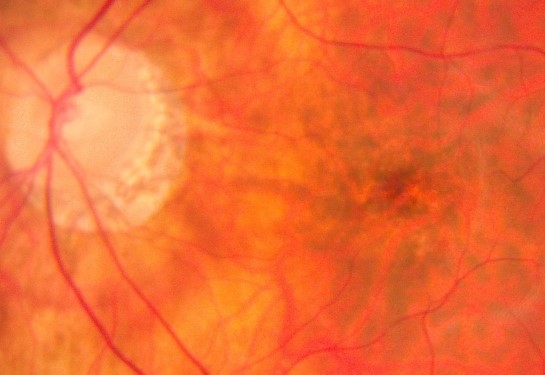
(SACRAMENTO) — A significant breakthrough has emerged from the California National Primate Research Center at the University of California, Davis, where researchers have identified a form of inherited blindness in rhesus macaques that closely mirrors a common inherited optic nerve disease in humans known as autosomal dominant optic atrophy (ADOA). This discovery, published on April 15 in the Proceedings of the National Academy of Sciences, opens up new avenues for understanding ADOA and potentially developing treatments for this debilitating condition.
ADOA, which affects approximately 3 in 100,000 people worldwide, leads to progressive vision loss and can result in complete blindness. The disease typically manifests through blind spots or scotomas, and currently, there are no effective treatments available. “Many patients are diagnosed between the ages of 10 and 30,” said Sara Thomasy, the senior author of the study and a professor of comparative ophthalmology at the Weill School of Veterinary Medicine and the Department of Ophthalmology and Vision Science at UC Davis, highlighting the urgent need for research focused on this age group.
In humans, ADOA is linked to mutations in the OPA1 gene, which plays a crucial role in mitochondrial function. Mitochondria are essential as they provide energy to cells, and the long nerve axons extending from the retina to the brain are particularly susceptible to mitochondrial defects. Given that rhesus macaques have eye structures and visual systems remarkably similar to those in humans, Thomasy and her team examined a cohort of monkeys at the research center. They found that some of these monkeys harbored a spontaneous mutation in the OPA1 gene, which caused eye changes akin to those seen in ADOA patients.
“ADOA affects about 3 in 100,000 people worldwide, causing progressive vision loss and eventual blindness. People with the disease develop blind spots, or scotomas, and there is no available treatment.” — Sara Thomasy, professor of comparative ophthalmology, Weill School of Veterinary Medicine and Department of Ophthalmology and Vision Science
The origins of this discovery underscore the adaptability of scientific inquiry during challenging times. The first author, Tracy Jaggers, a veterinary student at Western University College of Veterinary Medicine, originally planned a behavioral study at the primate center. However, when the COVID-19 pandemic disrupted those plans, she pivoted to investigate existing data on the macaques. “I actually expected it to be a negative study,” Thomasy admitted, but Jaggers’ determination and analytical skills led them to identify the connection between the OPA1 mutation and eye abnormalities.
Through advanced imaging techniques utilized in human ophthalmology, they confirmed that an animal displaying eye abnormalities also carried the OPA1 mutation. This pivotal finding facilitated a grant application to the National Eye Institute, enabling them to expand their research and establish a breeding colony for further study.
With this new breeding colony, the researchers can explore how ADOA progresses over time in these monkeys and examine differences based on whether they inherit one or two copies of the OPA1 mutation. This model holds potential for studying gene therapy aimed at preventing ADOA or testing treatments that could mitigate its progression in humans. In addition, Thomasy and her collaborators have successfully identified parallels between other inherited eye diseases in macaques and their human counterparts, including conditions such as achromatopsia and age-related macular degeneration.
The research team, which comprises experts from multiple institutions, including contributions from Jun Wang, Rui Chen, J. Timothy Stout, and Jeffrey Rogers of Baylor College of Medicine, the University of Wisconsin-Madison, and the Legacy Devers Eye Institute in Portland, has received financial support from the National Institutes of Health for this work.
The findings not only pave the way for a deeper understanding of ADOA but also emphasize the critical importance of research on inherited vision disorders. At the UC Davis Eye Center, where world-class care and pioneering research converge, the focus remains on transforming vision care and developing innovative treatments for blinding eye diseases. As scientists continue to unravel the complexities of such conditions, the hope for better outcomes for affected individuals grows stronger.
Salah's Shocking Return: Will He Risk It All to Save Liverpool's Season? You Won't Believe What Happens Next!

You Won't Believe Which Teams Are Facing Off in the 2026 Women's Soccer Schedule—Get Ready for Shocking Showdowns!

Pentagon's Shocking $10 Billion Deal with Google: What They Aren't Telling You!
Utah's Shocking Measles Outbreak: Why Experts Demand Infants Get Extra MMR Vaccine NOW!

How Coach Jesse Newton Transformed a Struggling Women's Soccer Team into Champions Overnight!

BlackRock's Shocking $112M Bitcoin Withdrawal: What This Means for Your Investments!
You might also like: