
Revolutionary AI Partnership Could Transform Global Health Education—Are You Ready for the Change?

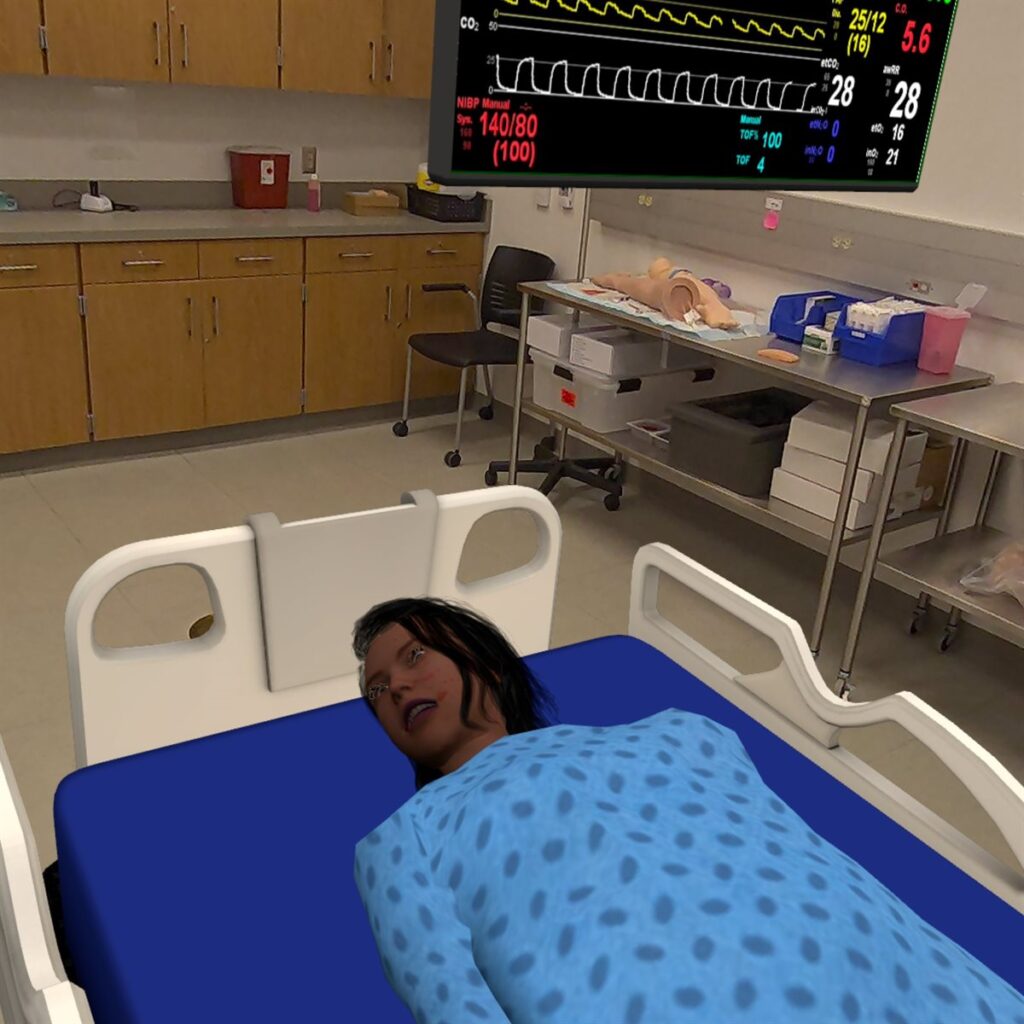
Researchers at Carle Illinois College of Medicine and Chonnam National University (CNU) in South Korea are pioneering an innovative approach to medical education that could reshape how future doctors are trained globally. They are harnessing the power of artificial intelligence (AI) and extended reality (XR) to automatically monitor and evaluate the physical indicators of medical students' learning during immersive simulations designed to replicate clinical environments. This groundbreaking research not only aims to enhance training effectiveness but could also establish new international standards for data collection in immersive learning.
Leading this initiative are Cedric Dumas, an XR Developer at CI MED’s advanced JUMP Simulation Center, and Professor Jeeheon Ryu, director of CNU’s Center for Immersive Learning Technology. Their collaboration combines CNU’s expertise in learning sciences with CI MED’s advanced simulation development, backed by a six-year grant from the National Research Foundation of Korea—the South Korean counterpart to the National Science Foundation. This partnership builds on existing studies that utilize AI to enhance medical training through the automatic tracking and assessment of learner activities.
The research is rooted in the concept of embodied cognition theory, which posits that learning is a physical exercise influenced by how an individual interacts with their surroundings. The team employs cutting-edge technology to track a range of physical indicators—including eye movements, speech patterns, attention spans, and body language—to provide real-time feedback tailored to how students engage with immersive clinical simulations.
"It is meant to serve educators during or after teaching activities to improve their understanding of the learning process and how their students have learned. Ultimately, it would help to detect issues, adverse events, etc.,"
said Dumas, emphasizing the dual focus on enhancing educational outcomes and identifying potential learning barriers.
One of the initiative’s primary goals is to facilitate early intervention for both individuals and groups when the system identifies physical indicators that may signal obstacles to learning. Ryu highlights the potential benefits, stating, "If we can have more sophisticated information about the learners available to the professors and instructors, it could have benefits in giving some prioritized help for the student, before they’re at the end of the process."
Leveraging CI MED’s strengths in XR development, the research team also aims to create new immersive simulations that utilize digital avatars and digital twins—virtual representations designed to emulate human interactions. These simulations will focus on enhancing decision-making and teamwork skills, particularly in scenarios where teams may need to collaborate remotely rather than in person. The newly developed simulations aim to be integrated into CI MED’s curriculum and could serve as a template for future simulation content worldwide.
Ryu envisions that their most ambitious aspiration is to collaborate across disciplines and national borders to establish global protocols for AI-driven multimodal data collection to assess learner behavior. CI MED's leadership within the field of engineering-based medical education positions it favorably to lead this initiative. The college is also at the forefront of the Global Consortium on Innovation and Engineering in Medicine, which serves as a platform for sharing best practices to advance medical school curricula incorporating engineering principles.
Ryu chose to partner with the Jump Simulation Center due to CI MED's established expertise in executing complex group simulations, along with its commitment to XR research and development. This collaboration is further enriched by CI MED’s engineering-informed medical curriculum, enhancing the prospects for developing this advanced training framework.
For decades, simulations have been a cornerstone in the education of future physicians, allowing students to refine their clinical skills and problem-solving abilities in a safe environment. CI MED’s JUMP Simulation Center is equipped with state-of-the-art tools that range from task trainers for specific clinical skills to high-fidelity manikins and virtual reality setups, now bolstered by extended reality configurations that enable students to practice clinical interactions and collaborative problem-solving.
As the medical education landscape evolves, this research initiative at the intersection of technology and education has the potential to make a significant impact, not only in the U.S. but also on a global scale. By embracing cutting-edge solutions, the future of medical training may make strides towards a more adaptable and effective educational framework, ensuring that tomorrow’s doctors are better prepared to meet the challenges of an ever-changing healthcare environment.
You Won't Believe How Ocean View Girls' Soccer Overcame Insurmountable Odds to Reach Their First CIF Final!
Your Browser is Outdated: Discover the Shocking Risks You Can't Afford to Ignore!

El Niño's Shocking Return in 2026: Is Your Home Prepared for the Heat Wave?

Rex Healthcare's Shocking $150K Settlement: Are You at Risk for Vaccine Discrimination?

Are You Ready? Massive New Real Estate Rules Coming in 2026 Could Cost You Thousands!

Mark Cuban's Shocking Revelation at AI Startup Panel: What He Said Will Leave You Speechless!
You might also like: