
El Niño's Shocking Return in 2026: Is Your Home Prepared for the Heat Wave?

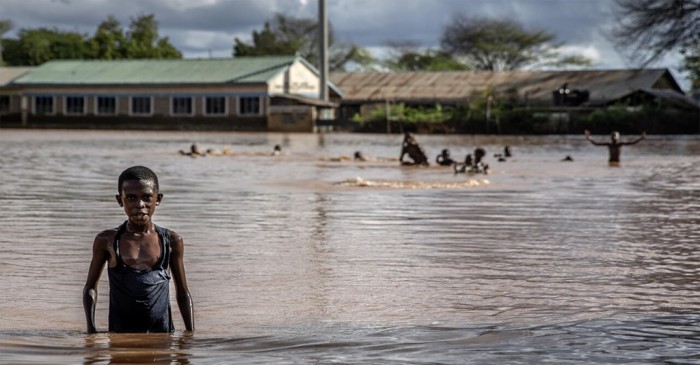
The warming El Nino weather phenomenon is on the horizon, potentially driving global temperatures to unprecedented levels. According to the U.S. National Oceanic and Atmospheric Administration (NOAA), there is a 50- to 60-percent chance that El Nino will develop in the July to September period and beyond. This development comes as the World Meteorological Organization (WMO) is expected to issue an update on El Nino’s status soon.
To understand the significance of El Nino, it’s essential to recognize it as part of the natural climate cycle known as the El Nino-Southern Oscillation (ENSO). This cycle has two distinct phases: El Nino—characterized by warmer ocean temperatures—and its counterpart, La Nina, which brings cooler temperatures. The term "El Nino," which translates to "the boy" or "the Christ Child," was coined in the 19th century by Peruvian and Ecuadoran fishermen to describe the unusually warm ocean current that would disrupt their fishing just before Christmas.
When El Nino develops, it can weaken the consistent trade winds that usually blow from east to west across the tropical Pacific. This alteration affects the distribution of warm water, which in turn influences rainfall patterns and wind currents worldwide. The additional heat released into the atmosphere during an El Nino event typically results in a temporary increase in global temperatures by about 0.1 to 0.2 degrees Celsius. As noted by NOAA meteorologist Nat Johnson, "All else being equal, a typical El Nino event tends to cause a temporary increase in the global mean temperature."
El Nino events usually occur every two to seven years and can lead to various climatic consequences. For instance, they often cause drier conditions in regions such as Southeast Asia, Australia, and southern Africa while resulting in wetter conditions in places like the southern United States, Peru, and Ecuador. The last El Nino took place during 2023-2024, contributing to making 2023 the second hottest year on record, with 2024 potentially set to break that record.
Looking ahead, climate experts are warning that if El Nino does form this year, it could set the stage for another record-breaking year in 2026. Carlo Buontempo, director of the European Union’s Copernicus Climate Change Service, has stated that 2026 could be "another record-breaking year" if El Nino materializes. However, climate scientist Tido Semmler from Ireland’s National Meteorological Service points out that the impact of El Nino would likely be felt more significantly in 2027, as it takes time for the global atmosphere to respond to its effects. Semmler remarked that there is a risk of 2026 being the warmest year on record even without El Nino, largely due to ongoing trends in global warming.
The latest La Nina episode, which began in December 2024, was relatively weak and is expected to transition into a neutral phase between February and April. La Nina cools the eastern Pacific for a period of one to three years, producing effects opposite to those of El Nino. While La Nina leads to wetter conditions in parts of Australia, Southeast Asia, and India, it causes drier conditions in South America. Despite La Nina's influence, 2025 still registered as the third hottest year on record.
This year, the NOAA has also adopted a new method for assessing El Nino and La Nina events. The old method, known as the Oceanic Nino Index, compared three-month average sea surface temperatures in one region of the Pacific with a 30-year average for that same area. However, as ocean temperatures have accelerated, that outdated 30-year average has become less relevant. The new approach, the Relative Oceanic Nino Index (RONI), offers a clearer and more reliable means to track these phenomena in real time, by comparing the temperature of the east-central Pacific with the rest of the tropics.
As discussions around climate change continue to evolve, the implications of phenomena like El Nino and La Nina become ever more critical. Understanding how these cycles impact global weather patterns can prepare communities for the climatic shifts ahead, whether that means flooding in the southern United States or droughts in Southeast Asia.
Rex Healthcare's Shocking $150K Settlement: Are You at Risk for Vaccine Discrimination?

Are You Ready? Massive New Real Estate Rules Coming in 2026 Could Cost You Thousands!

Mark Cuban's Shocking Revelation at AI Startup Panel: What He Said Will Leave You Speechless!

Flags at Half-Staff: What Governor Kelly Just Did for Rep. John Resman Will Shock You!

Detroit's Shocking Trade for David Montgomery: Did They Just Lose Their Future? Fans Are Fuming!

Californians Are Paying for Health Insurance They’ll Never Use—Is Your Plan a Money Pit?
You might also like: