
Poliovirus Cases Skyrocket in 2026: Are You and Your Family at Risk? Discover the Shocking Truth!

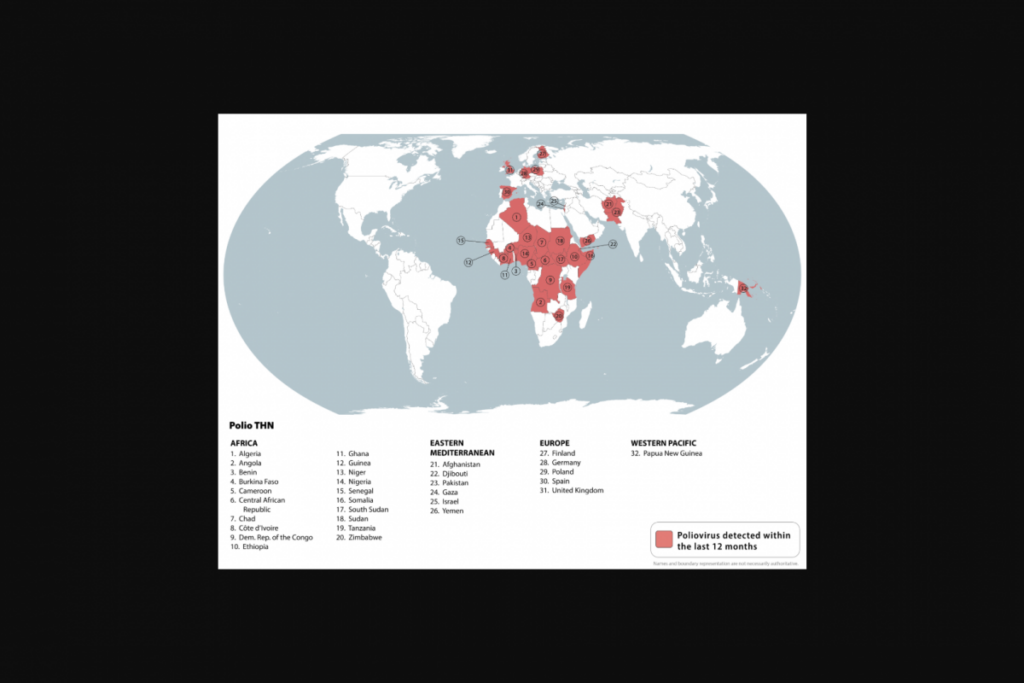
In early 2026, the Global Polio Eradication Initiative (GPEI) is intensively tracking poliovirus detections worldwide, particularly through wastewater surveillance in regions not traditionally associated with the disease. The focus is on both the ongoing transmission in core reservoirs and unusual findings in non-endemic areas, highlighting the persistent risk posed by poliovirus, which remains a global health threat.
As of February 17, 2026, there have been no reported human cases of acute flaccid paralysis (AFP) in newly affected areas of Europe this year, but the GPEI emphasizes that these findings serve as crucial early warnings. The GPEI's efforts include monitoring wastewater samples and reporting cases of AFP, which can signal the presence of poliovirus in the community.
Recent detections in the United Kingdom and Germany illustrate the ongoing surveillance challenges. In the UK, a circulating vaccine-derived poliovirus type 2 (cVDPV2) was identified in an environmental sample collected around January 28, 2026, during routine surveillance conducted by the UK Health Security Agency. Fortunately, no associated cases of paralysis have been identified. In Germany, heightened surveillance is ongoing following the detection of wild poliovirus type 1 (WPV1) in Hamburg's wastewater in late 2025, which has a genetic link to a cluster in Afghanistan. Although additional environmental samples related to this strain have surfaced, no new AFP cases have emerged. It is noteworthy that this WPV1 strain is distinct from the concurrent cVDPV2 findings in the region.
These alarming detections occur amidst a broader global landscape where the U.S. Centers for Disease Control and Prevention (CDC) has issued Level 2 Travel Health Notices for 32 countries due to the ongoing circulation of poliovirus. This list includes the United Kingdom, Germany, and Israel, indicating a heightened awareness of the poliovirus risk for travelers. Moreover, the World Health Organization (WHO) continues to classify polio as a Public Health Emergency of International Concern, stressing that poliovirus can pose a risk to children everywhere, regardless of geographic boundaries.
To combat ongoing cVDPV2 outbreaks, the GPEI is relying heavily on the novel oral polio vaccine type 2 (nOPV2), which is regarded as more genetically stable compared to earlier vaccines. As of February 2026, the WHO has prequalified additional supplies of nOPV2, bolstering global outbreak response capacity. Since its introduction, over 2 billion doses of nOPV2 have been administered worldwide, contributing to the efforts to control and eliminate polio.
The CDC has also recommended that fully vaccinated travelers may be eligible for a third (booster) dose when visiting areas at risk of polio transmission. With the recent detections in early 2026, the reality is clear: polio remains just a plane ride away from the U.S., making vaccination and awareness essential for travelers heading to high-risk regions.
The GPEI, WHO, and CDC assert that high vaccination rates, vigilant surveillance, and international cooperation are critical components in the pursuit of a polio-free world. For American travelers in 2026, most travel vaccine clinics are prepared to offer inactivated poliovirus vaccine (IPV) vaccinations before departure. This proactive measure is vital in ensuring that travelers are protected against a disease that, despite being eliminated in many parts of the world, continues to rear its head in unexpected locations.
Are Your Kids’ Skincare Choices Ruining Their Skin? Shocking Social Media Trends Revealed!

You Won’t Believe Who Just Became a Fifty Over Fifty Icon—Meet the Man Changing Lives at 70!

Is This Hidden Indicator About to Crash the Stock Market? Experts Warn You Could Lose Everything!

Is Your Favorite Snack Hiding a Shocking Secret? The Alarming Truth About Ultra-Processed Foods!

Is Your Business Ready? The Shocking Truth About the 2026 Maui Marathon Expo You Can’t Afford to Miss!

You Won't Believe How Nearly 100 Homes Sold in January Could Change Your Real Estate Game!
You might also like: