
Peru's Presidential Election Results Delayed: What Shocking Truths Will Emerge by Mid-May?

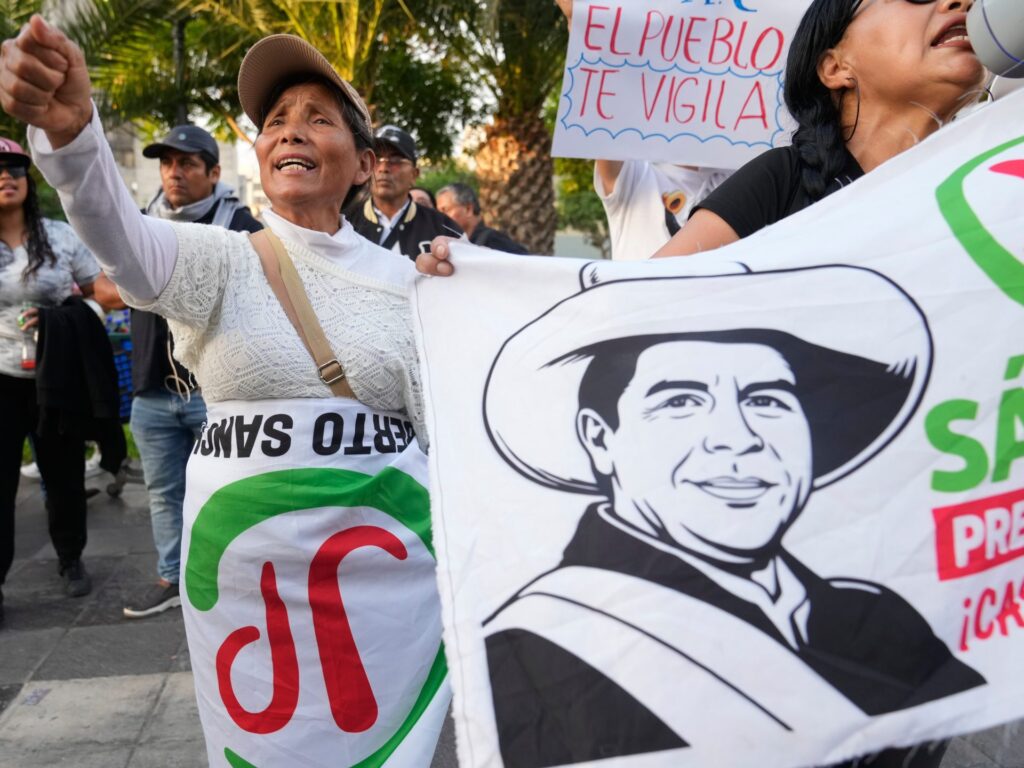
The EU’s election observer said the vote met democratic standards despite fraud allegations.
Published On 19 Apr 2026
Peru's presidential election remains shrouded in uncertainty as the final results will not be confirmed until mid-May, according to the country's electoral authority. This delay comes as officials continue to review challenged ballots from last Sunday’s vote, raising questions about the integrity of the electoral process.
As of now, with 93 percent of ballots counted, right-wing candidate Keiko Fujimori is leading with 17 percent of the vote. However, the race for the second position is tight, with left-wing candidate Roberto Sanchez at 12 percent and ultra-conservative Rafael Lopez Aliaga just behind at 11.9 percent. The margin separating Sanchez and Lopez Aliaga has narrowed slightly to about 13,600 votes as of Saturday.
Yessica Clavijo, secretary general of the National Jury of Elections (JNE), explained that the delay in finalizing the results is due to a review of over 15,000 challenged ballots. Notably, around 30 percent of these challenges pertain to the presidential race, with the remainder relating to legislative elections.
Lopez Aliaga has been particularly vocal about the election process, alleging fraud without providing evidence and calling for the annulment of the election results. He has urged supporters of his Popular Renewal Party to protest against the alleged irregularities. Sanchez, while also critical of the election process, emphasized the need for an investigation into the organizational issues, stating, “These serious organisational issues must be investigated and there must be appropriate sanctions.”
The backdrop of this election is significant; a record 35 candidates vied for the presidency in a nation long plagued by political instability. Of Peru's last eight presidents, four have been impeached by Congress, highlighting the turbulent nature of its political landscape.
Adding to the electoral chaos, some polling stations experienced disruptions due to delays in the delivery of election materials, causing authorities to extend voting into Monday in parts of Lima. Despite these setbacks, the European Union's election observer mission has stated that the vote met democratic standards.
On a troubling note, the situation has escalated to the point where prosecutors raided a warehouse operated by the National Office of Electoral Processes (ONPE), the agency responsible for organizing the election. Four officials have been reported to the JNE for alleged offenses linked to voting rights, further deepening the crisis surrounding this election.
As Peru navigates this tumultuous political landscape, the upcoming weeks will be crucial in determining the legitimacy of the election and the future of its governance. The implications of these results could resonate deeply within the fabric of Peruvian society, affecting both domestic policy and the international community's perception of Peru's democratic integrity.
Mark Wahlberg's 4AM Fitness Secret: What He Does by 5AM Will Shock You!

Why Are Phoenix, Denver, and Las Vegas Suddenly at Risk of Economic Collapse? Shocking Truth Revealed!

Shocking Real Estate Deals in Chartiers Valley: Are You Missing Out on These Surprising Sales?

Keisha Lance Bottoms’ Shocking Memoir Reveals the Untold Secrets Behind Her Political Rise!
You Won't Believe How 10 Simple Strategies Could Skyrocket Voter Centers This Year!
New Jersey Governor's Shocking Claim: Why $100 Train Tickets from NYC Are Just the Beginning!
You might also like: