Military on Alert: What Happens When Trump Quarantines Venezuelan Oil? Shocking Consequences Ahead!

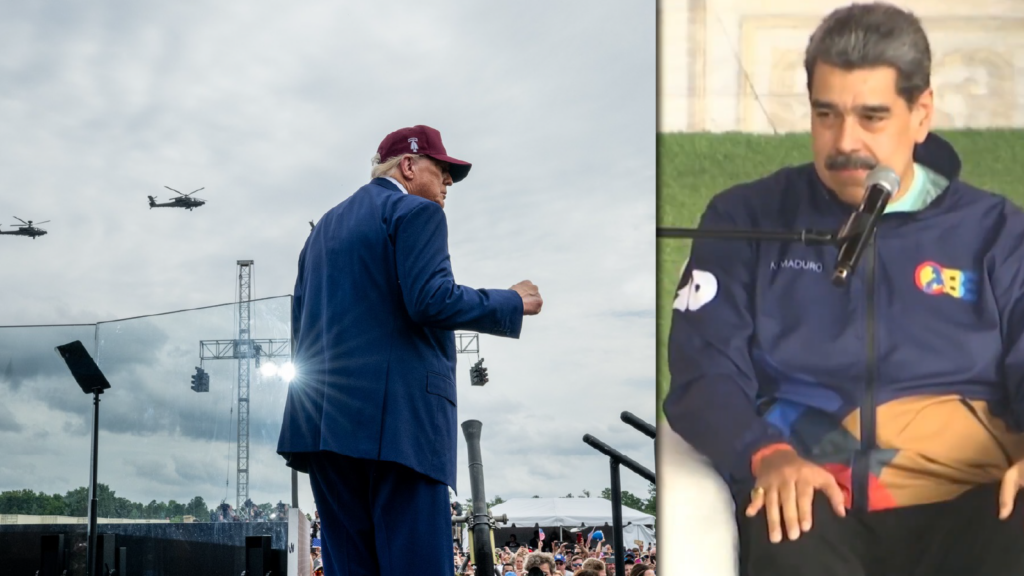
The White House has directed U.S. military forces to concentrate predominantly on enforcing a so-called “quarantine” of Venezuelan oil for at least the next two months. This move indicates that the Trump administration is intensifying its economic warfare strategy instead of resorting to direct military intervention against the regime in Caracas. A U.S. official, speaking on condition of anonymity, stated that this directive stems from the administration's belief that sanctions and oil interdictions can compel rapid concessions from Venezuelan leadership.
“While military options still exist, the focus is to first use economic pressure by enforcing sanctions to reach the outcome the White House is looking for,” the official explained. President Donald Trump has been notably elusive about his ultimate goals in Venezuela; however, he has privately urged Venezuelan President Nicolas Maduro to leave the country. Earlier this week, Trump suggested that it would be “smart” for Maduro to step aside. The U.S. administration is reportedly convinced that its pressure campaign is nearing a tipping point.
“The efforts so far have put tremendous pressure on Maduro, and the belief is that by late January, Venezuela will be facing an economic calamity unless it agrees to make significant concessions to the U.S.,” the official added.
Drug Claims, Strikes, and Covert Operations
Trump has frequently attributed the flood of illegal drugs in the United States to Venezuela. His administration has conducted airstrikes against vessels originating from South America that U.S. officials allege were transporting narcotics. These operations have attracted considerable international criticism, with several countries condemning them as extrajudicial killings. Additionally, Trump has threatened to bomb drug-related infrastructure on land and has authorized covert CIA activities aimed at destabilizing Maduro's government.
In the Caribbean Sea this month, the U.S. Coast Guard intercepted two tankers carrying Venezuelan crude oil. The comments from the White House official followed reports that the Coast Guard is poised to execute a third seizure involving a sanctioned vessel named the Bella-1, following an initial attempt earlier in the week.
Venezuela’s ambassador to the United Nations, Samuel Moncada, responded sharply to these developments. “The threat is not Venezuela,” Moncada stated. “The threat is the U.S. government.”
Massive Military Buildup in the Caribbean
The administration has yet to clarify what it means for the military to focus “almost exclusively” on oil interdiction. While the U.S. military is engaged in operations worldwide, most of its resources are not specifically designed for maritime enforcement. Nevertheless, the Pentagon has assembled a considerable force in the Caribbean, comprising more than 15,000 troops, an aircraft carrier, 11 additional warships, and over a dozen F-35 fighter jets. Although some of these assets can assist in enforcing sanctions, others, particularly the fighter aircraft, are ill-suited for oil interdiction missions.
On Tuesday, the United States informed the United Nations that it would impose and enforce sanctions “to the maximum extent” to curtail Maduro’s financial resources. Earlier this month, Trump ordered what he termed a “blockade” of all sanctioned oil tankers entering or leaving Venezuela. Notably, the administration's choice to use the term “quarantine” mirrors language from the 1962 Cuban missile crisis, during which then-Defense Secretary Robert McNamara explained the avoidance of the term “blockade” due to its classification as an act of war.
U.N. experts condemned the oil blockade on Wednesday, warning that such actions are recognized under international law as “illegal armed aggression.” For the Trump administration, the message is unequivocal: Venezuela’s oil lifeline is now a frontline in the escalating pressure campaign against Maduro’s regime.
Jakarta's Shocking Move: How Tehran Could Turn the Sci-Tech Game Upside Down—Are We Ready?
Breakthrough Malaria Vaccine Offers 90% Protection—Are You at Risk? Discover the Shocking Details!

9 Shocking Changes in Atlanta's Arts Scene That Could Leave You Speechless in 2025!

Estonia’s Startup Boom: How Defense Tech is Transforming the Future – Are You Missing Out?

Discover the Shocking Truth: 3 Brain-Computer Implant Trends That Could Change Your Life by 2026!
Unlock a $1,000 Monthly Stipend! Are You the Next TikTok Star for UNFPA? Find Out NOW!
You might also like: