
Measles Vaccination Drop: Is the U.S. Facing a $7 Billion Economic Disaster by 2030?

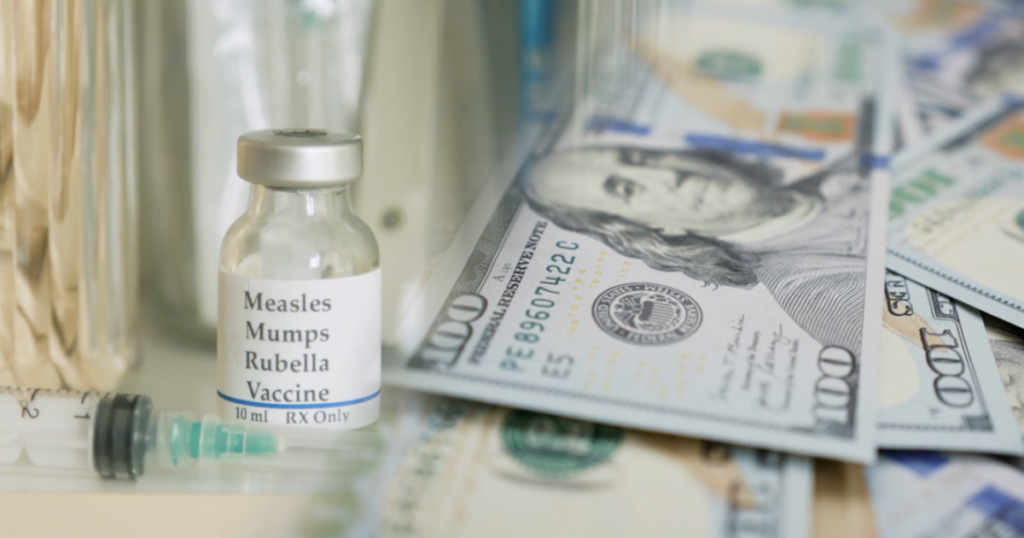
BALTIMORE, Md. — As measles cases rise across the United States, health professionals at the University of Maryland School of Medicine are raising alarms about a significant decline in measles vaccinations. This trend not only poses a public health threat but could also incur substantial economic costs, potentially exceeding $7 billion by 2030.
Dr. Meagan Fitzpatrick, an associate professor at the Center for Vaccine Development and Global Health at the University of Maryland, has been closely monitoring the downward trajectory of measles, mumps, and rubella (MMR) vaccinations, a trend that began around 2020. With measles outbreaks increasing globally, the implications for the U.S. could be dire if the vaccination rates continue to decline.
"We expect that we can see $1.5 billion annually in costs related to measles outbreaks, if this trend continues, if we see a 1% decline in measles coverage in children over the next 5 years,"
Dr. Fitzpatrick stated. In 2025 alone, these outbreaks could cost the U.S. $244 million, leading to an estimated total of more than $7 billion over five years. “That’s lost money in your pocket; these economic consequences really add up,” she emphasized, noting the personal impact on families who might face quarantine measures due to outbreaks.
Maryland has seen a fluctuating pattern in measles cases, recording no cases from 2020 to 2022, followed by one case in 2023, another in 2024, and three in 2025. The state's first confirmed case of 2025 was reported last week, involving an individual in the Baltimore area who had traveled internationally and may have exposed others at BWI Airport, an urgent care clinic, and Sinai Hospital. This underscores the rapidity with which measles can spread, especially in crowded or public spaces.
When asked how soon an isolated case could escalate into a widespread outbreak, Dr. Fitzpatrick noted,
“It could be a couple of weeks before this turns into an outbreak.”
This time frame highlights the importance of monitoring and vaccination, especially in a world that has grown increasingly interconnected.
Dr. Fitzpatrick is hopeful that the research conducted at the University of Maryland will spur local and state investments to enhance vaccine accessibility and address parental concerns regarding vaccinations. She pointed out that Maryland has relatively high overall vaccination coverage, which is a positive sign.
“If you are at all considering whether you should get that vaccine, the answer is yes, and the time is now,”
she urged.
For Maryland residents concerned about their immunization status or looking for free vaccines, the state health department provides resources online, allowing families to check their vaccination history and access necessary shots.
This situation serves as a vital reminder of the importance of vaccinations, not just for individual health but for community well-being and economic stability. As Dr. Fitzpatrick aptly concludes, “These economic consequences really add up,” emphasizing that investing in vaccination programs is not merely a health issue but a significant economic priority for the future.
Is 'Avatar: Fire and Ash' Crushing the Competition? Discover the Shocking Numbers Behind Its U.K. Reign!

Unbelievable! South Girls Soccer Crushes Dimond—You Won't Believe the Final Score!

You Won’t Believe What Alvarez Did in Just One Game – 4 Home Runs and a Shocking Sweep!

Janet and Paris Jackson's Shocking No-Show at Michael's Premiere: What Are They Hiding?

Equity LifeStyle's Q1 Earnings Skyrocket: What This Means for Your Investments!

You Won't Believe What Happens in Game 3: Pistons vs Magic—Catch the Shocking NBA Playoff Drama Tonight!
You might also like: