
Kansas Governor's Shocking Veto: What This Means for Trans Rights and Your Privacy!


In a significant political move, Democratic Kansas Governor Laura Kelly vetoed a GOP-led bill on Friday that would prevent transgender individuals from using restrooms and locker rooms corresponding to their gender identity. The legislation, which garnered support from more than two-thirds of the Republican-controlled state House and Senate, is now poised for a potential override of the veto, which could force the bill into law.
In her statement rejecting the bill, Governor Kelly described the legislation as "poorly drafted," warning that it may have unintended consequences beyond just restroom usage. "I believe the Legislature should stay out of the business of telling Kansans how to go to the bathroom and instead stay focused on how to make life more affordable for Kansans," she said, emphasizing a need to prioritize pressing issues over social controversies.
In response, Republican House Speaker Dan Hawkins chastised the governor for her decision. "Instead of standing with the overwhelming majority of Kansans on this issue, the Governor chose to appease her most radical supporters at the cost of women and girls in our state," he stated. Supporters of the bill argue that it aims to protect women and girls by ensuring single-sex facilities.
The proposed law mandates that government buildings, encompassing public schools and universities, must "take every reasonable step" to segregate restrooms and locker rooms based on biological sex. Individuals found in violation could face fines up to $1,000 or criminal charges for repeated accusations of using facilities that do not align with their sex assigned at birth.
Republican Representative Bob Lewis, who played a pivotal role in amending the legislation to include bathroom provisions, described the bill as a common-sense measure. “It just codifies social norms,” he stated, asserting that there exists an expectation for single-sex spaces in restrooms and locker rooms.
As of now, twenty states have enacted laws restricting individuals from using bathrooms that correspond with their gender identity in specific public settings, highlighting a national trend toward legislation that limits transgender rights.
The bill also seeks to fulfill a longtime goal of Republican State Attorney General Kris Kobach by prohibiting Kansans from changing the gender markers on their state-issued driver’s licenses and birth certificates. This aspect of the bill is seen as part of a broader conservative agenda targeting transgender rights in the state.
Notably, the maneuver used by Republican legislative leaders—known as "gut and go"—allowed them to cut and paste the bathroom provisions into another piece of legislation without public comment. This method has drawn criticism for circumventing open discourse on issues that significantly affect many Kansans.
During the six-hour floor debate prior to the bill's passage, Republican State Representative Susan Humphries, who chairs the committee that introduced the bill, defended it as providing clarity for school administrators and public facilities. "We're going to give them clarity on that," she said, suggesting that the law would help establish uniform standards for handling restroom access.
However, city and county officials expressed concerns that the law lacks specific guidelines for enforcement, which could lead to confusion and additional costs for local governments tasked with updating signage and, in some cases, building infrastructure to align with the new mandates. Notably, the law would permit children up to the age of eight to use opposite-sex restrooms when accompanied by a caregiver, while coaches could access opposite-sex locker rooms as long as everyone is clothed.
The so-called “bathroom bill” is the latest in a series of Republican-led legislative efforts targeting transgender and gender nonconforming individuals in Kansas. In the previous year, the state legislature overrode a veto to enact a law that bans gender-affirming care, such as puberty blockers and hormone replacement therapy, for transgender individuals under the age of 18; a legal challenge to that law is currently pending in state court.
Democratic Representative Abi Boatman, a transgender woman who recently filled a vacant seat in the House, articulated her concerns during the floor debate, arguing that the bill serves more to undermine the rights of transgender individuals than to safeguard women's spaces. "Am I afforded all of the rights and responsibilities of an elected official," she questioned, "or do I need to just go waste my time at facilities asking where I'm allowed to take a dump?”
This issue is a microcosm of a larger national debate on transgender rights and the appropriate role of government in personal matters. As Kansas finds itself at the crossroads of this contentious dialogue, the implications of such legislation extend far beyond the state, influencing discussions on identity, rights, and the complexities of public policy in America.
Stanford Study Reveals Shocking Truth: Are You Addicted to Social Media? Find Out Now!
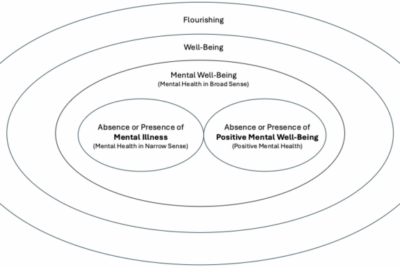
Is Your Mental Health at Risk? Discover These 5 Shocking Truths Before It's Too Late!

Is HomeCode the Game-Changer Real Estate Agents Can't Afford to Miss? Shocking Reviews Inside!

N.C. A&T's Shocking Early Voting Event: Why 1,000 Students Are Urged to Show Up NOW!

You Won't Believe What Happens When Kaukauna HS Takes a Shot at Mental Health Awareness!

Student Arrested for Threatening School on Social Media—You Won't Believe What Happened Next!
You might also like: