
Is Your Town Next? Shocking Truths About Extreme Weather That Politicians Won't Tell You!

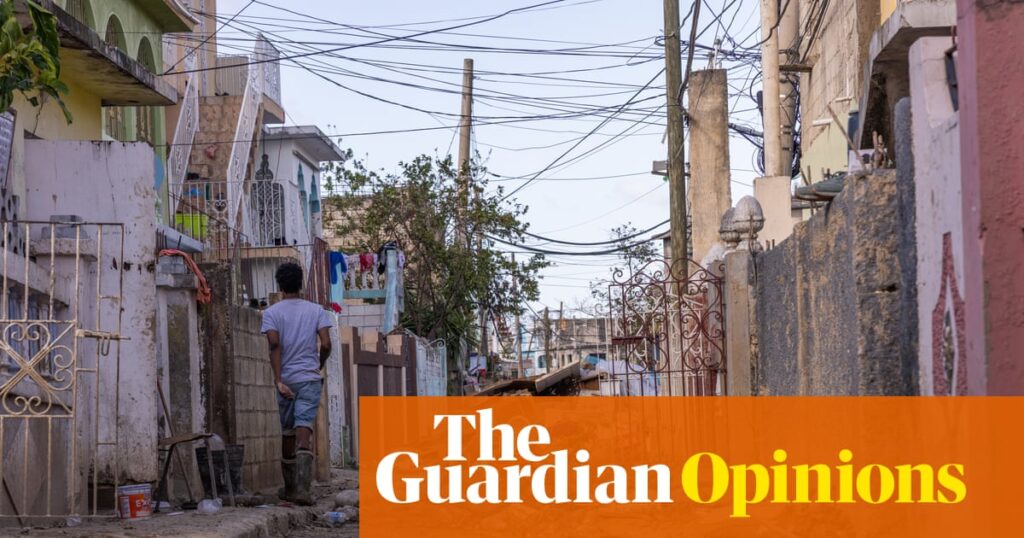
As extreme weather patterns increasingly dominate headlines, a stark assessment has emerged from recent research: the climate crisis is intensifying these events at an alarming rate. The record-breaking winds of 252 mph from Hurricane Melissa, which ravaged Caribbean islands at the end of October, were made five times more likely due to climate change. Similarly, the scorching wildfire conditions across Spain and Portugal during the summer were amplified by a staggering factor of 40, while June's heatwave in England was made 100 times more likely.
This insight comes from a branch of science known as attribution science, which has established a clear link between global warming and the spike in extreme weather incidents. While the understanding that greenhouse gas emissions have been warming the planet is well-known, new findings indicate that this rise in temperature is driving record heatwaves and increasingly violent storms with greater frequency.
The urgent question now is how to reduce the risks posed by these events and implement effective climate adaptation strategies. Experts in climate adaptation are sounding the alarm: our current efforts are woefully inadequate. The consequences of inaction can be tragic, as seen with the floods and cyclonic storms across Thailand, Sri Lanka, and Indonesia, which left hundreds dead at the end of November.
André Corrêa do Lago, the president of COP30 in Brazil, has called for the upcoming UN climate change conference to focus on adaptation. However, many governments from the most vulnerable nations returned from the recent COP events feeling frustrated. While the anticipated annual adaptation budget has been tripled to $120 billion, they are disappointed that the deadline for this funding has been pushed to 2035, with no clear mechanisms established to ensure that wealthier nations will fulfill their financial obligations.
This funding still falls short of the $300 billion in climate finance that was pledged at COP29 in 2024. Without support from wealthy nations, heavily indebted countries like Jamaica risk becoming trapped, diverting resources that could be used for green energy initiatives into merely managing the fallout from climate disasters.
The call for preparedness is not confined to developing nations or those suffering from extreme heat and evolving storm patterns. A group of UK scientists recently organized a “national emergency briefing” in London to raise awareness about the severity of the climate crisis and alarming levels of unpreparedness.
The Global Challenge of Climate Adaptation
On a global scale, the politics surrounding adaptation are evident. Developing countries, particularly small island states threatened by rising sea levels, have long argued that affluent nations, responsible for the bulk of historical and current emissions, must aid them in adapting to climate change and transitioning away from fossil fuels. However, right-wing nationalist governments in the West have largely resisted these calls, showing hostility toward aid and climate spending, especially regarding the phaseout of fossil fuels and achieving net-zero emissions.
In wealthier nations, the challenge of adaptation often appears as a technical issue rather than a political one, with policies addressing flood risks or resilience to heat not prioritized by voters—except in the wake of disasters. For instance, the recent floods in eastern Spain led to the resignation of Carlos Mazón, president of Valencia, highlighting how mismanaged water resources can quickly become a political liability. In England and Wales, debates surrounding the water industry also reflect this disconnect, as critical questions about infrastructure resilience remain largely sidelined in national discourse.
A report from the UK's Glacier Trust and Climate Majority Project emphasizes the need for charities and politicians to work together to foster an “action-oriented public understanding of climate risk.” The fundamental truth is that adaptation cannot rely solely on market forces. The long-term investments necessary to safeguard communities from floods, fires, and extreme heat are unattractive to private lenders. Instead, it is the responsibility of governments to build seawalls and provide insurance for subsistence farmers facing escalating risks. Leah Aronowsky, a historian of science at Columbia University, aptly notes that climate risk exacerbates everyday injustice, and how we adapt is deeply entwined with political struggles.
Amidst all this, there is an overwhelming urgency to cut emissions. With the Paris Agreement’s target of limiting global warming to 1.5°C increasingly at risk, mitigation—reducing or removing greenhouse gas emissions—takes precedence. Discussing adaptation can sometimes feel like accepting defeat or distracting from the core issue of emissions cuts. Yet, even as climate advocates push for stronger measures to reduce emissions, plans for preparing for a warmer climate must not be overlooked. In fact, under the UK’s Climate Change Act, the government is legally required to regularly assess its adaptation strategies.
The UK’s Climate Change Committee will soon publish guidelines outlining what a “well-adapted” country should look like. Essential features include flood defenses designed to withstand future storms, transport systems built for more extreme weather, and food supply chains resilient against global disruptions. Additionally, experts argue that the 1.5 million homes pledged for construction in England must be designed to withstand future climate challenges. These initiatives could help foster a collective commitment to responsible land stewardship amid the polarized climate debate.
For wealthier nations, adaptation is a matter of prudence. For developing countries, it’s a fight for survival. The latest UN report makes it evident that developing nations will require over $310 billion annually by 2035, yet they received only $26 billion in 2023. Recent catastrophic floods in Asia and worsening droughts in Africa underscore the urgent need to accelerate climate adaptation.
Under the Paris Agreement, nationally determined contributions (NDCs)—the specific plans countries develop to combat climate change—are meant to address both emissions reductions and adaptation strategies. However, these plans often focus predominantly on reducing greenhouse gases, sidelining critical adaptation measures. It is essential that national adaptation strategies, which emerged from COP16, take center stage. These plans demand genuine commitment, tangible financial resources, and a justice-oriented approach, emphasizing a vital question: how can vulnerable nations endure a warming world that emissions cuts alone cannot prevent?
You Won't Believe How Bentworth Soccer Dominated in 2025 – Shocking Stats Inside!

Scientists Reveal the Shocking Truth: Why a Cure for the Common Cold is Further Away Than Ever!

Is the Vivo X300’s Zeiss Camera the Game-Changer We’ve All Been Waiting For? Unbelievable Results Inside!

Is Your Wellness Routine a Lie? Discover the Shocking ECG Tech That Reveals the Truth!

You Won't Believe the 3 Shocking Public Health Crises Set to Explode by 2026! Are You Prepared?

You Won't Believe What I Discovered About My "Middle Class" Life – 7 Shocking Truths That Changed Everything!
You might also like: