
Is Your AI Trustworthy? Shocking Truth Behind ArbaLabs' Groundbreaking Discovery!

As artificial intelligence (AI) increasingly permeates our daily lives—from chatbots to industrial systems—a significant yet often overlooked concern is gaining traction: accountability. When AI systems autonomously make decisions, the questions arise: How can we verify those decisions, and who is responsible when things go awry?
Much of the global race to develop AI has centered on enhancing the capabilities and power of these systems. However, the aftermath of deployment, especially as AI transitions from cloud servers to physical environments like factories, vehicles, and infrastructure, remains inadequately addressed. In these settings, establishing an AI system's actions can be crucial.
One startup tackling this challenge is ArbaLabs, a deep tech firm that recently gained recognition by finishing in the final four of the 2025 K-Startup Grand Challenge. ArbaLabs is innovating tools aimed at verifying how AI systems function on edge devices—machines that operate AI locally as opposed to relying on centralized data centers.
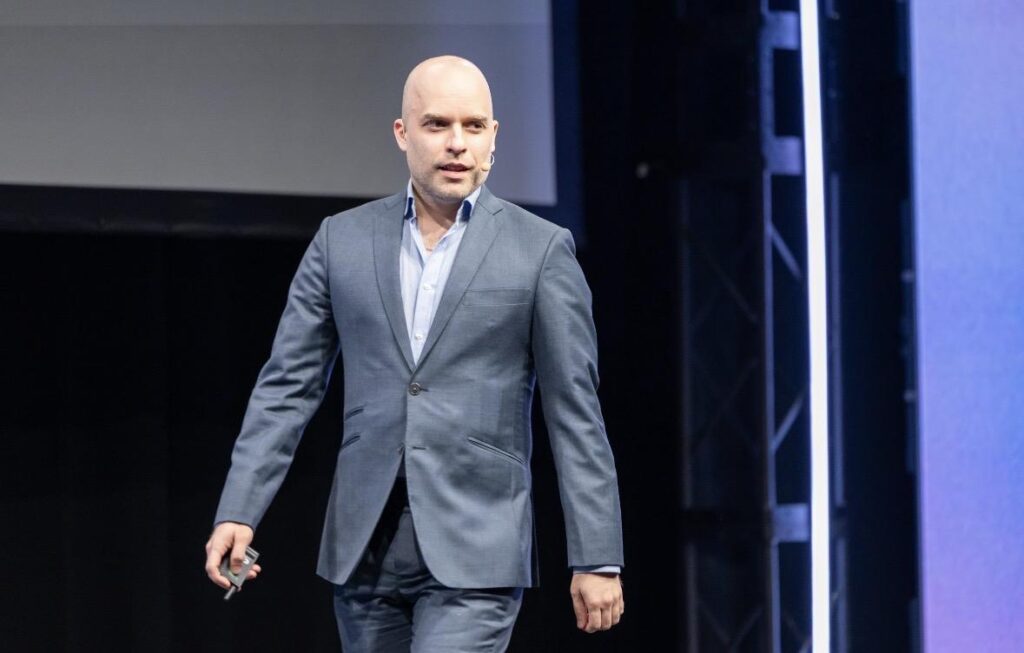
Founder Ashley Reeves explains the company's mission succinctly: “ArbaLabs builds a way to prove that an AI system is running exactly as it was designed and that its results haven’t been tampered with.” The focus is on trust and accountability, particularly in sensitive real-world environments.
Reeves likens their approach to incorporating a flight recorder in AI systems. The technology generates verifiable records that detail which specific AI model produced a result and whether that output was modified post-generation. “A normal AI system can generate a result,” he elaborates. “Our system can prove which exact model produced that result and that it was not modified.”
It’s important to note that this verification does not assess whether an AI's decision is correct or fair. Instead, it concentrates on ensuring that a system executed its operations as expected and that its outputs remained unaltered. This distinction carries weight in sectors where safety and liability are paramount.
Consider scenarios involving drones inspecting infrastructure or agricultural land. “The AI on that device decides whether something is damaged, safe, or dangerous,” Reeves points out. “If that AI model is altered—whether maliciously or accidentally—the decision could be incorrect, with serious consequences.”
Industries such as drone manufacturing, autonomous vehicles, robotics, and smart factories are showing early interest in ArbaLabs' offerings. In these contexts, AI typically operates with limited oversight, raising significant questions when incidents occur.
Experts assert that while verification tools do not entirely eliminate AI-related risks, they can facilitate clearer records during investigations of failures. High-profile accidents involving autonomous vehicles in the United States, including a fatal self-driving test in Arizona, have exposed complications surrounding software versions and system states at the time of incidents.
“When an AI-driven system makes a fatal or near-fatal decision, investigations rely on logs and internal records,” emphasizes Reeves. “Without independent verification, it can be difficult to prove whether the deployed model was unchanged or properly calibrated.”
This issue has sparked interest among policymakers in several regions, including Korea and the European Union, who are advocating for enhanced transparency and security in AI implementations, especially in regulated sectors. While standards are still evolving, some companies, including ArbaLabs, are proactively preparing.
“We now have AI systems making decisions in healthcare or industrial automation,” Reeves states. “The question is no longer ‘Can AI do this?’ but rather ‘Can we trust it, verify it, and assign responsibility if something goes wrong?’”
As AI systems increasingly interact with the physical world, the conversation may shift from their intelligence to their accountability. “Innovation is moving extremely fast and that’s exciting,” Reeves concludes. “But accountability mechanisms are still catching up. Trust should be measurable, not just a marketing buzzword.”
With AI's footprint growing in various sectors, addressing accountability and verification becomes essential for fostering trust and ensuring safety in these rapidly evolving technologies.
Dollar & Bonds Soar Amid Shocking War News—Is Your Portfolio Safe from the Chaos?
Sibling Showdown: Will Fano or the Styles Brothers Outshine at the NFL Combine? Shocking Stats Revealed!

Scream 7 Shatters Records: Discover How $64 Million Opened a New Horror Era!

UK Health Official EXPOSED: Why He Just ABANDONED the Puberty Blockers Trial Amid Shocking Bias Claims!

HONOR’s Shocking New Partnership with ARRI: Is Your Smartphone About to Become a Movie-Making Machine?

USC Stars Makai Lemon & Ja'Kobi Lane: Will Their NFL Dreams Crumble After Shocking Combine Results?
You might also like: