
Is the U.S. Falling Behind in Space? Shocking CEO Claims We’re Losing to China & Russia – What’s Next?

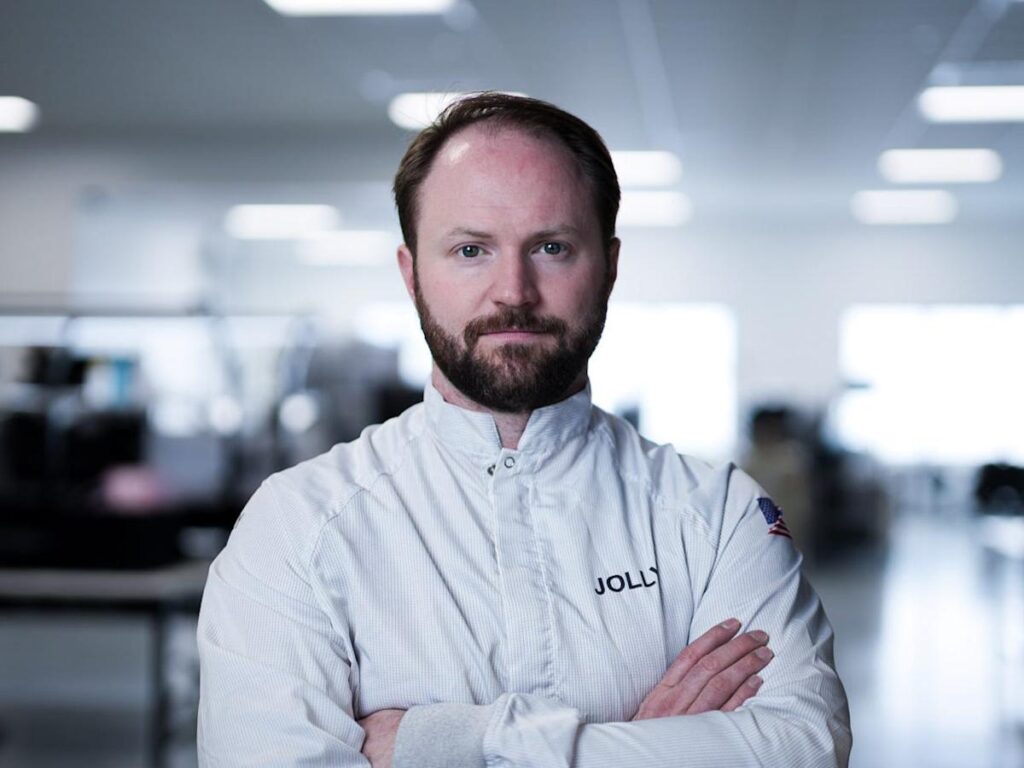
The landscape of space has dramatically shifted from a peaceful realm of exploration to a battleground of national security, as highlighted by Even Rogers, CEO of the space defense startup True Anomaly. Rogers, a former officer with the US Space Command, asserts that the United States must significantly enhance its capabilities to achieve space superiority and counter the advances made by adversaries like China and Russia.
In an interview with Business Insider, Rogers expressed concerns about the rapid progress being made by these nations in the space domain. He noted that the US is "really behind" in terms of responding to the capabilities that Russia and China have deployed into orbit. The notion of space being a contested environment is no longer just a theoretical discussion; it has become a pressing reality with profound implications for national security.
The current state of affairs presents a stark contrast to the post-Cold War era, when space was largely viewed as a peaceful utility. US officials are now sounding alarms about China and Russia's mounting capabilities, including the development of anti-satellite weaponry. Brig. Gen. Brian Sidari, the deputy chief of space operations for intelligence at the US Space Force, recently described China's pace of progress in space as "concerning," noting record levels of launches. A 2024 US intelligence report corroborates this, indicating that both China and Russia are actively exploring ways to incapacitate satellites, which could severely compromise US military operations.
The threats posed by foreign space systems are multifaceted, ranging from spy satellites that gather intelligence on US troop movements to potential anti-satellite weaponry capable of destroying American assets in space. Rogers elaborated on the ongoing "cat and mouse game" between the US and its adversaries, emphasizing that the US lacks a rapid-response capability to gather high-quality reconnaissance on newly deployed foreign spacecraft. According to him, Russia has increasingly been deploying what the US suspects are "weapons and test systems into lower orbit" over the past decade.
Rogers pointed out a glaring gap in US capabilities: "We haven't had a responsive capability to be able to, within 24 to 48 hours, go take a picture of that object," he said. This inability to quickly gather actionable intelligence raises concerns about the US's current readiness to respond to emerging threats in space.
While the US government has capabilities to track objects in space, Rogers underscored that the real challenge lies in acquiring high-quality information. The Space Force needs to conduct reconnaissance on highly agile and maneuverable spacecraft without detection—a difficult task given the current technological landscape.
To address this gap, True Anomaly is developing innovative solutions. The company, which employs over 250 individuals, is working on a spacecraft designed for close maneuvers around other objects to collect detailed intelligence. One of its flagship products is the Jackal, a space drone specifically engineered for reconnaissance missions that the Space Force would find invaluable.
Furthermore, the growing interest in placing critical AI infrastructure into lower orbit adds another layer of complexity. While tech CEOs are exploring the concept of data centers in space, Rogers warns that this also introduces vulnerabilities that need addressing. "You could see data centers in general being part of critical infrastructure for a country's political power," he stated, emphasizing the necessity for robust space security measures.
The emerging threats in space not only challenge national security but also highlight the increasing intersection of military and commercial interests in the realm of space technology. As the US navigates this complex environment, the stakes are higher than ever, making it crucial for the nation to invest in its capabilities to ensure that it remains a leader in space.
UK's Shocking AI Consultation: Will It Cripple Social Media? Find Out Now!

Why Is Pittsburgh Suddenly the Biotechnology Capital You Never Knew About? Shocking Facts Inside!

Unlock the Secrets to EASI26: Only 100 Spots Available for Aspiring Entrepreneurs—Will You Miss Out?

Paramount’s Shocking Move: Could They Really Buy Warner Bros? Netflix's Exit Changes Everything!

Trump's Shocking New Neighbor? Epstein’s 'Walk of Shame' Just Steps Away—What Happens Next Will Stun You!

You Won’t Believe How Climate Change is FORCING Major Flood Projects in the East Coast and Beyond!
You might also like: