Hiroshima Governor's Shocking Call: Can the World Really Abolish Nuclear Arms Before It's Too Late?

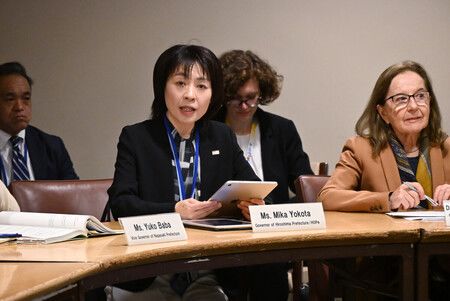
As the world grapples with the ongoing threat of nuclear proliferation, Hiroshima Governor Mika Yokota has underscored the critical importance of abolishing nuclear weapons. During an event held on April 30, 2026, in New York—coinciding with a review conference for the Nuclear Nonproliferation Treaty (NPT)—Yokota articulated a clear message: "The only sure way to prevent the use of nuclear weapons is their abolition." This statement serves as a poignant reminder of the catastrophic events that unfolded in August 1945, when the cities of Hiroshima and Nagasaki were devastated by U.S. atomic bombings in the final days of World War II.
The event was co-hosted by the prefectural governments of Hiroshima and Nagasaki and featured a panel discussion led by members of a U.N. independent panel of experts established last year to investigate the far-reaching consequences of nuclear warfare. The panel addressed the effects of nuclear weapons on various aspects of society, including human health and the global climate, highlighting the pervasive risks associated with nuclear armament.
In her address, Governor Yokota emphasized that achieving nuclear disarmament should be a unanimous priority among U.N. member states. This call to action resonates deeply in a world still haunted by the specter of nuclear destruction. Her remarks come at a time when geopolitical tensions are escalating, raising concerns about the potential for nuclear conflict.
The implications of nuclear weapons extend far beyond military strategy; they affect public health, environmental stability, and global security. The long-term consequences of nuclear warfare can be devastating, as demonstrated by the enduring health issues faced by survivors of the Hiroshima and Nagasaki bombings, known as hibakusha. Survivors have dealt with a range of health challenges, including cancer and psychological trauma, which underscores the urgent need for disarmament.
The discussion also touches on the broader theme of international cooperation. As countries continue to modernize their nuclear arsenals, the efforts to achieve disarmament become increasingly complicated. The NPT, which aims to prevent the spread of nuclear weapons and promote peaceful uses of nuclear energy, has been a cornerstone in these efforts. However, the treaty faces challenges, including non-signatory states and regional conflicts that complicate disarmament talks.
Governor Yokota's call for nuclear abolition is not merely symbolic; it is a rallying cry for a collective re-evaluation of global priorities in a time of rising military expenditures and increased nuclear capabilities. It serves as a reminder that the stakes are not just political but deeply human. The path toward a nuclear-free world requires the courage to confront uncomfortable truths and the commitment to build a safer future for generations to come.
As the discussions continue at the NPT review conference, the world watches closely, hoping that Yokota's call for unity and action will resonate among global leaders. In a landscape fraught with uncertainty, the vision of a world without nuclear weapons remains an essential goal—a goal that demands unwavering dedication and collaboration from every corner of the globe.
This New DNA Vaccine Could Change the Game for Prostate Cancer — Are You at Risk?
Geely's Bold Move: Can Ford's Tech Secrets Save Them from a Market Shock? Discover Now!

Is Your Hay Fever About to Get Even Worse? Discover the Shocking Truth Behind the Climate Crisis!

Timberwolves Stun Nuggets! How the Knicks' Destruction of Hawks Changes the NBA Playoff Landscape Forever!
Shocking Twist: White House Truce Puts 60-Day Deadline at Risk—What You Need to Know NOW!

Is This the End of Commercial Real Estate? Shocking Insights from the Latest Pipeline Report!
You might also like: