Gov. Moore's Bold Stand Against Trump: What He Said Will SHOCK You!

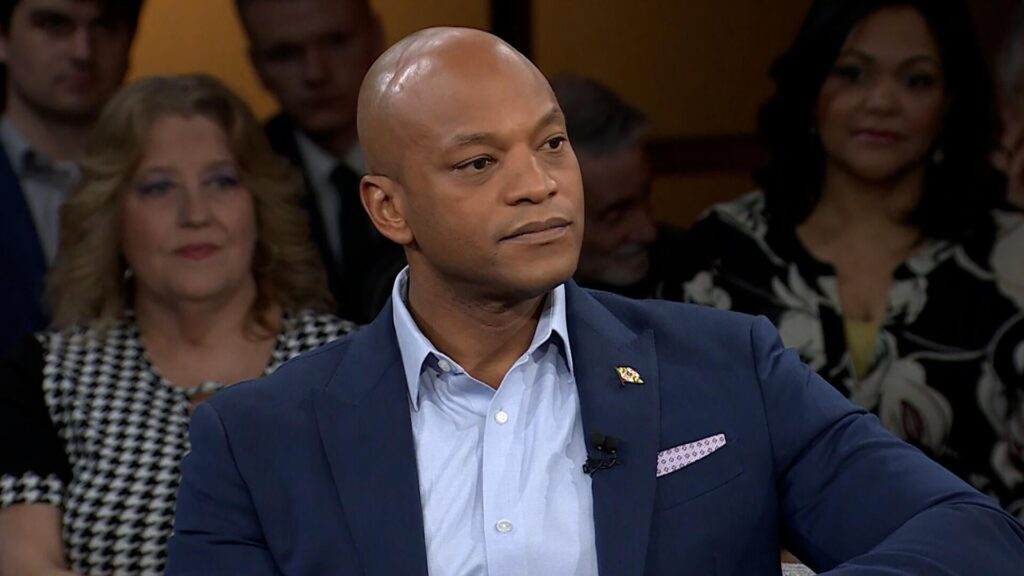
Maryland Governor Wes Moore recently addressed comments made by former President Donald Trump, who stated that Moore was “not worthy” to attend an upcoming White House dinner for governors. The annual event, part of the National Governors Association conference, typically brings together leaders from both sides of the political spectrum for discussions on governance and policy.
In an interview with CBS News, Moore dismissed Trump's remarks, declaring that “the president does not determine my worthiness.” He emphasized that his worth is defined by his constituents in Maryland and by a higher moral standard, stating: “God determines my worthiness. The people of Maryland determine my worthiness. They are who I answer to. Not him.”
Moore's response came after Trump criticized him, labeling him as "foul-mouthed" and insinuating that he lied about receiving a Bronze Star during his military service. Moore clarified that he had made an “honest mistake” on a White House fellowship application in 2006 concerning the Bronze Star he earned for his deployment in Afghanistan.
Originally, Trump’s administration planned to exclude all Democratic governors from the formal business meeting at the White House. However, it was later decided that only Moore and Colorado Governor Jared Polis would be left off the guest list. Trump’s comment that they were “not worthy” of the dinner led to a wave of solidarity among Democratic governors, prompting many to announce they would not attend the event.
In the spirit of bipartisanship, Moore remarked, “I will work with anyone. But I will bow down to no one. And I think the president has a problem with that.” His comments highlight a growing trend among political leaders who are willing to challenge the status quo and assert their independence in the face of political pressure.
Moore’s interview with CBS News was conducted by senior correspondent Norah O’Donnell during a town hall event, which will be aired on Sunday evening. This setting provided a platform for the governor to address not only his stance on Trump’s remarks but also his broader vision for leadership in Maryland.
As the political landscape continues to evolve, Moore’s comments serve as a reminder that political discourse often extends beyond policy disagreements and enters the realm of personal values and leadership ethos. In an era where divisive rhetoric can dominate, Moore’s assertion of dignity and respect for his office resonates with many constituents who may feel disenchanted by the current political climate.
In the wake of these events, it will be important to observe how the dynamics of state leadership and federal relations unfold, particularly as governors from both parties navigate their roles in a polarized environment. The ability to collaborate across party lines while maintaining one’s sense of self-worth and integrity is increasingly crucial in American politics.
As Moore himself indicated, “if the point of the meeting is to turn it into name-calling … I will not go.” His commitment to constructive dialogue over confrontation underscores the challenges and opportunities that lie ahead for political leaders in the United States.
How a Shocking 70% of Voters Could Turn the GOP’s 2024 Hopes Upside Down!
LeBron James Just Broke a 30-Year NBA Record—You Won't Believe What Happened Next!

Thailand's Shocking Move: Are Elephants at Risk from Controversial Birth Control Vaccine? Discover the Truth!

OpenAI’s Bombshell Memo: Is China’s DeepSeek R1 Model Cheating the System? You Won’t Believe What Happens Next!
Ernie Hudson at 80 Reveals His Shocking Secret to Surviving Life—You Won't Believe What He Said!

Are Male Frogs Getting Hotter? Discover the Shocking Truth Behind Their New 'Sexy' Calls!
You might also like: