
Glaciers Are Disappearing Fast—Find Out What This Means for Your Future!

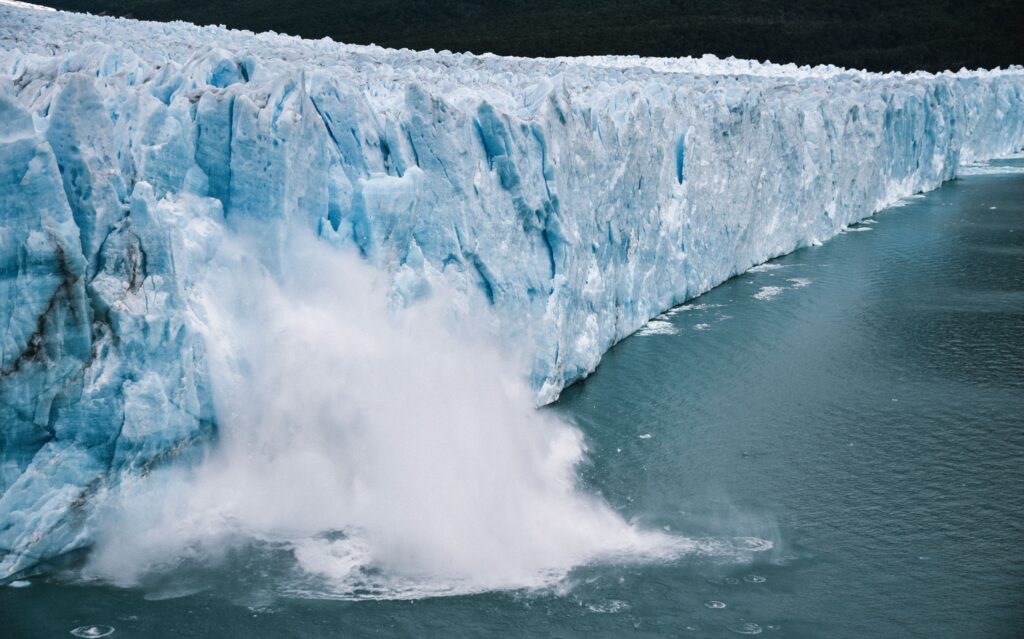
If you’re looking for a clear indicator of how climate change is progressing, melting glaciers serve as one of the most honest metrics available. They are impervious to politics and bias, simply responding to the planet's warming by losing ice. A recent international assessment brings alarming news: 2025 ranks as one of the worst years on record for global glacier ice loss.
The newly released study estimates that glaciers around the world lost approximately 408 gigatons of ice in 2025, making it the sixth worst year since records began in 1975. What’s particularly striking is not solely the loss in one year, but the overarching trend; annual glacier losses over the past decade have been nearly four times higher than in the late 20th century.
📰 Table of Contents
A New Era of Melting Glaciers
In the late 1900s, the average glacier mass loss was under 100 gigatons per year. However, over the last ten years, this figure has escalated to an average of around 390 gigatons annually. Therefore, the figure of 408 gigatons for 2025 is not an isolated anomaly; it represents a disturbing consistency that has become the new normal.
Dr. Levan Tielidze, a research fellow at Monash University, highlighted the significance of glaciers as indicators of climate change, stating, “Glaciers are among the clearest indicators of climate change, and we are now witnessing unprecedented global ice loss.” He also pointed out the alarming concentration of extreme loss years, noting that six of the most extreme loss years have occurred within the past seven years. This pattern underscores the rapid changes taking place in our climate system.
Ripple Effects Everywhere
The implications of glacier mass loss extend far beyond the icy peaks where they reside. One major consequence is sea-level rise; as glaciers lose land-based ice, this meltwater flows into the ocean. Another significant impact is on freshwater supply. Many communities rely on glaciers as natural reservoirs, storing winter snow and releasing it slowly during dry seasons. As this buffer diminishes, people face two-fold challenges: increased flood risks during heavy melt years and acute water shortages when ice is gone.
Dr. Tielidze noted, “These changes are not only reshaping mountain landscapes but are also contributing significantly to global sea-level rise and affecting water resources for millions of people.”
A Truly Global Pattern
The report reveals a concerning detail: all 19 major glacier regions worldwide exhibited mass loss in 2025, marking the fourth consecutive year in which every region has recorded net loss. This consistency illustrates that the drivers of this phenomenon are not isolated incidents but rather part of an overarching warming signal affecting nearly every corner of the globe. The most substantial losses in 2025 were reported in regions like Western North America and Central Europe.
The Long-Term Picture
When considering the long-term implications, the figures become staggering. Since 1975, glaciers have lost nearly 10,000 gigatons of ice, with approximately 80 percent of that loss occurring since the year 2000. This analysis stems from the World Glacier Monitoring Service (WGMS), which combines satellite observations with on-the-ground measurements, ensuring a comprehensive understanding of glacier dynamics.
Every Fraction of a Degree Matters
One of the most sobering insights from Dr. Tielidze is that even if global warming were to halt today, glaciers wouldn't stabilize immediately. However, he emphasized that our future isn't entirely predetermined. The temperature at which we ultimately stabilize matters significantly. “Every fraction of a degree matters; reducing warming will directly reduce future glacier loss and its impacts,” he explained. The authors caution that if current loss rates continue, many glaciers could vanish within decades, with cascading effects on sea levels, ecosystems, and freshwater availability.
In essence, glaciers are more than just frozen landscapes; they serve as crucial barometers of climate change, revealing that our planet's baseline is shifting—and rapidly. The research has been published in the Climate Chronicles collection of Nature Reviews Earth & Environment.
—–
Like what you read? Subscribe to our newsletter for engaging articles, exclusive content, and the latest updates.
Check us out on EarthSnap, a free app brought to you by Eric Ralls and Earth.com.
Shocking Warning: Kubica Calls Out Antonelli on Social Media—What Leclerc's Step Back Means for F1!

College Sports Shock: Learfield's $1 Billion Deal Could Change Everything—Are You Prepared?

You Won’t Believe What iGB L!VE Revealed About the Future of Startups – Are You Missing Out?

Why a $100,000 Donation from Vulcan Materials is Transforming the Fred Corriher YMCA – Don't Miss This!

Wisconsin GOP's Shocking Move: Will Thousands of Late Mail Ballots Be DISCARDED in Supreme Court Battle?
You Won’t Believe What Happened at the DC Conference Where Climate Deniers Took Control!
You might also like: