
Deaton’s Shocking US Senate Move: What He’s Hiding Could Change Everything!

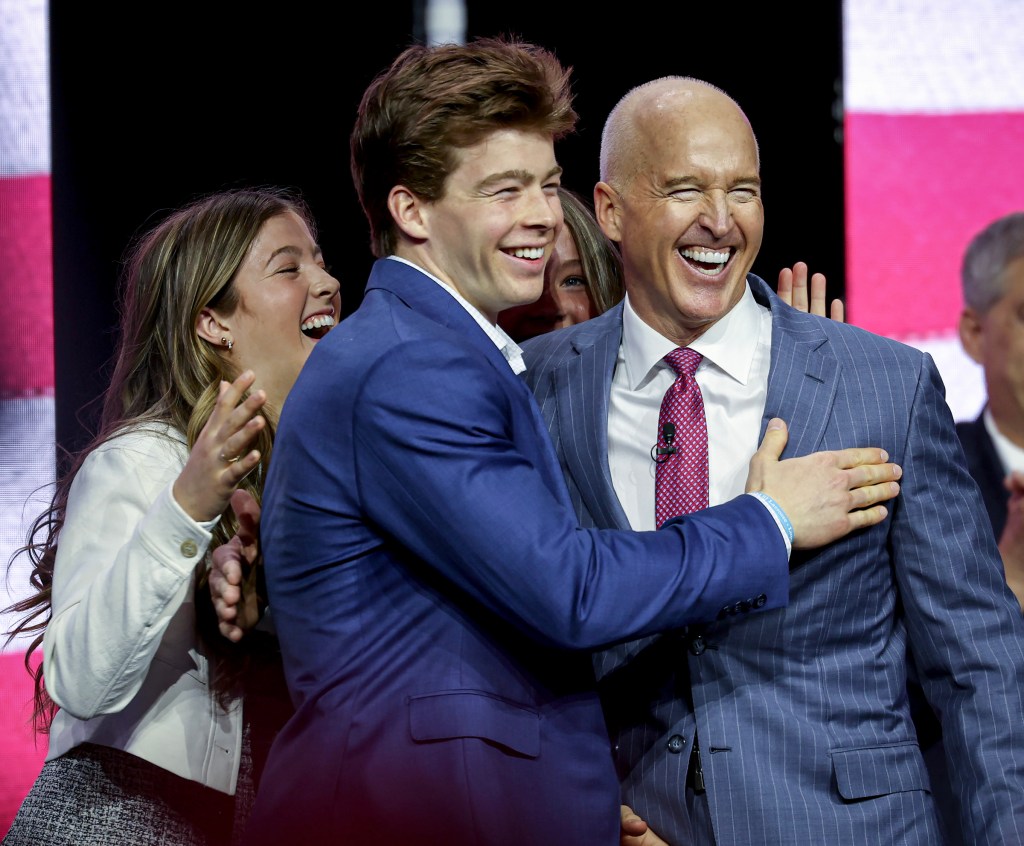
In a decisive victory, Mike Minogue has secured the Republican nomination for Governor of Massachusetts, capturing an impressive 70% of the votes at the Massachusetts Republican Convention held at the DCU Center in Worcester. Minogue’s robust win signals a notable shift in the party’s dynamics as he positions himself as a political outsider, boasting a successful background in the private sector with his biotechnology company.
Brian Shortsleeve's campaign managed to stay afloat, earning 15% of the votes, or 278 total, thus meeting the threshold to secure a position on the ballot. Conversely, Mike Kennealy fell short with just 14.11% of the votes, totaling 253, and will not appear on the ballot. Minogue, with a total of 1,262 votes, demonstrated a clear preference among delegates.
During his address to the delegates, Minogue emphasized his campaign’s core proposals, which include plans to repeal the NetZero by 2050 climate mandate and the MBTA Communities Act. He also stated intentions to end free “right to shelter” laws for undocumented immigrants in Massachusetts and reaffirmed his commitment to protecting the Second Amendment. These positions reflect a strong alignment with traditional Republican values, aiming to resonate with a broad base of conservative voters.
Alongside Minogue, Anne Brensley clinched the MassGOP endorsement for Lieutenant Governor, garnering 1,100 votes, which accounted for 56.09% of the total. Brensley’s substantial lead over her competitors, Anne Manning Martin and Shawn Oliver, who received 27.33% and 16.57% respectively, underscores her strong backing within the party.
📰 Table of Contents
Republican Senate Nomination
In a separate but notable outcome, John Deaton achieved the Massachusetts Republican nomination for U.S. Senate by acclamation. Drawing on historical figures such as Abraham Lincoln, Ronald Reagan, and Dwight Eisenhower, Deaton articulated a vision rooted in the party’s traditional principles. He framed his candidacy as a return to the core Republican values of freedom and progress, echoing Lincoln’s legacy and emphasizing the party’s historical role in civil rights.
“When I think of being a Republican, I think of Lincoln signing the Emancipation Proclamation… I think it’s time we elected someone who puts people before party,”
Deaton declared, launching a direct critique against his potential Democratic opponent, incumbent U.S. Senator Ed Markey. Highlighting Markey’s lengthy tenure of over 53 years in office, Deaton framed the election as a choice between a representative who prioritizes real issues affecting Massachusetts residents and one who has become entrenched in politics.
Former U.S. Senate candidate Geoff Diehl sponsored Deaton’s unopposed nomination, underscoring momentum behind Deaton’s campaign with recent polling that suggests a narrowing gap between him and Markey. Deaton’s campaign seeks to bridge the divide between party loyalty and the immediate needs of voters.
Attorney General and State Treasurer Candidates
Meanwhile, with no challengers in sight, Elizabeth Dionne, a member of the Belmont Select Board, and Michael Walsh, an attorney from Lynnfield, secured their respective GOP nominations for State Treasurer and Attorney General. Dionne aims to unseat Democratic incumbent Deb Goldberg, while Walsh targets Attorney General Andrea Campbell’s seat.
The convention featured keynote remarks from notable figures, including Seth Dillon, CEO of the Babylon Bee, who championed the importance of free speech and the role of satire in challenging bad ideas. Dillon asserted,
“Bad ideas have to be ridiculed, and that’s what satire does so effectively,”
emphasizing the moral imperative behind such discourse.
Despite the excitement surrounding the nominations, the event faced significant delays, with voting for gubernatorial candidates postponed for several hours due to issues with delegate registration and communication. Massachusetts Republican Party Chairwoman Amy Carnevale addressed these challenges, explaining the difficulties encountered in rectifying voting roles, particularly among ex-officio members.
As the convention concluded, the outcomes of these nominations reflect an evolution within the Massachusetts Republican Party. With candidates like Minogue and Deaton, the party is gearing up for a competitive election cycle, aiming to connect with voters on pivotal issues that resonate throughout the Commonwealth.
Is OpenAI's Shocking Release Timeline a Game-Changer or a Dangerous Gamble? You Decide!

Will MrBeast’s Shocking Lawsuit Ignite a #MeToo Uprising in the Influencer Elite? Find Out Now!
This AI Startup Backed by Mark Cuban is Unveiling Family Secrets—Are You Ready to Discover Yours?
You Won't Believe How New London Shocked Everyone with Their First Soccer Win of the Season!

You Won't Believe What Just Opened at Lakewood Park: A Bar with Live Music and Shocking Secrets!
Idaho in Mourning: What You Didn't Know About Dirk Kempthorne's Controversial Legacy!
You might also like: