
Are Peat-Free Options About to Change Forever? Discover the Shocking Tech Behind This Sensor Trial!

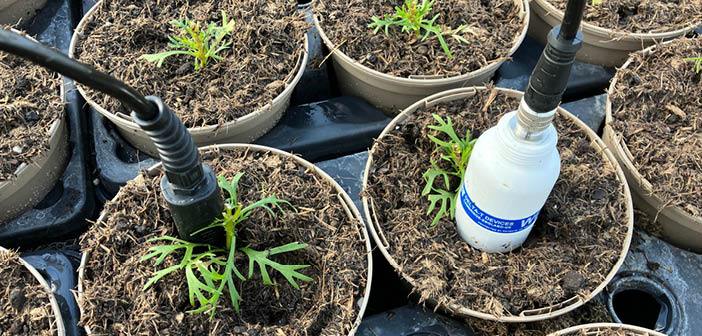
A new initiative funded by the ADOPT program is paving the way for the implementation of wireless sensor technology in the horticulture industry, specifically for precision irrigation and nutrient management in peat-free ornamental crop production. This project is part of a broader effort by the Horticultural Trades Association (HTA) to promote research and development while unlocking essential funding for the benefit of the industry.
Set to take place later this month, nursery events will showcase the practical application of this technology in commercial trials. These events are crucial for demonstrating how innovative solutions can tackle challenges in commercial production.
The ADOPT (Accelerating Development of Practices and Technologies) program is a multi-year funding initiative managed through the Defra Farming Innovation Programme in collaboration with Innovate UK. It aims to support collaborative, grower-led, on-site trials that test and demonstrate effective solutions for contemporary agricultural challenges.
This one-year project, which commenced in April, brings together notable players in the horticulture sector, including the HTA, Hillier Nurseries, The Farplants Group – Fleurie Nursery, the Royal Horticultural Society, and Van Walt. The consortium will evaluate how wireless sensors can monitor substrate moisture and nutrient status, allowing for more precise irrigation and feeding strategies within peat-free growing systems.
Launch events scheduled for April 30 at Hillier Nurseries and May 1 at Fleurie Nursery will offer free, two-hour sessions. These gatherings will outline the project’s objectives, the foundational science supporting the technology, and its application in commercial production. Participants will learn how to optimize plant culture while transitioning towards peat-free production.
“This project is focused on generating practical, nursery-scale evidence concerning how wireless sensor technology can support peat-free production,” said Wayne Brough, Technical Horticulture Manager at the HTA. “By monitoring growing media conditions in real time, growers can make better informed irrigation and nutrition decisions, improving product consistency while reducing plant wastage and optimizing resource use. The aim is to build confidence in adopting these tools across the sector.”
Steve Carter, General Manager at Fleurie Nursery, expressed enthusiasm regarding the support received from ADOPT. “We were very pleased to receive this significant support from ADOPT, recognizing that growers need additional support and tools for the transition to peat-free growing,” he stated. “We are excited to witness how sensors can improve our knowledge of crop water use requirements and determine whether this technology can be used in the future to automate irrigation systems. We look forward to working with all the partners and sharing our learnings with the wider industry.”
The implications of this project go beyond merely improving crop production; they align with a growing global movement towards sustainable practices in agriculture. As peat bogs are critical ecosystems that sequester carbon and support biodiversity, moving away from peat-based growing mediums is seen as a necessary step in mitigating climate change. By leveraging technology like wireless sensors, growers can enhance efficiency while simultaneously addressing environmental challenges.
The commitment to peat-free production not only benefits the environment but may also position growers more favorably in a market increasingly prioritizing sustainability. As consumers become more aware of environmental issues, businesses that adopt sustainable practices will likely enjoy enhanced reputation and profitability. This project, therefore, represents not just a technical advancement but a potential shift in the horticultural industry's approach to production and sustainability.
In conclusion, the ADOPT-funded project, in collaboration with prominent horticultural organizations, marks a significant step towards integrating advanced technology in sustainable farming practices. By demonstrating the effectiveness of wireless sensors in precision irrigation and nutrient management, the initiative aims to foster a culture of innovation and responsibility that could reshape the future of ornamental crop production in America.
Samsung's Project Luna: This AI Robot Will Change Your Life—But Only If You Act Fast!
You Won't Believe What Happens Inside SatEnlight's Laser Spiral – Matteo Vismara Unveils Shocking Secrets!
American Farmers' Solar Dreams Crushed Overnight: What Trump Changed That Could Cost Them Millions!

You Won't Believe the SHOCKING Tech Predictions for 2026 - Are You Prepared for the Digital Dangers Ahead?

Deion Sanders DROPS a Bombshell on NFL Draft’s Biggest Prospect—You Won't Believe How He Reacts!

$1.36 Billion ETF Influx: Why Bitcoin and Ether Are About to Explode—Are You Missing Out?
You might also like: