Election Board Member Caught at Trump Rally—What This Shocking Violation Means for Your Vote!

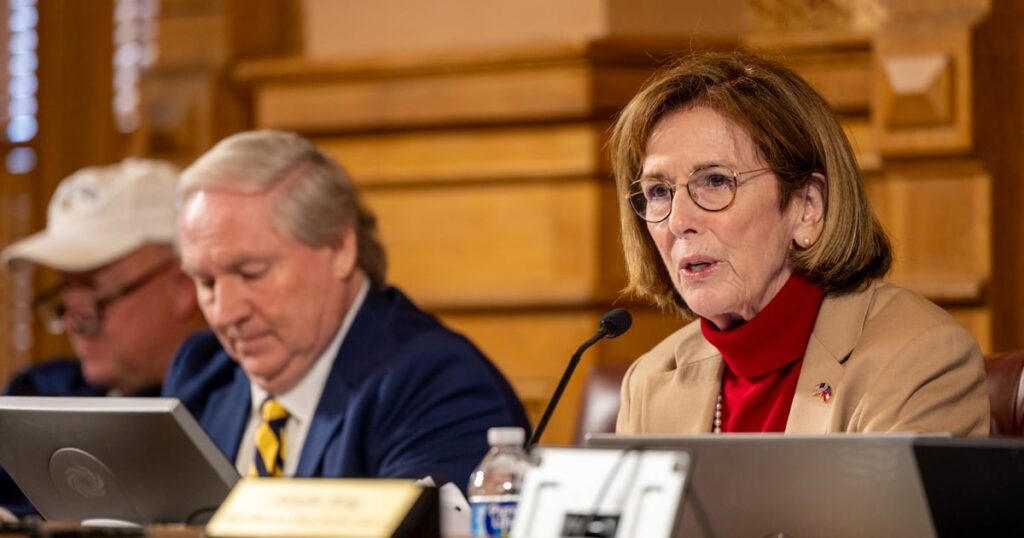
In a recent report issued by the Georgia Office of Inspector General, it was determined that State Election Board Vice Chair Janice Johnston violated the board’s code of conduct by attending a campaign rally for Donald Trump at Georgia State University last year. This incident has raised serious questions about impartiality and potential conflicts of interest within the state's election oversight.
The inspector general's findings revealed that Johnston's attendance at the rally could lead a reasonable observer to conclude that she was expressing partisan support for Trump, suggesting a breach of the nonpartisan ethos expected from a member of the State Election Board. The report specifically noted that her presence at the event created an “appearance of conflict of interest,” which is particularly troubling given the board’s critical role in overseeing elections in Georgia.
Janice Johnston, who has served on the board, was present during a time of heightened scrutiny around election integrity, especially following the tumultuous elections of 2020 and ongoing debates about voting rights. Her actions have not only ignited conversations about ethical conduct but also about transparency in the electoral process. According to the report, “a reasonable person could conclude that Johnston was, at minimum, displaying partisan support for a candidate or more significantly, that Johnston had endorsed President Trump.”
Critics argue that Johnston’s actions may further undermine public trust in the electoral process, a sentiment echoed by various election integrity advocates. Given the heated political climate, any perceived bias from those tasked with overseeing elections can have significant consequences, potentially discouraging voter participation and raising doubts about the legitimacy of election outcomes.
This situation highlights a broader concern regarding the politicization of election oversight bodies across the United States. Many states have faced similar challenges, with officials finding themselves in precarious positions, balancing their civic duties with personal political beliefs. As election laws and regulations evolve, it becomes increasingly crucial for election board members to maintain a clear separation between their personal affiliations and their official responsibilities.
The implications of Johnston's actions extend beyond her individual conduct. They may prompt discussions about the need for stricter regulations governing the behavior of election officials, including potential guidelines on attending political events. As states prepare for upcoming elections, ensuring that election officials adhere to a high standard of impartiality will be vital in preserving the integrity of the electoral process.
As this story continues to develop, the focus will likely remain on how election boards across the nation can uphold transparency and neutrality amid a politically charged atmosphere. The outcome of this incident may serve as a precedent for how other states address similar conflicts of interest and strive to maintain public confidence in their electoral systems.
Why We’ve Never Shared Our Son’s Face Online – The SHOCKING Consequences You Won’t Believe!

50 Ex-Vegans Spill the Shocking Truth: You Won't Believe What Made Them Quit!

Samsung's Shocking New Camera Tech Promises to Erase Motion Blur—Are Your Photos About to Get a MAJOR Upgrade?

Are You Ready for the Snack Bar Explosion? Shocking Market Trends Revealed for 2025-2033!

Bitcoin's Shocking 2026 Prediction: Will It Soar to $250,000 or Crash? Find Out NOW!

Shocking Truth: 70% of Care Workers Skip Flu Shots Because of Viral Myths—What They Don’t Want You to Know!
You might also like: