
Tech Giants Team Up with Blue-Collar Workers: Is Your Job at Risk? Find Out Now!

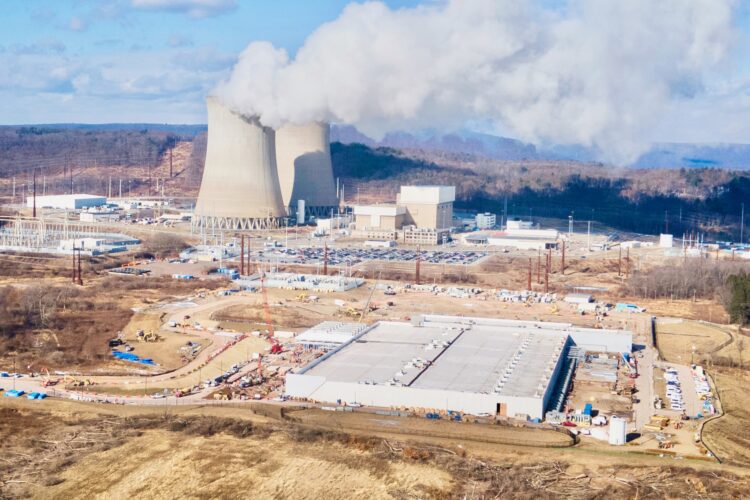
In recent years, building trades unions have found themselves at the intersection of labor and the burgeoning artificial intelligence (AI) economy, aligning closely with some of the world's richest companies. As data centers proliferate across the United States, these unions are not only championing job creation but also addressing concerns from local communities about the impact of such developments.
Unionized workers are heavily involved in the construction of massive data centers, with reports indicating that data centers now account for as much as 40% of work hours for members of the Columbus-Central Ohio Building and Construction Trades Council, and 50% for the International Brotherhood of Electrical Workers Local 26 in the Washington, D.C. area. In 2025, North America’s Building Trades Unions announced a record membership and the highest number of apprentices in its history.
This surge in union activity is fueled by the rapid growth of data center projects, which has led to expansions in training programs and apprenticeships. Rob Bair, president of the Pennsylvania Building and Construction Trades Council, emphasized the importance of framing data centers positively. “When people say, you know, ‘data centers are the root of all evil,’ we’re just saying, ‘look, they do create a hell of a lot of construction jobs, which we live and work in your communities,'” he stated.
The Alliance with Tech Giants
As they strive to meet astonishing demand, unions have forged alliances with tech giants and supportive government officials, united by the narrative that the U.S. is in a pivotal national security race with China over AI supremacy. This partnership has enabled unions to exert influence over local and state legislation aimed at regulating data centers. For instance, they have opposed a proposed statewide data center moratorium in Maine and legislation in Illinois requiring data centers to generate their own energy.
Unions have not shied away from addressing community concerns regarding the environmental impact of data centers. They have taken proactive steps to engage with community leaders, offering suggestions for project improvements and advocating for local investments—like funding for schools—as part of the development agreements. “If you don’t ask, you’re never gonna get,” Bair remarked, urging communities to articulate their needs clearly.
Tech companies, recognizing the critical role of skilled labor in building their multibillion-dollar projects, have invested significantly in training initiatives. For instance, Google has reported that the majority of labor used in its data center construction is unionized, and it has allocated $10 million toward a union-backed electricians training program aimed at increasing the workforce pipeline by 70%.
Mark McManus, general president of the United Association of Union Plumbers and Pipefitters, acknowledged the criticism unions face for aligning with powerful corporations. However, he insisted that refusing to work with these companies would not halt data center construction. “If we chose as a union to have a moratorium on building the data centers because we didn’t believe it was right for America, the data centers would still be getting built,” he noted. His organization has secured a significant share of the workforce for data center projects, with members working on over 90% of such projects nationally.
As labor agreements are negotiated for major developments—including the Oracle and OpenAI Stargate campus in Michigan—union representatives are increasingly visible in local councils and state legislatures. Their presence often influences public sentiment, with some council meetings showcasing unions advocating for projects that promise job creation and economic growth.
However, the union’s strong presence can spark tension in community discussions. For example, in Joliet, Illinois, Alicia Morales described union members as “bullying” during public meetings. Nevertheless, union representatives often find themselves as the primary supporters of data center initiatives, advocating for the economic benefits these projects can bring.
As the demand for data centers continues to grow, the role of unions in shaping the landscape of labor, technology, and local economies will likely expand. With their increasing membership and aggressive recruitment strategies, unions are positioned not just as labor advocates but as key stakeholders in the future of America’s AI-driven economy.
Why Sen. Klobuchar's Radical Anti-Fraud Plan Could Change Minnesota Forever—Are You Ready?

You Won't Believe How Fast China's Healthy Snack Chips Market Is EXPLODING – Shocking Numbers Inside!

Discover the Shocking Four Projects Transforming Pacific Climate Resilience – You Won’t Believe What’s at Stake!

White House Dinner Shock: Secret Service Agent Shot—What Really Happened? You Won't Believe the Details!

“Did Jaylen Brown Just Expose the NBA's Biggest Flopper? Shocking Video Sparks Outrage!”

You Won't Believe What Shocking Fitness Changes Are Coming for the 137th SOW – Act Now or Miss Out!
You might also like: