Historic Fed Shock: Will May 15 Leave Your Investments in Ruins? Find Out NOW!

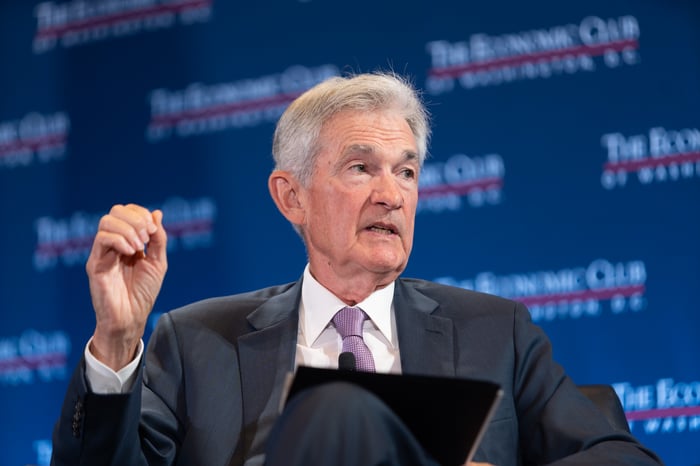
Wall Street's remarkable climb may be approaching a turning point, as concerns mount over the future direction of the U.S. stock market. The iconic Dow Jones Industrial Average, S&P 500, and Nasdaq Composite have enjoyed unprecedented gains over the past seven years, with the S&P 500 rallying at least 16% in six of those years. The Dow and Nasdaq have recently reached significant milestones, surpassing levels of 50,000 and 24,000, respectively. However, the anticipated shift at the helm of the Federal Reserve could signal a volatile period ahead for investors.
As of May 15, Jerome Powell will officially step down as Fed chair, a change that has been widely discussed for over a year due to ongoing tensions with President Donald Trump regarding interest rates. While Trump has advocated for aggressive interest rate cuts to 1% or below, Powell has maintained a commitment to allowing economic data to guide monetary policy. Following his departure, Kevin Warsh, whom Trump has nominated as his successor, aims to reshape the Fed's narrative, potentially to the detriment of the stock market.
Warsh's vision includes a critical reevaluation of the Fed's bloated balance sheet, which surged from approximately $900 billion in August 2008 to nearly $9 trillion by March 2022. Despite a modest reduction to $6.7 trillion through a quantitative tightening cycle, Warsh argues for further deleveraging, positing that a more passive role for the Fed is essential. However, if he follows through on this strategy, it could involve offloading trillions in long-term U.S. Treasury bonds and mortgage-backed securities, which might lead to a decline in bond prices and an increase in borrowing costs.
Moreover, Warsh’s track record indicates a hawkish stance on monetary policy. During his five years as a voting member of the Federal Open Market Committee (FOMC), he prioritized inflation control over other economic indicators, such as unemployment. With inflation pressures mounting, Warsh is likely to favor sustained higher interest rates, a scenario that does not bode well for a stock market that has been banking on further cuts.
As the transition unfolds, Warsh will also confront a historically divided FOMC. Powell's tenure saw one of the lowest dissent rates in decades, but recent meetings have been characterized by clear ideological rifts among committee members. For instance, during the final seven FOMC gatherings of Powell's leadership, dissenting opinions have emerged in opposite directions regarding interest rate policies. In one notable instance, four members voiced dissent during Powell's last meeting as chair, marking a first in 34 years.
This division poses a challenge for Warsh as he steps into a role where he must mediate differing viewpoints on how to manage monetary policy in the wake of economic uncertainty. He will also need to navigate two inflation shocks stemming from ongoing trade tensions and geopolitical unrest, particularly the ramifications of President Trump's tariffs and the protracted conflict in Iran.
The credibility of the FOMC, which has historically been granted leeway to adjust policy, could be further jeopardized by this level of dissent. Investors typically expect a unified front from the committee; disunity could disrupt the ongoing rallies for the Dow, S&P 500, and Nasdaq. As analysts speculate about the potential end of an era of substantial stock market returns, many are left wondering: What does this mean for future investments?
Before considering new investments in the S&P 500, it’s critical to note that some analysts suggest looking elsewhere. For instance, the Motley Fool Stock Advisor team has recently identified ten stocks that they believe are better positioned for substantial returns—none of which include the S&P 500 Index. Historical data backs this claim, as evidenced by past recommendations that have yielded remarkable results.
As we await confirmation of Kevin Warsh and the subsequent policy shifts at the Federal Reserve, the message for investors is clear: caution may be prudent in an environment where the dynamics of monetary policy are shifting, and the stock market's resilience is being tested by both internal and external pressures.
Former Dolphins Star WR Chases NFL Dream AGAIN - You Won't Believe Which Team He’s Targeting!

Big Tech's Grip Tightens: Are 80% of Asian Journalists Losing Their Voice? Shocking Revelations Inside!
You Won't Believe Who's Predicted to Steal the Spotlight in Pistons vs Magic Game 7—Shocking Stats Inside!

I Did 50 Squats Daily for 7 Days—You Won’t Believe What Happened to My Body!

Dating Startup Founder Reveals Shocking Secrets: Are You Missing Out on True Love?

St. Lawrence University’s Shocking Baseball Sweep: You Won't Believe Who Almost Ruined Their Playoff Dreams!
You might also like: