
Is ‘The Devil Wears Prada 2’ About to Spark a Major Controversy Over This Asian Character? Shocking Details Inside!

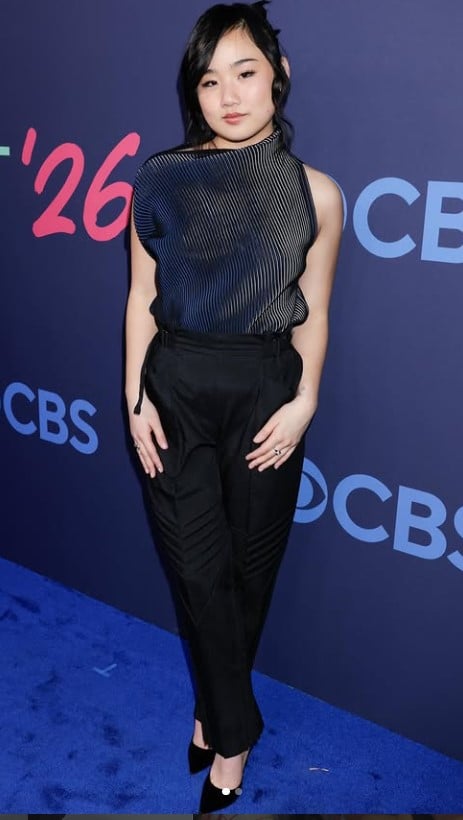
The highly anticipated sequel, The Devil Wears Prada 2, hit theaters on May 1, featuring the original creative team and principal cast, including Meryl Streep, Anne Hathaway, Emily Blunt, and Stanley Tucci. Directed by David Frankel and written by Aline Brosh McKenna, the film also introduces new faces like Kenneth Branagh, Lucy Liu, Simone Ashley, Justin Theroux, and Helen J. Shen.
However, early audience reactions have been shaped by significant online criticism regarding the portrayal of a newly introduced Asian character, Jin Chao, played by Shen. The controversy began with a promotional clip released in April, where Jin introduces herself to Andy Sachs (Hathaway) and lists impressive academic credentials, including a 3.86 GPA and a perfect ACT score.
Critics have pointed out that Jin’s character fits a familiar trope associated with Asian figures in Western media: the highly accomplished yet socially awkward assistant. Comments on international social media platforms highlight how her styling—characterized by conservative layers and oversized eyewear—reinforces a narrow, bookish visual identity. This echoes long-standing concerns about the representation of Asian characters in cinema, often relegated to stereotypes that fail to capture the complexity of their identities.
Another layer of criticism has emerged surrounding the character's name. Some commentators have noted that the English pronunciation of "Jin Chao" may carry unintended phonetic associations that could be deemed insensitive. This aspect of the discourse remains unaddressed in official studio communications, which have primarily focused on the film's general release details and narrative setting.
As of now, the studio has not provided a formal response to the specific concerns voiced online. While promotional materials mention the cast and film premise, they do not clarify the intent behind Jin's naming or presentation. This lack of engagement begs the question of how studios will navigate the increasingly complex landscape of cultural representation as they cater to diverse global audiences.
The response to Jin Chao’s character highlights a broader trend in the film industry, where character portrayals are frequently scrutinized under various cultural lenses. Elements that may be perceived as satire or exaggeration in one market can be interpreted quite differently in another, particularly when they align with established cultural archetypes. This dynamic underscores the importance of cultural sensitivity in character development, especially in an era where international audiences are more engaged than ever.
For many viewers, the issue transcends a single role; it reflects a cumulative effect of repeated portrayals of Asian characters in Hollywood. Film studios must reckon with this increased scrutiny and the demand for more nuanced and authentic representations. The backlash against Jin Chao serves as a reminder that audiences are not only looking for entertainment but also for stories that resonate with their realities.
As the film industry continues to evolve, the challenges of representation and cultural sensitivity are unlikely to dissipate. With the audience's appetite for diverse narratives growing, studios are called to not only acknowledge but also address these criticisms proactively. The portrayal of characters like Jin Chao is not just a creative choice; it is a reflection of the broader societal values and perceptions that demand continuous examination.
As The Devil Wears Prada 2 continues to roll out, the industry—and its audiences—will be watching closely to see how it navigates the complex web of cultural representation. The conversation surrounding Jin Chao may very well set the tone for future portrayals and the standards to which they will be held.
You Won't Believe Why Over 50% of Millennials Are Choosing Tiny Homes—The Shocking Truth Revealed!

Clemson's Shocking Collapse: How They Suffered Their 4th Consecutive Loss Against Boston College!

This Weekend's Unmissable Twin Cities Events: 5 Shocking Surprises You Didn't Know About!

Is the Stock Market on the Brink of Collapse? Shocking Trump Catalyst Revealed!

You Won't Believe What NFL Insider Just Said About Commanders LB Sonny Styles—Prepare to Be Shocked!

Did You Expose Your Family? Shocking New Measles Risk Uncovered in Northern Virginia!
You might also like: